
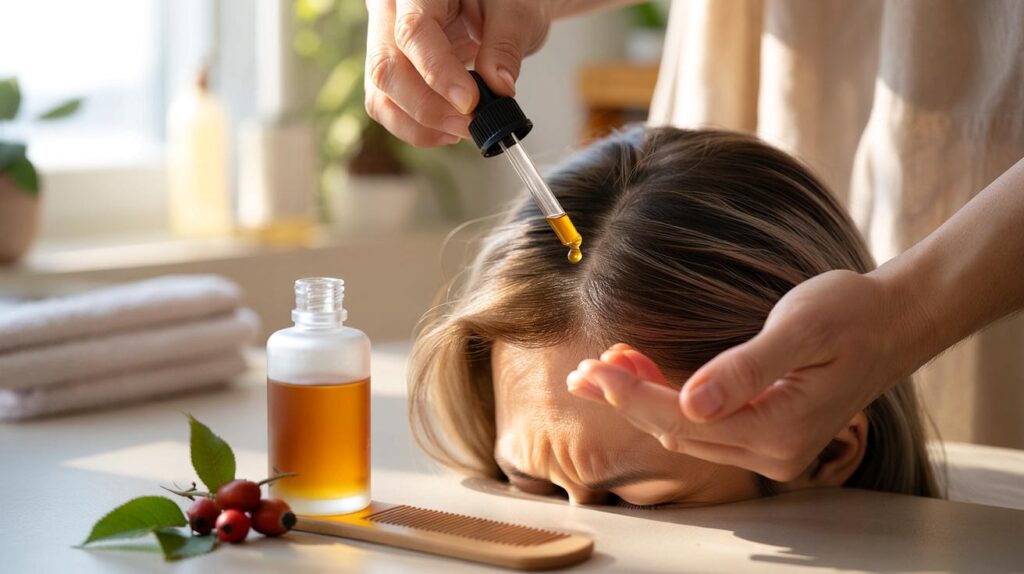
Some mornings the mirror is kinder than others. On the harsh ones, the parting looks wider, the shower drains clog faster, and every hat becomes a shield. You’re not chasing miracle cures; you just want a calmer scalp and a fighting chance at fuller-looking hair.
I noticed it on a Tuesday, under the bathroom’s unforgiving bulb. My fringe sat flatter than usual and the crown looked weary, as if the day had started without it. I rubbed a few drops of rosehip oil between my fingers and pressed them along my scalp, the way you would calm a crumpled shirt with steam.
It wasn’t glamorous. There were no angels singing, no instant bounce. But the tightness that had been building all month softened, and the itch that made me scratch during Zoom calls simply faded. I made tea and forgot about my hair for the first time in weeks.
Then something quietly changed.
What rosehip oil actually does for a tired scalp
Rosehip oil isn’t heavy or perfumed; it’s the quietly competent friend who brings soup when you’re run down. It’s rich in essential fatty acids like linoleic and alpha-linolenic acid that support the scalp’s natural barrier, which can get frayed by frequent washing, heat, dyes, or winter radiators. When that barrier behaves, your scalp feels less irritable, and your hair tends to shed less from stress.
We’ve all had that moment when your parting looks wider under office lights and you panic-Googled at 2 a.m. One survey from a UK hair charity found over a third of women report increased shedding during times of stress, while dermatologists often see seasonal blips in autumn. The pattern isn’t destiny. A calmer, hydrated scalp is less likely to throw tantrums that show up as extra hair in the plughole.
Think of the scalp like soil. Dry, inflamed soil doesn’t hold roots well; balanced soil keeps them anchored. Rosehip oil brings antioxidants such as vitamins A and E that help buffer everyday oxidative stress from sun and pollution. It won’t change your genetics or outsmart hormones, yet it can nudge the environment in your favour so hair feels denser and behaves better across wash days.
How to use rosehip oil for fuller-feeling hair
Start with clean, slightly damp hair so the oil spreads kindly. Place 4–6 drops of rosehip oil on your fingertips, then dot along your parting, temples, and crown. Massage with small circular motions for two minutes, moving skin, not just hair. Leave it on overnight if you can, or at least for 30 minutes before a gentle shampoo. Two or three nights a week is a sweet spot for most scalps.
Go light. This isn’t a marinade. Too much oil can weigh down fine hair and make you give up before it works. Let’s be honest: nobody actually does that every day. Use less than you think, focus on the scalp, and rinse with lukewarm water the next morning. If you heat-style, give your scalp an oil-free day after to breathe. Small, steady habits trump big messy ones.
Common slip-ups are easy to fix. People rub at the hair shafts instead of the skin, or they pick blends with heavy fragrances that don’t play nicely with sensitive scalps. Patch-test behind the ear first, and keep the bottle away from direct sunlight. Consistency beats quantity with scalp oils.
“You can’t pour health into a hair fibre; you create it at the scalp,” says a London trichologist I met backstage at a fashion week. “Nourish the skin, and hair has a better chance to stick around.”
- Choose cold-pressed, pure rosehip oil with a short ingredient list.
- Pair with a gentle, sulphate-free shampoo on rinse days.
- Combine with a weekly scalp brush session to lift buildup.
- Pause and chat to a professional if you notice sudden, patchy loss.
Signals to watch, and why this feels different
You’ll notice the small wins first. Less tightness under a beanie. Fewer flakes on your shoulders. Hair that lies flatter on day one but looks plumper by day three because your scalp isn’t overproducing oil in protest. I could feel the scalp tension easing like a soft exhale.
Some weeks will be messy. Travel, hormones, deadlines — your scalp reads all of it. Don’t chase perfection. Keep your routine light and kind, and swap the comb-attack for a slow massage on the nights you remember. Rosehip oil won’t regrow hair that’s permanently lost, but it can help your scalp behave better. A calmer scalp sheds less from irritation, and that alone can change how your hair feels in your hands.
You might pair it with habits that support hair from the inside — balanced protein at meals, iron and B12 checked if you’re often tired, a lid on heat tools. There’s no single hero, just a stack of gentle choices. Healthy scalp, happier hair—simple as that.
There’s a quiet confidence that comes from solving a small, everyday problem. Rosehip oil won’t headline your life, yet it can turn down the noise in your mirror. Share this with the friend who keeps changing shampoos every fortnight, or the cousin who swears by hats. The conversation matters.
| Key points | Details | Interest for reader |
|---|---|---|
| Rosehip oil calms the scalp | Essential fatty acids and antioxidants support the skin barrier and reduce irritation | Less itch, fewer flakes, and less stress-related shedding |
| Use small, regular doses | 4–6 drops, massage 2 minutes, leave 30 minutes to overnight, 2–3 times weekly | Visible comfort without greasy hair or heavy buildup |
| Pair with gentle habits | Sulphate-free shampoo, light heat styling, nutrition checks if needed | Better long-term results and realistic routines |
FAQ :
- Will rosehip oil make my hair grow back?It can’t change genetics or medical causes, but it can improve scalp comfort and reduce stress-related shedding, which often makes hair look fuller.
- Can I use it on a sensitive or flaky scalp?Yes, it’s generally well-tolerated. Patch-test behind the ear first and choose pure, fragrance-free oil.
- How long until I notice a difference?Comfort can improve within days. Shedding patterns may take 4–8 weeks to settle as your routine evens out.
- Do I put it on roots or lengths?Target the scalp, not the mid-lengths. Massage the skin gently and use a light hand on fine hair.
- What if I’m seeing sudden, patchy hair loss?Pause the DIY and speak with a GP or dermatologist to rule out medical causes such as alopecia areata or thyroid issues.



Lovely read—honest and not salesy. I tried 4–5 drops with a two‑minute massage and, while it’s no miracle, the tightness definately eased and the itching chilled out. The “this isn’t a marinade” tip made me laugh and actually helped me not overdo it. Thanks for keeping it practical.