
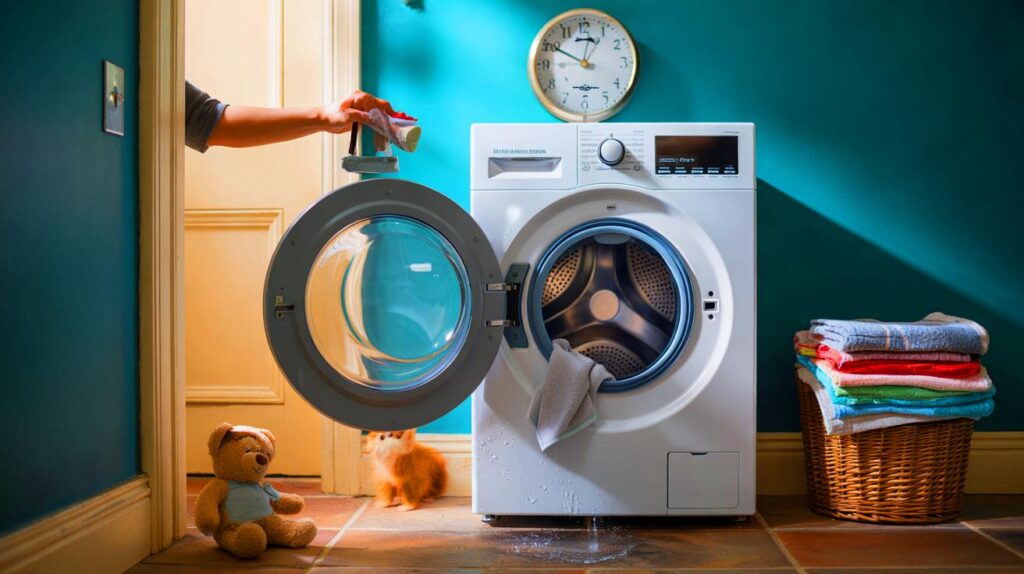
Britain’s laundry habits face fresh scrutiny as appliance engineers flag a quiet problem lurking after every wash cycle.
What happens in the hour after you unload matters more than most people think. The choice to leave a washing machine door wide open, or to shut it promptly, shapes hygiene, energy use, safety and repair bills. It also shapes how long the machine lasts.
Why leaving the door open invites hidden damage
Many manufacturers advise against keeping the door permanently ajar. Residual moisture does not vanish just because the door gapes. Instead, fluctuating room air draws damp into crevices and onto metal surfaces, where it can drive slow corrosion. Electronic components also dislike continuous humidity swings.
Modern machines intentionally hold a small water reserve — typically 0.5 to 2 litres — to keep seals, pumps and hoses conditioned. If the cabinet air over-dries those parts day after day, detergent films harden. Fibres cake. Heaters and sensors work harder through fouling, and the machine can take longer to reach temperature. That costs power and shortens service life.
Ventilate briefly, then close: 1 to 2 hours is enough to dry the drum without punishing parts.
When a stale odour appears, the culprit often hides in the detergent drawer and door gasket, not in the drum itself. A film of soap, softener and lint feeds bacteria. Leaving the door open all day does not remove that film. Cleaning does.
Hinges, locks and glass do not like constant strain
A front loader’s glass porthole is heavy. An open door acts as a lever that loads the hinge pin and the latch plate. Over time, the hinge can sag, the strike misaligns and the lock struggles to engage. The result is rattling, leaks or a door that needs a shove to close.
Top loaders face a different risk. Humid air rises through the lid gap and seeps into the hinge and lid switch. Lubrication gets displaced. Rust starts. Either way, minor play turns into major bills. Typical numbers in the UK look like this: hinge kits £30–£70, call-out and labour £60–£120, so a simple preventable repair can approach £180.
A door left open becomes a lever. Over time, that lever bends metal and loosens seals.
A safety blind spot for children and pets
An open door is an invitation. Small children climb. Cats curl up on warm drums. Dogs chew gaskets. None of that ends well. Damaged seals split and leak. A curious child can wedge fingers under the glass rim. The door becomes a hazard, not a convenience.
- Keep the door closed outside the short drying window.
- Use child lock functions when available.
- Store laundry pods and cleaners out of reach.
- Inspect the gasket for bite marks or nicks after any incident.
The 1–2 hour rule that keeps odours down and parts healthy
You do not need the door open for hours on end. You need targeted ventilation and regular maintenance. Here is a simple routine that works in damp British homes and compact flats alike.
- At the end of a cycle, open the door a hand’s width for 60–120 minutes.
- Remove the laundry straight away. Wet fabric breeds mould fast.
- Wipe the grey door seal and the bottom lip of the opening with a dry cloth.
- Pull out the detergent drawer; wipe it and the housing. Leave the drawer slightly ajar to dry.
- Run a maintenance wash monthly at 60–90°C: use 200–250 ml white vinegar or 75–100 g citric acid. Do not mix either with bleach.
- Clean the drain filter every 6–8 weeks, and check the pump impeller spins freely.
What to use and what to avoid
White vinegar and citric acid dissolve limescale and soften stubborn deposits. They also help lift the biofilm that fuels musty smells. Oxygen-based washing machine cleaners can substitute if you prefer commercial products. Avoid mixing acids with chlorine bleach, as the reaction produces dangerous gas.
Most smells come from a film in the drawer and gasket, not from closing the door after two hours.
Does shutting the door cause mould?
Shutting the door immediately after a soak of condensation can trap damp where you least want it. That is why the short drying window matters. After one to two hours, residual droplets have evaporated, the gasket has dried, and the drum feels cool, not clammy. Close the door then. You will prevent dust ingress and stop prolonged strain on the hinge.
If your utility room runs very humid, crack a nearby window or run an extractor during that drying window. Good room ventilation helps the machine dry faster without leaving the door yawning all day.
Energy and repair maths people rarely do
Dirt and scale on the heater and sensor surfaces slow heat transfer. A few minutes extra heat-up per wash does not look dramatic. Across 220 cycles a year, a 5–10 kWh bump is realistic if maintenance lags. At current tariffs, that is several pounds you could keep.
Add wear-and-tear. A sagging hinge that misaligns the door compresses the gasket unevenly. That kinked rubber tears earlier, and a replacement gasket typically runs £25–£60 plus labour. If the door lock fails, some models will not start, which means another call-out. A £180 repair on a mid-range machine erases the savings from a year of careful detergent dosing.
| Symptom | Likely cause | Quick fix |
|---|---|---|
| Musty odour after a day | Biofilm in drawer and gasket | Clean drawer and seal; run 60–90°C maintenance wash |
| Door needs a shove to latch | Hinge sag and strike misalignment | Tighten hinge screws; avoid leaving door open; book service if play persists |
| Water under the machine | Torn gasket or loose clamp | Inspect seal; replace gasket; check clamp tension |
| Longer heat-up times | Scale and detergent deposits on heater | Monthly hot service wash with citric acid or cleaner |
Front loader versus top loader
Front loaders suffer most from hinge and latch strain when left open. Top loaders avoid the heavy glass door, but their lids expose switches and hinges to moist air if propped up all day. Both types benefit from the same rule: short drying window, then close.
Extra tips that stretch the life of your machine
Do not overdose detergent; modern formulas need less, especially in soft water areas. Excess soap builds the very films that smell. Level the machine so the door seal sits evenly. Consider a simple timer reminder on your phone to return after 90 minutes and shut the door. If you must leave the house, leave the detergent drawer slightly open instead of the main door; it allows airflow without loading the hinge.
For households with allergy concerns, a monthly 90°C empty cycle knocks back microbial growth. For households with hard water, citric acid works better than vinegar against scale. And for pet-heavy homes, keep a spare door-seal wipe on the radiator; a quick swipe after each wash does more than any perfume additive.



£180 a year from leaving the door open—are we assuming a hinge repair every 12 months? Feels like worst‑case maths. Any averge repair data by brand/region to back this up?
Okay, timer set: 90 minutes, wipe the seal, close the door. My cat will be furious 🙂 Also love the drawer tip—never thought the smell was hiding there rather than the drum.