
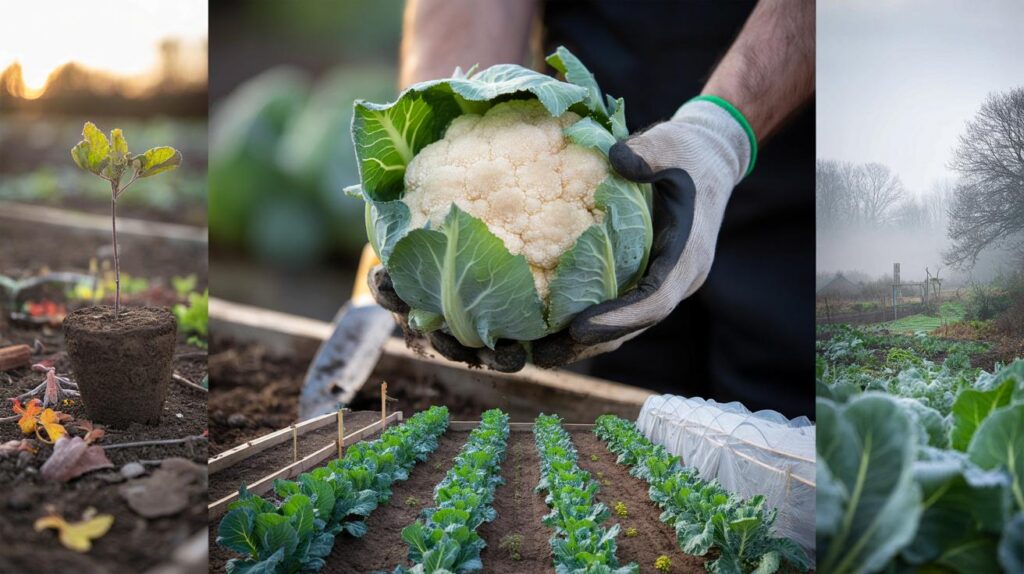
A handful of cheap tweaks turned a sleepy autumn plot into a spring harvest that made our neighbours look twice today.
We followed the market gardeners’ playbook with an October planting, minimal fuss and no costly inputs. The result was a bed of cauliflowers that bulked up early, shrugged off winter, and delivered dense, white heads before supermarket prices peaked.
Why the October window changes everything
Warm soils, cool air, steady moisture
By late October, soils in much of the UK still hold summer warmth while the air has cooled. That combination reduces transplant shock. It also keeps evaporation down. Young cauliflower roots settle quickly without the heat stress that dogs late spring plantings. Rainfall is usually more dependable, too, which steadies growth and cuts watering chores.
Autumn soil warmth plus cooler air gives transplants a head start that early spring rarely matches.
Deep winter roots, spring surge
Growth above ground slows in winter. Underground, it continues. Roots push deeper and wider through the cooler months, tapping moisture and nutrients that shallow systems miss. When day length lifts, those well-anchored plants respond fast. Heads start forming earlier, with tighter curds and fewer gaps.
Plant in October, and winter does the heavy lifting: stronger roots, quicker spring lift-off, heavier heads.
Soil preparation that mirrors market gardeners
Pitfalls to dodge before you plant
Compacted beds starve roots of air. Poor drainage invites rot. Weedy residues shelter pests. Nutrient-poor ground stalls leaf growth, which limits head size later. Skipping a pre-plant clean-up is the quickest route to spindly plants and patchy yields.
Amendments and drainage that move the needle
Work the bed to a spade’s depth. Fold in well-rotted compost to improve structure. Aim for a neutral to slightly alkaline soil reaction.
Target pH 6.8–7.4, with a light sprinkle of untreated wood ash to nudge soils towards neutral and add potash.
If your site holds water, raise the rows slightly or cut shallow channels to shed winter downpours. Good drainage keeps collars dry and disease pressure low.
Planting before hard frosts: the crucial checklist
Picking sturdy seedlings and timing the put-in
Select young, stocky plants with firm stems and unblemished, mid-green leaves. Avoid pot-bound seedlings or anything leggy. In most regions, the safe window runs to late October. Many growers down tools by 25 November to avoid a cold snap on fresh transplants.
Step-by-step method we verified
- Loosen each root ball gently to free circling roots.
- Dig holes about 15 centimetres deep and wide enough to accommodate the root system.
- Blend a trowel of compost and a pinch of organic nitrogen source into backfill.
- Set the plant so the collar sits just below surface level for stability.
- Backfill firmly but do not compact; leave soil friable for air and water.
- Water well to settle soil and expel air pockets.
- Mulch with fallen leaves or ramial wood chips to conserve warmth and moisture.
A simple board laid briefly over freshly planted rows stops capping after rain and slows new weeds. Remove it once the surface has dried.
Low-maintenance winter, high-return spring
Cold-season care to keep losses low
Check the mulch periodically. Top up if wind or birds disturb it. Do not overwater. Winter rain usually suffices. If a hard frost is forecast, drape horticultural fleece to break the wind and limit scorch. Vent on mild days to prevent damp build-up around crowns.
Light spring jobs that pay off
As temperatures climb, pull the mulch back to warm the soil faster. Scratch in a light dressing of compost around each plant. Watch for slugs and snails grazing inner leaves. A ring of wood ash can deter them after rain. Water steadily if spring turns dry. Reliable moisture helps curds knit tight.
What our trial delivered
Numbers gardeners can use
We set 24 seedlings across two beds: 12 planted in late October, 12 planted in late March. Both received the same compost and watering regime. We recorded head weights, dates and losses.
| Planting | First harvest | Average head weight | Losses |
|---|---|---|---|
| Late October | 15–28 March | 1.05 kg | 1/12 plants |
| Late March | 25 May–12 June | 0.78 kg | 3/12 plants |
The autumn group matured roughly eight to ten weeks earlier. Heads were denser and less prone to yellowing. The spring group suffered more stress during warm spells, and curds opened sooner.
October starts cut our supermarket spend in April by an estimated £18–£24 for a family of four.
Could you hit 1 kg in 90 days? From transplanting, most gardens will need nearer 130–160 days, weather permitting. The 90-day mark is realistic only from the moment vigorous spring growth begins, not from the October planting date.
Spacing, rotation and pest pressure
Give plants room and break disease cycles
Space cauliflowers 55–65 centimetres apart in rows 60–70 centimetres apart. Tighter spacing reduces head size. Keep brassicas on a four-year rotation to limit clubroot and soil-borne issues. Lime acidic soils in winter where clubroot is a risk. Avoid waterlogging at all costs.
Keep common pests in check without chemicals
- Use mesh against pigeons and cabbage whites when temperatures lift.
- Hand-pick slugs after dusk or set beer traps near beds.
- Encourage ground beetles by leaving undisturbed refuges at bed edges.
- Remove yellowing leaves promptly to reduce grey mould.
Cost, effort and where the gains truly come from
Small inputs, measurable returns
Our outlay was limited to compost, netting and fleece. Labour was front-loaded into bed prep and a single planting session. Winter work was largely observational. The big gain came from using the season’s free resources: residual soil warmth, regular rain and a long rooting window.
Further angles worth your time
Vernalisation, blanching and head quality
Cold exposure triggers bud development in many brassicas. That vernalisation phase sets up firm curds later. To keep heads white, fold inner leaves over developing curds when they reach egg size. Tie loosely with a soft tie and remove before harvest to check maturity.
Risk management and a simple trial you can run
Split your bed this year: half planted in the last week of October, half in late March. Keep notes on dates, head weight and pest damage. If your garden sits in a frost pocket, push the October date forward by a week and have fleece ready. If you garden on heavy clay, build low ridges to lift collars above wet soil. This small, local experiment will show how your microclimate responds, and it will guide next autumn’s plan.



Great write-up! I tried the October window in Devon: sturdy seedlings, mulch of leaves, a dash of wood ash. Came in mid-March with dense, white curds—two heads topped 1.05kg. The tip to pull mulch back in spring definately sped things up 🙂