
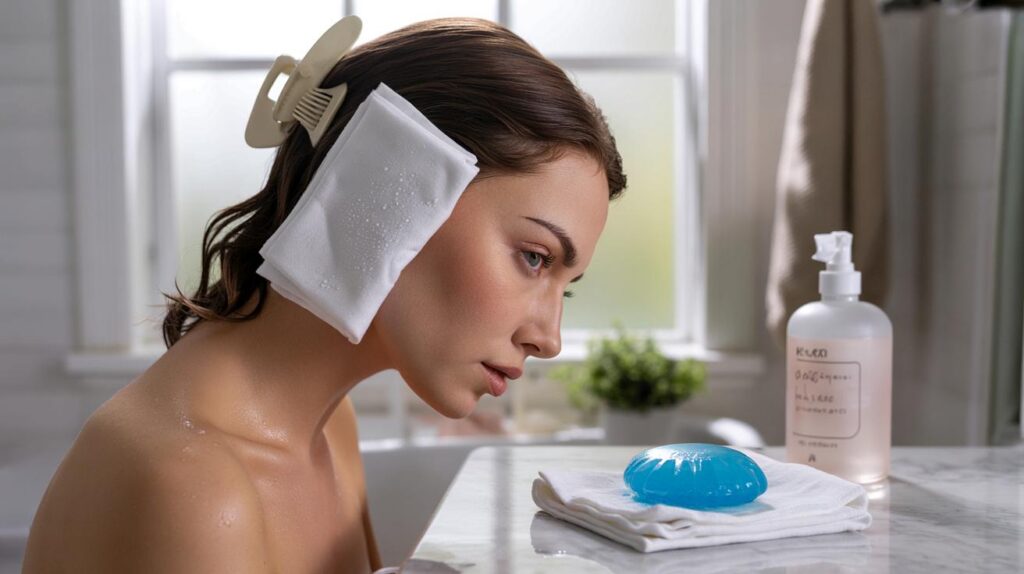
The scalp isn’t dramatic by nature. It just wants a steady climate, a gentle wash, and a bit of respect. Heat, sweat, tight ponytails and colour sessions push it over the edge, and suddenly it’s prickly, itchy, loud. That’s when a cool compress feels less like skincare and more like first aid — simple, immediate, almost old-fashioned. And quietly brilliant.
I first noticed it on the 8:12 to Clapham, forehead sweating under a wool beanie in March because London can’t agree on a season. My scalp felt electric, like a fizzing can about to open. I took the beanie off, wrapped a chilled bottle of water in a scarf and pressed it at the nape of my neck. Two stops later, the itch dialled down. By Balham, the urge to scratch had gone, replaced with that clean, post-rain feeling.
It wasn’t a miracle cream. It was cold meeting skin. The switch flipped.
Why a cool compress calms an angry scalp
You know that bliss when a cold flannel hits your forehead on a feverish day. Your scalp responds the same way. Blood vessels shrink a touch. Nerve endings fire less. The whole area gets quieter. It’s basic physiology with a domestic tool, and it’s oddly satisfying.
I saw it with a runner friend who lives in high ponytails. After a 10K on a sticky morning, her scalp looked flushed across the hairline. She pressed a refrigerated cotton cloth along her parting while we stretched by the track. Five minutes in, the pink faded. Her hands stopped hovering to scratch. Estimates suggest up to half of adults will deal with dandruff or itch at some point, which makes this tiny trick feel almost communal.
There’s a science-y layer too. Cold nudges the skin’s “cool” receptors (think TRPM8), which can dampen the itch signal travelling to your brain. The gentle vasoconstriction reins in redness and swelling after friction or heat. Lower temperature also slows sebum oxidation, so the scalp smells and feels fresher for longer. *Your head deserves quiet.*
How to add a cool compress to your hair routine
Keep it easy. Wet a clean cotton cloth with cold tap water, wring it out, and pop it in the fridge while you shower. After rinsing and towel-drying, fold the cloth and press it along the hairline, crown and nape for 2–3 minutes each. Total time: 10–15 minutes. Think of it as a pause before styling, like letting dough rest before baking.
Swap the cloth for a soft gel pack wrapped in a thin T‑shirt on days you need targeted relief. The sweet spot is cool, not arctic — roughly fridge-cold. If you’re in a rush, mist the scalp with chilled rose water or a light, fragrance-free tonic, then press with your fingers. We’ve all had that moment when everything feels too much and the scalp joins the chorus. This is the off button.
Go gentle when you’re fresh from a colour service or dealing with flakes. **Never apply ice straight to skin.** It can shock the area and make irritation worse. Short, frequent sessions beat one marathon chill. Let’s be honest: nobody actually does that every day. Build the ritual around moments you already have — post-run, after blow-drying, or before bed on warm nights.
“Cold doesn’t fix everything, it just gives the scalp space to settle,” a London stylist told me. “When the scalp relaxes, hair behaves better too.”
- Fridge-ready cloth in a zip bag
- Small gel pack wrapped in an old cotton tee
- Chilled, fragrance-free scalp mist
- Timer on your phone set to 12 minutes
- Loose clip to lift hair for easier access
When it really helps — and when to skip
Think of heat, friction and stress as the three triggers. After a long commute in a hat. After a workout under a cap. After a tight bun day or heavy dry shampoo. A cool compress eases the rush, so your scalp isn’t negotiating styling on top of irritation. Use it after washing before heat tools, or on no‑wash days when your head feels “busy”.
If the skin is broken, oozing, or painfully tender, press pause and speak to a professional. Skip menthol or essential oils if your scalp is sensitive; cold water alone is a quiet hero. **Cold turns the volume down on the itch**, it doesn’t cancel underlying causes like product build-up or dermatitis. Pair it with kind routines — fewer rough brushes, lighter hold, careful towel drying.
There’s a summer angle too. Sun on the scalp is sneaky. A hat helps, and a cool compress at day’s end helps more. Ten minutes at the nape can also soothe tension headaches that make the scalp feel tight. On winter radiators-and-beanies days, a gentle chill rebalances that dry heat flush without adding another product. **Fifteen minutes, not more.** Enough to calm, short of numbing.
A small ritual that changes the mood of your hair days
What I like most is that it asks for nothing fancy. The cool cloth turns a noisy, itchy morning into a manageable one. Your blow-dry sits better because your scalp isn’t fighting you. You’re not scratching between emails. You just feel more like yourself, and that tends to show up in the mirror.
Some will turn it into a full spa vibe with peppermint hydrosol and a silk robe. Others will grab the nearest clean tea towel and get on with it. Both win. Share the trick with a friend who keeps saying their scalp “hates” heat. They’ll text you a heart emoji the first time the itch fades before the kettle boils.
| Key points | Details | Interest for reader |
|---|---|---|
| Cooling calms nerves and redness | Cold engages TRPM8 receptors, lightly constricts vessels, slows the itch signal | Quick relief without new products or spend |
| Make it a post-wash or post-workout step | 10–15 minutes with a fridge-cold cloth or wrapped gel pack | Fits into routines you already do |
| Keep it safe and gentle | No bare ice, avoid broken skin, go fragrance-free if reactive | Comfort without flare-ups or guesswork |
FAQ :
- Can a cool compress help dandruff itch?Yes. Cooling dials down itch perception and redness, so flakes bother you less while you tackle build-up with wash-day care.
- How cold should it be?Fridge-cold is ideal — soothing, not stinging. You want calm, not numb.
- Can I use it after a colour or bleach appointment?Yes, if the scalp isn’t broken or raw. Use plain cold water on a soft cloth and keep sessions short.
- What can I add to the compress?Try chilled rose water or aloe vera if your skin tolerates them. Skip strong essential oils on a reactive scalp.
- How often works best?Whenever the scalp feels hot, tight or itchy. Many people find 3–4 times a week around heat or workouts keeps things settled.



Loved this—simple and actionable. I’ve definitley noticed “hot scalp” days after blow‑drying. If I swap the cloth for rose water like you suggest, should it be fragrance‑free only? My skin tolerates aloe, but menthol burns. Any tips to avoid frizz while pressing along the hairline?
Genuine question: if cooling causes vasoconstriction, could frequent use slow nutrient delivery to follicles and worsen shedding, or is the effect too mild/short to matter? I’d love a source beyond TRPM8 mentions.