
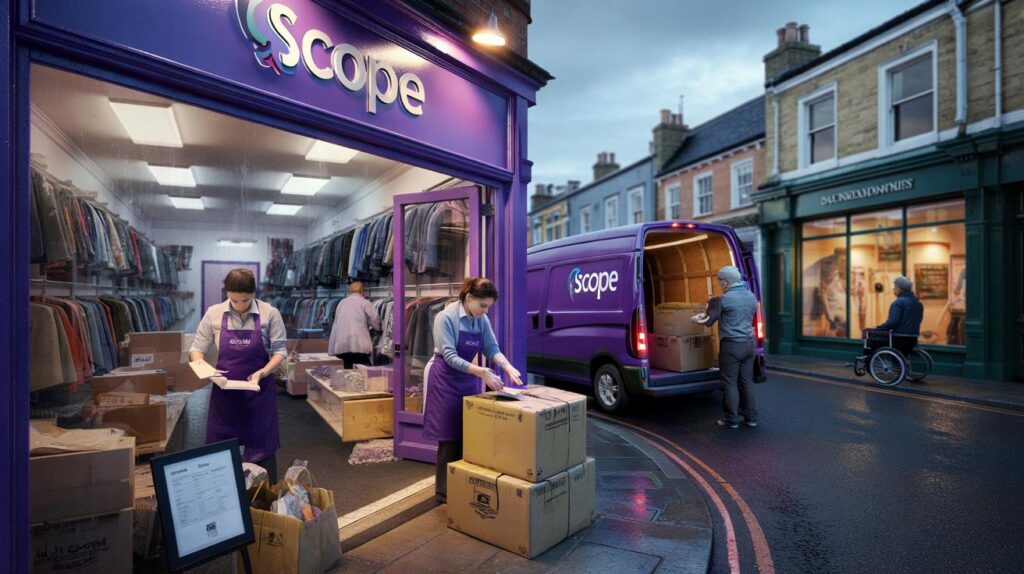
Shoppers across England and Wales face emptier windows as a well-known charity chain reshapes its footprint and counts rising costs.
Scope, which runs more than 130 shops, has set dates for six closures while it reassesses dozens more sites after a difficult year.
What’s happening to Scope’s high street shops
The disability equality charity plans a fresh round of closures on top of a large cutback earlier in 2024. Six branches will close between 30 August and 27 September. The Alton store shut its doors first, ahead of closures in Bishop’s Stortford, Huntingdon and Newmarket on 6 September. Beverley and Fleet follow on 27 September.
Six closures in four weeks, a projected £1.5 million shop-trading loss this year, and 77 of 138 sites under review.
The charity confirmed that retail trading faces a deficit this financial year. Management started a consultation after reporting that the shop estate would make a £1.5 million loss. Alongside the near-term schedule, Scope is reviewing 77 sites across its 138-strong network to determine which stores remain viable.
Closure dates and locations
| Location | Closure date |
|---|---|
| Alton | 30 August |
| Bishop’s Stortford | 6 September |
| Huntingdon | 6 September |
| Newmarket | 6 September |
| Beverley | 27 September |
| Fleet | 27 September |
This autumn’s closures sit on top of a swift contraction earlier in the year. By late August, 50 shops had already gone. Twenty-three shut by the end of March, another 11 closed in May, and 15 closed over the summer months, before Alton joined the list on 30 August.
Why a charity retailer is under pressure
High street retail has grown tougher. Charities face many of the same headwinds as commercial chains. Landlords seek higher rents on better sites, energy contracts cost more than they did two years ago, and business rates take a larger slice of income. Footfall has not fully recovered in some towns, especially where office workers have not returned in numbers.
Donations also vary by region and season. Stores rely on a steady stream of quality clothing, household goods and furniture. When donations fall or quality dips, takings drop. Some donors now sell higher-value items directly through apps, which reduces supply to shops. At the same time, wages have risen, and recruiting volunteers can prove harder in areas with tight labour markets.
Scope reported £24 million of retail income last year, against £24.7 million in shop costs, before this year’s projected £1.5 million loss.
Margins in charity retail can look thin even in stable times. Every extra pound of energy, distribution or lease cost has an effect. Where leases include break clauses, charities often use them to leave loss-making sites quickly and focus on locations with stronger donor bases and steadier sales.
What it means for shoppers, donors and volunteers
Customers will see closing-down notices appear over the coming weeks. Most stores run short final sales to clear stock locally. Where stock remains, teams usually transfer it to nearby branches to avoid waste. Volunteers often move to neighbouring shops, especially in towns with more than one site.
Donors can still give goods as normal until the final trading day. Shops that run furniture collections will confirm or reschedule any pending bookings. If a collection cannot go ahead, staff will point donors to the nearest branch that can help.
- If your branch is closing, ask staff which nearby shop will accept donations next week.
- Use Retail Gift Aid on donated goods so the charity can claim an extra 25p per £1 raised.
- Keep receipts for bought items; statutory consumer rights still apply on faulty goods.
- Consider higher-demand categories: quality coats, knitwear, small appliances and furniture sell quickly in autumn.
- Offer a regular volunteering slot at another local store to support the transition.
Retail Gift Aid: a quick example
When you donate goods and agree to Retail Gift Aid, the charity sells items as your agent and claims Gift Aid on the sale proceeds. If your donations sell for £40, Gift Aid can add £10, turning that effort into £50 for services. A few forms at the till make a noticeable difference at scale.
How the closures affect communities
Charity shops do more than sell second-hand finds. They act as community hubs, offering low-cost essentials and a social space for volunteers and regulars. Closures reduce that presence on the high street. People who relied on nearby branches may face longer trips, especially if they travel by bus or rely on mobility aids.
Scope says it will keep a visible presence where stores remain strong and where demand for its services runs high. The charity has signalled that it wants fewer, healthier shops. That usually means focusing on towns with high donation volumes, busy pedestrian routes and affordable leases.
Shoppers still want pre-loved fashion and household bargains; the question is where that demand meets viable rents and steady donations.
The bigger picture for Britain’s high streets
Many town centres now depend on a mix of food, leisure and value retail. Charity shops fit that model, but only if the sums add up. Empty units in some seaside and market towns show how fragile local retail ecosystems have become. When a single anchor store closes, the surrounding footfall can dip and small shops feel the strain.
At the same time, second-hand retail remains popular with budget-conscious families and sustainability-minded shoppers. That demand helps surviving stores trade well. A smaller, better-located estate can create a more reliable income stream for a charity, especially if it invests in digital selling for niche items.
What to watch next
Look for updates after the September closures. If the review of 77 sites leads to further changes, new lists will follow in stages tied to lease dates. Expect more consolidation into towns with strong Saturday trade, good parking and active donor networks. Stores with successful furniture departments and e-commerce links often make the cut.
How you can cushion the blow locally
Residents who want to keep a shop open can help in practical ways. Consistent donations keep rails full. Weekend volunteering covers busy hours. Retail Gift Aid lifts income without extra cost to donors. Local landlords sometimes agree shorter, flexible leases that reduce risk. Town councils can promote bag-drop days and reuse events before peak seasons.
For households facing rising living costs, charity shops still offer value. Plan visits around stock cycles. New donations typically reach the shop floor midweek after weekend sorting. Autumn brings coats, boots and schoolwear; January brings homeware and fitness equipment from clear-outs.
For Scope’s retail team, the next month is about orderly exits, staff support and stock transfers. For shoppers, it is a reminder that even trusted high street names adapt fast when costs rise and donations shift. Keep an eye on window posters, ask about the nearest open branch, and make the most of the pre-loved market while it remains on your doorstep.



Brutal for towns like Beverley and Fleet. High rents, energy, and weaker footfall are a nasty mix, but losing community hubs hurts most. If your shop’s closing, please keep donating to the nearest branch, tick Retail Gift Aid, and consider a temprorary volunteer slot so staff aren’t overstretched. With 77 sites under review, nothing feels secure—clear timelines and relocation info would help donors, volunteers and regular shoppers plan instead of guessing.