
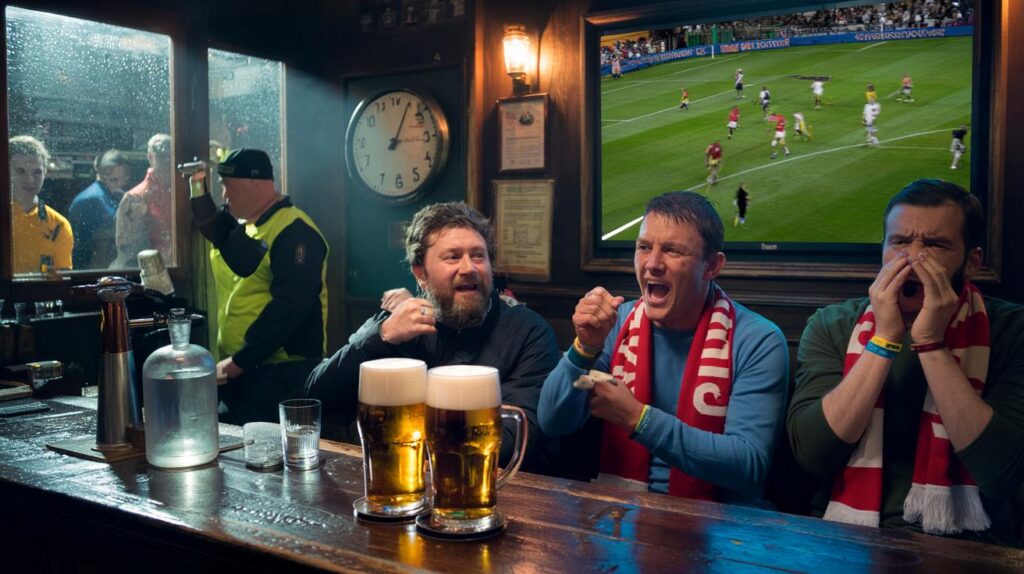
Fans face midnight dilemmas as summer fixtures creep deeper into the night and councils weigh community impacts and policing costs.
Ministers are preparing a two-hour licensing extension for pubs in England as late World Cup kick-offs loom next summer, with venues braced for 11pm and possibly 2am starts driven by North American heat.
What the two-hour rule would do
The Home Office is expected to use powers under the Licensing Act 2003 to relax hours on selected dates of “exceptional national significance”. If signed off, pubs in England that usually close at 11pm could trade until 1am for specified matches without applying for individual temporary permissions.
The order would typically extend on-sales of alcohol, regulated entertainment and late-night refreshment for the hours stated. Existing licence conditions would still apply, including requirements on door supervision, noise control and capacity limits. The measure would not force pubs to open later; it simply allows them to do so lawfully if they wish.
Pubs that normally shut at 11pm could legally stay open until 1am on the designated World Cup match nights.
The likely aim is to catch late evening kick-offs that finish around midnight, allowing fans to see the final whistle and leave in an orderly way. Ministers are expected to limit the relaxation to a small number of dates covering key fixtures rather than the entire tournament window.
Who decides and when
The Home Secretary can lay a Licensing Hours Order before Parliament after consulting police, local authorities and the hospitality trade. These orders have been used for royal jubilees, royal weddings and recent international football tournaments. Officials generally publish the list of dates several months in advance so venues can plan staffing and security.
Government sources indicate the World Cup will qualify as an event of national significance, especially if England matches fall late at night. The final schedule of fixtures and kick-off times usually lands after broadcast and host-city discussions conclude.
Why late kick-offs are likely
Fifa is expected to set local evening kick-offs in North America to protect players and fans from extreme daytime heat. That translates to late-night starts in the UK—commonly 11pm, and on some days potentially 2am—once time zones are taken into account. Broadcast partners in Europe and elsewhere have been involved in those discussions for months.
Some England games could begin at 23:00 UK time, with a handful of fixtures pencilled as late as 02:00 to dodge peak temperatures.
A senior figure in the North and Central American confederation recently signalled that lessons from past tournaments would shape this calendar, balancing player welfare, safety and global TV audiences. While presidents and premiers may comment, the tournament’s scheduling sits squarely within Fifa’s jurisdiction.
What it means for fans
- For an 11pm kick-off: expect the final whistle around 12:50am if there is added time. A 1am closing window covers that finish.
- For a 2am kick-off: the national extension would not be enough. Pubs would still need a Temporary Event Notice to trade beyond 1am.
- Public transport thins out after midnight. Fans should plan taxis, lifts or night services ahead of time.
- Venues may use wristbands or ticketing for capacity control. Bring valid ID for Challenge 25 checks.
- Noise rules remain in place. Expect stricter door policies and controlled dispersal after the final whistle.
Impact on trade and communities
Hospitality leaders anticipate a welcome boost after a difficult year of energy costs and wage pressures. A modest two-hour window can lift revenue on specific nights while keeping compliance straightforward. Residents and councils will focus on noise, litter and late-night transport, so venues that plan stewarding and dispersal well are likely to see fewer complaints.
To frame the stakes, here is a simple projection. It is illustrative, not a forecast.
| Scenario | Estimated pub takings per late match | Likely local impacts |
|---|---|---|
| 11pm England group match, 1am closing | £400–£900 uplift from two extra hours | Manageable dispersal; minimal extra policing if planned |
| Quarter-final at 11pm, extra-time and penalties | £700–£1,300, depending on capacity | Higher noise risk; taxi pinch-points near closing |
| 2am kick-off (TEN required beyond 1am) | Varies; many venues may opt out | Sparse transport; neighbours more sensitive to late dispersal |
What licensees should do now
Operators do not need to wait for the order to start preparing. A clear plan reduces risk and maximises trade on the night.
- Check your premises licence conditions for door staff, noise limiters and non-standard timings.
- Line up a roster that covers an extra two hours without breaching rest rules.
- Review your incident log, queuing layout and post-match dispersal plan.
- Talk to neighbours early; a letterbox note with contact details lowers complaint rates.
- Book taxis and private hire partners in advance; display numbers prominently.
- If you intend to open beyond 1am for any 2am kick-offs, prepare Temporary Event Notices now.
- Stock smarter: smaller draught top-ups, more low/no alcohol options, water jugs on the bar.
- Brief staff on Challenge 25, refusals and managing celebratory flashpoints after big results.
What about Wales, Scotland and Northern Ireland
The expected order would apply in England and usually Wales. Scotland runs its own regime: local licensing boards can grant general or targeted extensions, and the Scottish Government can encourage a coordinated approach for major events. Northern Ireland operates a separate licensing system with its own late opening permissions. Operators outside England should speak to their local board or council early to understand any national or city-wide plans.
Key dates and how the nights could unfold
The 2026 tournament is scheduled for summer, with detailed kick-off times following negotiations between organisers, broadcasters and host cities. If the government follows previous practice, the licensing order will list specific dates tied to England fixtures, possibly the semi-finals and the final. Venues should expect a short, targeted list rather than a blanket month-long relaxation.
Broadcasters will confirm their coverage plans nearer the time. If England land in a group with West Coast fixtures, later UK times become more likely. Early knockout rounds in central or eastern time zones could fall around 11pm here, which the two-hour extension is designed to accommodate.
The practicalities behind the headlines
A Temporary Event Notice is the fallback for any date not covered by the government order, or where trade needs to continue beyond 1am. Apply in writing to your local authority, notify police and pay the small fee. Standard TENs require at least 10 working days’ notice; late TENs exist but carry tighter limits. Premises and individuals have annual caps, so plan carefully if multiple late matches stack up.
For fans, the biggest pinch points will be travel and next-day commitments. Night services vary widely by city. If you work the next morning, consider pacing, alternating alcoholic drinks with water and planning your exit before stoppage time begins. Venues may stagger last orders by area to prevent a rush, and some will close food service earlier to reduce litter outside.
The national two-hour extension is a nudge towards celebration, not a free-for-all. Planning will decide whether the night feels festive or fraught.
If you run a small neighbourhood pub, think about a pre-booked screening model with seated service, capped numbers and a simple snack menu. That approach controls noise and keeps costs down while still capturing the atmosphere. Larger city-centre venues can lean on ticketing, extra stewards and radio links with neighbouring sites to manage flows between premises after the final whistle.
For community groups, there is room to organise family-friendly screenings earlier in the evening on non-England nights, using community halls and soft drinks sponsorships. That spreads footfall and reduces pressure on late-night services. Insurance, safeguarding and TV licence requirements still apply, so check the basics before you commit.



Honestly, my body clock taps out at 11:07. Are we sure “late kick-offs” isn’t just code for late hangovers? Definately need pubs to serve toasties and coffee with those 90+7s.