
Britain’s homes brim with orchids, yet countless plants fade indoors for reasons that feel harmless on busy weekdays and unnoticed until leaves yellow.
You can turn things around. The fix begins with roots, light and where you park that pretty pot cover. Small changes bring fast results.
What yellow leaves really mean
Yellowing signals stress. Roots often sit wet for too long. Oxygen disappears. Tissues break down. Leaves lose chlorophyll and fade. That is root rot. It starts below the surface. It moves up the plant.
Light misfires push the same symptom. Harsh midday sun scorches tissue. Deep shade starves growth. Cold draughts slow metabolism. Hot radiators dry leaves. Each pathway ends with tired, yellow foliage.
Most fading starts at the roots. Wet, stale compost suffocates them. The leaves tell you late, not early.
Healthy Phalaenopsis roots look firm and green after watering, and silvery when dry. Temperature near 18–24°C suits them. Humidity around 40–60% keeps leaves turgid. Bright, indirect light feeds photosynthesis without burn.
The mistake too many people make
The cachepot trap
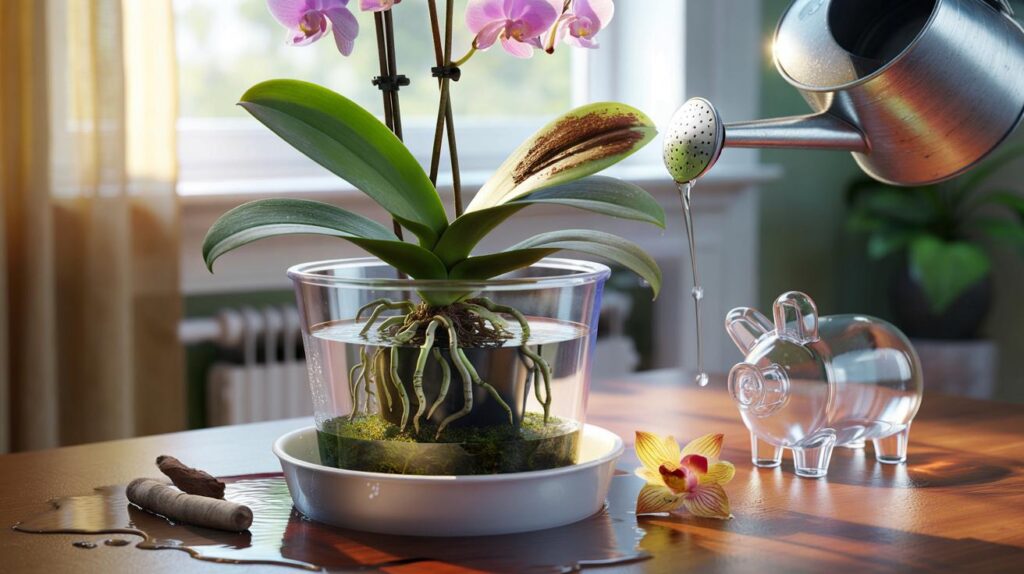
Decorative covers hide water. The inner pot drains after watering. The saucer or cover holds a puddle. Roots sit in it for hours. Rot follows. Many households repeat this cycle twice a week.
Never leave water standing in a cover pot. If in doubt, tip it out after 10–15 minutes.
Clear nursery pots help you see roots and moisture. Opaque ceramic hides danger. A quick lift and pour saves plants.
Nine warning signs you should act on today
- Lower leaves yellow first, starting at the tip and moving to the base.
- Leaves feel soft and wrinkled even though the compost is wet.
- Roots look brown or mushy through a clear pot.
- A green film of algae lines the pot wall.
- Brown, sharp-edged patches appear on leaves after strong sun.
- The newest leaf emerges smaller than the last.
- Buds dry and fall before opening.
- The pot smells sour or swampy.
- Water still sits in the cachepot 15 minutes after watering.
A quick, precise rescue plan
Lift the plant from its pot. Rinse the roots under lukewarm water. Trim black, hollow or mushy sections with sterilised scissors. Keep only firm, white or green roots. Dust the cut ends with ground cinnamon on leaves and crown only. Keep it off roots.
Repot in fresh medium-grade orchid bark with a little sphagnum for moisture. Use a pot with ample drainage. Set the crown above the mix. Stake if wobbly. Water to settle bark, then drain fully.
After surgery, give light and warmth. Water again only when roots turn silvery and the pot feels light.
How to water by numbers
- Target: water every 7–10 days in spring and summer, every 10–14 days in autumn and winter.
- Volume: use roughly 20–25% of the pot’s volume per watering, then drain completely.
- Weighing trick: note the pot’s weight just after watering and when “thirsty”. Water when it feels closer to the lighter mark.
- Soak for dehydration: sit the pot three-quarters deep in water for 10 minutes, then drain. Use this only to rehydrate a dry plant.
Light and heat that keep leaves green
Place the plant near a bright east window, or a south window with a sheer curtain. Avoid midday beams. Aim for bright shade with a soft shadow. Bathrooms suit many homes if they offer daylight. They bring gentle humidity.
Keep temperatures stable. Nights near 18–19°C help set spikes. Days around 21–24°C keep growth steady. Move plants away from radiators and draughty doors. A small fan on low improves air flow without chilling leaves.
Humidity without fuss
- Group plants to create a microclimate.
- Use a pebble tray with water below the pot base, not touching it.
- Mist in the morning only, and not into the crown.
When to cut yellow or black leaves
Plain yellow leaves near the base often mark old age. You can leave them until they drop. If you prefer tidy, cut close to the stem with clean tools. Black patches or spreading spots need prompt removal. Sterilise blades between cuts. Bin affected tissue.
Yellow can wait; black travels. Remove black lesions fast and keep the crown dry.
A simple table to keep you on track
| Room temperature | Pot size | Watering frequency | Fertiliser plan |
|---|---|---|---|
| 18–20°C | 9–12 cm | Every 10–14 days | Quarter strength, every second watering |
| 21–24°C | 9–12 cm | Every 7–10 days | Quarter strength, weekly |
| 21–24°C | 12–15 cm | Every 10–12 days | Quarter strength, weekly |
| 25°C+ | Any | Check twice weekly | Quarter strength, weekly; add monthly flush |
Three fast diagnostics you can do now
- The finger test: push a finger 3–4 cm into the bark. If it feels cool and damp, wait.
- The root colour test: green means wet; silver means time to water.
- The shadow test: hold your hand over the plant at midday. A soft shadow means good light.
Fertiliser, water quality and a quick cost check
Feed “weakly, weekly”. Use a balanced, urea‑free fertiliser at quarter strength in the growing season. Many growers aim for 100–150 ppm nitrogen. If that sounds heavy, follow the label at one‑quarter dose. Rinse with clear water once a month to prevent salt build‑up that scorches roots and yellows tips.
Hard tap water can leave deposits and raise pH. Rainwater or filtered water keeps salts down. If you must use hard water, flush more often. Avoid ice cubes. Cold shocks roots and slows repair.
Are you really wasting money and water? Run a quick check. If you own five orchids and flush 800 ml through each pot twice a week, unused drainage adds up to 8 litres. Add fertiliser concentrate at, say, 10 ml weekly from a £12 bottle, plus metered water and replacement bark every year. In larger collections, those small leaks can nudge £10 in a single busy week, especially if mistakes lead to plant losses.
Repot timing and media choices that prevent yellowing
Repot every 12–18 months or when bark turns spongy and dark. Fresh bark boosts airflow and cuts rot. Pick medium bark for most Phalaenopsis. Add a small pinch of sphagnum if your home runs dry. Skip dense garden compost. It collapses, holds water and starves roots of air.
Fresh, airy bark plus full drainage keeps roots breathing. Green leaves follow healthy roots.
Extra help: a practical routine you can copy
Morning check: lift each pot for weight, scan roots, and feel the bark. Water only the light ones. Midweek light check: shift plants a hand’s width if shadows look harsh. Weekend care: wipe leaves with a damp cloth, flush with clear water, and empty every cachepot after 10 minutes. Note dates on a sticky label. Patterns guide your next move.
Try a small experiment. Split your orchids into two groups. Group A gets a strict drain after each watering and bright, filtered light. Group B keeps old habits. Track leaf colour and root condition for four weeks. Most homes see clearer leaves and firmer roots in Group A. Once you see the difference, the routine sticks.



This definately explains my yellow leaves. My Phals sat in a pretty cachepot with a secret puddle; I never tipped it out. After following the 10–15 min drain rule and switching to clear pots, roots stopped turning mushy.