
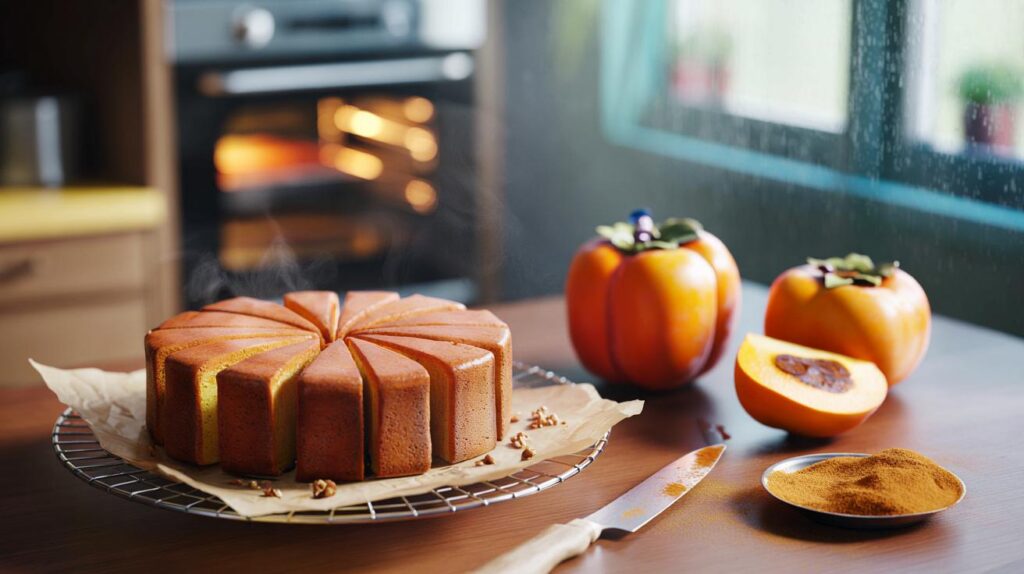
Rain gathers on the pane while a bright orange persimmon waits, hinting at warmth, comfort and an easy afternoon bake.
Across home kitchens, a soft, amber-coloured cake is slipping into the seasonal rotation. The humble persimmon, usually eaten raw, turns to satin once baked, lending gentle sweetness, a tender crumb and a scent that feels like central heating for the soul.
The autumn bake you did not know you needed
Persimmons arrive just as evenings draw in. Their honeyed flesh brings body without heaviness, which suits a weekday cake. You get colour, natural sugars and a lovely sheen, all from fruit that often sits overlooked in the fruit bowl. This is a simple formula: ripe pulp, a light whisked base and low, steady heat.
Target about 350 g of peeled persimmon pulp from 2 large fruits for a soft, custardy texture.
What you will need
- 2 large ripe persimmons (about 350 g pulp once peeled and de-stemmed)
- 100 g light brown or golden caster sugar
- 2 medium eggs
- 90 g plain flour
- 40 g neutral oil (rapeseed or sunflower)
- 11 g baking powder
- Pinch of fine salt
- 1 tsp vanilla extract (optional)
Know your fruit before you bake
Ripeness and variety
Two common persimmons reach British shelves: squat Fuyu and acorn-shaped Hachiya. Fuyu tastes sweet while still firm, and slices neatly. Hachiya is astringent until fully soft and almost jelly-like. That astringency comes from tannins that disappear when the fruit turns to a quiver.
| Variety | Texture when ripe | Best for | Ripeness cue |
|---|---|---|---|
| Fuyu | Crisp to tender | Chunks, light bakes, salads | Gives slightly when pressed |
| Hachiya | Very soft, almost jammy | Purées, puddings, dense cakes | Feels like a water balloon |
If your persimmon tastes furry or drying, it is unripe. Leave it by a banana for a day or two and try again.
Method at a glance
Bake at 170°C fan for 30–35 minutes. Cool before slicing to keep the crumb plush and intact.
Why this batter stays so tender
Persimmon purée brings soluble fibre and natural pectin. These bind water and stop the crumb drying out. Oil coats the flour, which reduces gluten development and keeps the bite soft. The whisked eggs add structure without weight. Baking at a moderate 170°C sets the cake gently, so the top browns while the centre stays silky.
Flavour upgrades that make sense
- Crunch: scatter chopped toasted walnuts or flaked almonds on the batter before baking.
- Spice: a pinch of cinnamon works; a tiny shaving of tonka bean is aromatic and potent, so go sparingly.
- Fruit: fold through small pear dice for extra juiciness that echoes the persimmon.
- Citrus: a teaspoon of finely grated orange zest brightens the sweetness.
How to serve it
This cake shines slightly warm. A spoon of thick yoghurt adds tang. Lightly whipped cream turns it into pudding. Bitter black tea, smoked tea or a straightforward morning coffee all pair well. For a festive note, dust with icing sugar or spoon over a few cubes of orange peel in syrup.
Make it work for your week
Storage and freezing
- Room temperature: 2 days in an airtight tin.
- Fridge: up to 5 days; bring to room heat for 30 minutes before eating.
- Freezer: wrap slices and freeze for a month. Defrost on the counter, then warm briefly in a low oven.
Allergens and swaps
- Flour: a 1:1 gluten-free blend with added xanthan works; reduce oil to 35 g to avoid gumminess.
- Eggs: for an egg-free version, use 2 flax “eggs” (2 tbsp ground flax + 6 tbsp water). The crumb will be denser.
- Sugar: coconut sugar brings caramel notes; keep the weight the same for balance.
What to do if your fruit is not ripe
Speed up ripening by placing persimmons in a paper bag with a ripe banana. Warm kitchens help, as does patience. If only firm Fuyu is available, grate it and leave it with a teaspoon of sugar for ten minutes before puréeing. The salt-and-sugar approach draws out juice and softens the shreds for blending.
Small, useful numbers
- Yield: about 8 slim slices from an 18 cm round tin.
- Fruit ratio: roughly 40% fruit to total batter by weight for a plush crumb.
- Target internal temperature: 96–98°C at the centre if you use a probe.
Why persimmons deserve a place in your basket
Persimmons carry natural sugars, fibre and a soft hit of vitamin A. Baking concentrates flavour without needing much fat. You also sidestep waste: over-soft fruit that looks past its best becomes perfect purée. If you find a tray of marked fruit at a discount, this recipe turns that bargain into a gentle, amber cake with real character.
Two final ideas to stretch the theme
Turn the batter into 12 mini cakes by using a muffin tin and baking for 18–20 minutes. The timing suits weekday snacks and packed lunches. For a brunch twist, bake the batter in a shallow tin, then spoon over a quick yoghurt-honey glaze while warm. The glaze sinks into the top and sets to a thin sheen.
Leftover persimmon purée does not go to waste. Stir a spoonful into porridge, blend into smoothies for body, or whisk into vinaigrette with lemon and olive oil for a salad that welcomes roasted squash and goat’s cheese. One fruit, several small comforts, and a cake that feels like a hug when the forecast says showers.



Just tried this with 2 very ripe Hachiya (about 360 g pulp) and a teaspoon of orange zest + walnuts. 170°C fan for 33 minutes gave me a silky, custardy crumb and exactly 8 tidy slices. Loved the tip to slice when barely warm—edges stayed clean. New autumn staple, thank you! 🙂
11 g baking powder to 90 g flour feels high—nearly 2 1/2 tsp. Is that intentional because of the high persimmon moisture? Mine rose fast then cracked and tasted a touch tinny. Would 7–8 g still give enough lift with the whisked eggs, or should I reduce oil instead?