
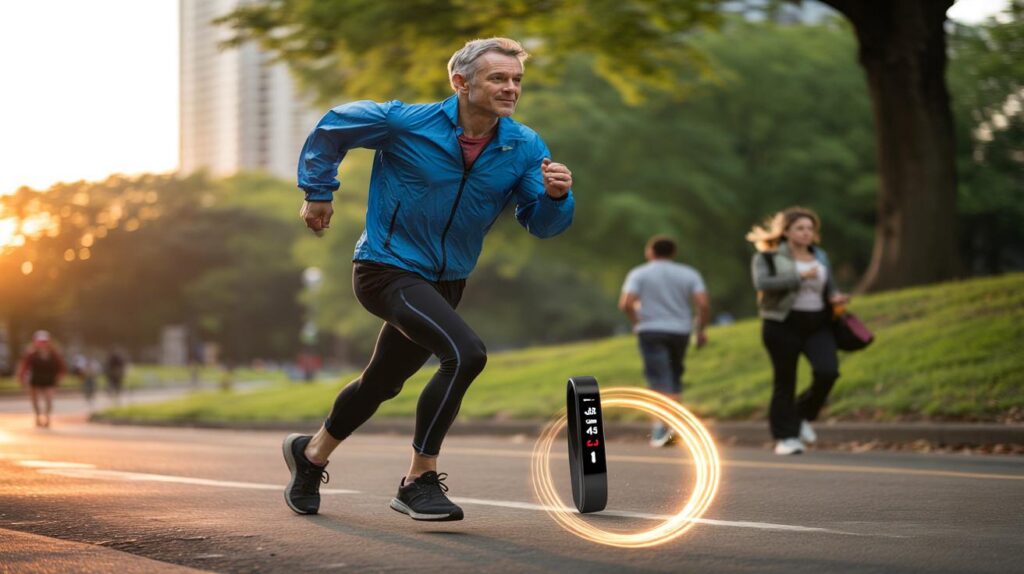
Step counters buzz, pavements brim with trainers, and the daily march continues, while many walkers quietly wonder whether their effort truly counts.
Ten thousand steps has become the world’s favourite fitness target. Yet new evidence suggests the way you walk may matter as much as how far you go. An exercise scientist now points to a tiny tweak that could turn an everyday stroll into a stronger shield against rising weight, blood pressure and blood sugar.
Why 10,000 steps is not the whole story
Large studies in recent years show that health gains begin well below 10,000 steps, often at 7,000 to 8,000. That does not make 10,000 useless. It remains a practical, motivating anchor for busy people. But a 2024 analysis in a leading sports medicine journal finds that both quantity and quality of movement link to five red flags for metabolic syndrome: a larger waistline, high triglycerides, low HDL cholesterol, raised blood pressure and elevated glucose.
Moving more helps. Moving a little faster at times helps even more. The benefits stack when you combine both.
Dr Elroy Aguiar, an exercise scientist involved in that work, frames the idea simply: keep your daily volume, then sprinkle in periods of greater intensity. For most walkers, that means a faster minute here and there, plus a regular block of brisk pace.
The simple trick: one brisk minute, every day
The eye-catching finding is surprisingly modest. When researchers examined the single highest minute of activity registered each day on wearables, that tiny peak strongly tracked with whether people carried one or more metabolic risk factors. In plain terms, a short burst appears to signal healthier physiology.
One minute of near-maximal walking effort, repeated day after day, can nudge key markers in the right direction.
This does not require sprints or gym kit. You can fold it into normal life: power up one hill, stride fast between platforms, or charge the last block home. If you already hit 10,000 steps, you are halfway there. You only need to shift a sliver of those steps up a gear.
How fast counts: cadence and effort
- Brisk walking typically starts around 100 steps per minute for many adults.
- A “push minute” feels hard but controlled; you can talk in short phrases, not full sentences.
- Use a perceived exertion of 7–8 out of 10 for that single minute.
- Warm up for a few minutes, then hit your minute, and settle back to normal pace.
Stacking quality and quantity: what it does to your body
Why does a small dose of intensity matter? Walking more burns energy and trims dangerous belly fat over time. Add faster spells and you recruit more muscle fibres, raise heart rate higher, and challenge blood vessels and glucose regulation in a useful way. Those effects ripple into everyday health.
A brisk walk can lower blood pressure within 15–20 minutes, and the effect can last for much of the next day.
Short bouts after meals also help tidy up blood sugar, with benefits that can persist for a day or two. People who carry extra weight, or who sit in the grey zone of prediabetes or borderline hypertension, often see the clearest early wins. Over weeks and months, consistent activity moves all five metabolic risk factors in a healthier direction.
A week to try
Here’s a simple way to make 10,000 steps work harder without turning your life upside down.
| Day | Plan | Focus |
|---|---|---|
| Mon | 10,000 steps with 1 x 1-minute push | Stairs or gentle hill |
| Tue | 8,000–10,000 steps + 20–30 minutes brisk | Cadence near 100–120 spm |
| Wed | 10,000 steps with 2 x 1-minute pushes | Separated by easy walking |
| Thu | Active commute or errand walk | Upright posture, arm swing |
| Fri | 10,000 steps + 30 minutes brisk | Flat route, steady pace |
| Sat | Long scenic walk or light jog | Enjoyable pace, low stress |
| Sun | Recovery walk, mobility, easy steps | Keep the habit alive |
Small bursts that fit real life
Most people do not want a bootcamp. The new message is kinder: every move counts, and brief spikes count too. You can collect them across the day without a formal workout.
- Walk the last stop. Add one fast minute between two lampposts.
- Use stairs and climb at pace for a single flight.
- Carry shopping for 60 seconds at a purposeful stride.
- Time your minute to the chorus of a song.
- After dinner, loop the block and surge one corner.
Turn ordinary steps into “smart steps” by slotting a focused push into the movement you already do.
Eating, timing and the bigger picture
Pairing walking with smart timing amplifies the return. A short, brisk stroll within 30 minutes of a meal helps blunt the blood sugar peak. Spreading your walking across the day breaks up long sitting spells, which supports better metabolic control. If weekends suit you, bank more steps then; if weekdays are packed, stack mini-pushes into your commute.
Safety, risks and who should be cautious
If you are new to faster walking, start with 15–20 seconds per push and build towards a full minute. Comfortable footwear reduces calf and shin niggles. Hydrate, especially in warm weather. People with chest pain, uncontrolled blood pressure, or foot numbness should speak to a clinician before adding intensity. If you feel dizzy, ease back to an easy pace and try again another day.
Beyond steps: strength, hills and loaded carries
Steps alone do a lot, but your weekly plan gains power with variety. Two short sessions of strength work each week maintain muscle and help regulate glucose. Hills raise heart rate without running. A light rucksack (rucking) spices up a routine walk and boosts energy use; start light and keep good posture. Cyclists and swimmers can borrow the “one-minute push” idea by adding a short surge into a steady session.
How to judge effort without a device
You do not need a smartwatch to make this work. The talk test is reliable. At normal pace, you can chat. At brisk pace, you speak in phrases. During the one-minute push, you manage a few words at a time and feel your breathing rise. Recover to normal before your next burst.
What success looks like after four weeks
Expect better stamina on familiar routes, a slightly lower resting heart rate, and steadier energy after meals. Many people notice trousers loosening at the waist first. Blood pressure readings often drift down on days after a brisk session. Keep a simple log of daily steps, push minutes and how you felt; that record keeps motivation high and helps you spot progress that the mirror can miss.



Tried my first ‘push minute’ up the hill by my house—heart thumping, recovered quick. Feels doable; I’ll tag it onto my commute. Thanks for the nudge! 🙂
Compelling idea, but is the ‘highest minute’ just a proxy for overall fitness or VO2max? Without randomization, correlation != causation. Any trials showing that adding a daily 60‑second surge actually lowers BP/glucose vs control?