
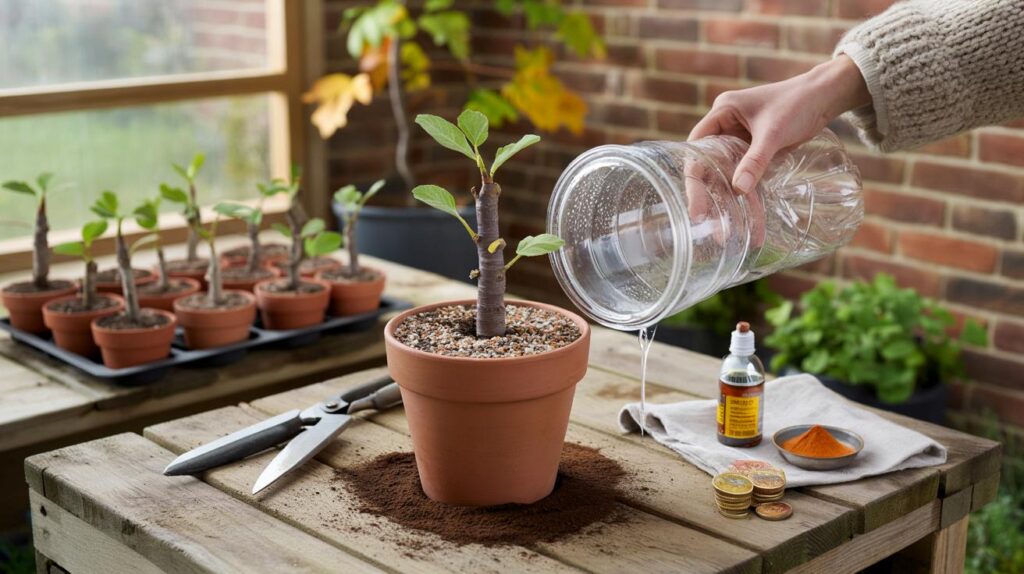
Cooler evenings, shorter days, and a quiet race against frost: gardeners across the country are trying a surprisingly swift trick.
As autumn beds in, a simple horticultural technique is turning fig prunings into future trees in little more than a week. The promise is modest yet striking: a 20 cm cutting, cleanly taken and kept evenly moist, can root fast enough to change next year’s harvest plans.
Why figs, and why now
Figs thrive in sheltered British spots. They shrug off many pests. They ask for little water in summer once established. They reward patience with honeyed fruit.
Autumn suits propagation. Growth slows, yet stems hold stored energy. Air stays damp. Soil stays cool. That mix encourages roots rather than leaves. Many gardeners also prune now, so good material sits ready on the bench.
Target one-year wood about the width of a pencil. Sound, unscarred, and firm. You want four visible nodes and 15–20 cm in length.
The 10-day method at a glance
What you need
- Secateurs sharpened and wiped with alcohol
- Fig cuttings, 15–20 cm long, with 3–5 nodes
- Pots 1–2 litres or a sheltered patch of friable ground
- Substrate: 50% multi-purpose compost, 50% sharp sand or perlite
- A clear cover: cut bottle, plastic cloche, or propagator lid
- Optional: a pinch of cinnamon or powdered charcoal for the cut end
Step-by-step
- Make a straight cut just below a node at the base. Make a slant cut at the top so you never plant it upside down.
- Dust the base with cinnamon or charcoal. This reduces rot. Skip synthetic hormone if you prefer a low-cost approach.
- Fill the pot with the mix. Water once until it drains. Let it stop dripping.
- Push the cutting down so two nodes sit below the surface. Firm gently. Label the variety and date.
- Cover with the clear dome. Leave a small gap for airflow. Place in bright shade, not full sun.
- Check daily. Keep the mix moist, not wet. Vent the cover for 20 minutes if condensation runs.
Moist, not sodden, wins. Aim for substrate that clumps when squeezed but does not drip.
Does the moon change success rates
Plenty of gardeners work by the lunar calendar. They favour the descending moon for rooting, as folklore says sap flows downward. That window often falls in mid to late October. Trial it if you enjoy rhythm and routine. Control your other variables while you do.
Scientists focus on temperature and moisture. They measure success when nights hold above 5°C and the medium stays evenly damp. Both approaches can sit side by side in the same shed. Treat the lunar date as a tidy cue, not a guarantee.
What to expect over the next month
Progress shows in small signs. Buds swell. Bark looks fresher. A gentle tug meets resistance as roots anchor. Do not yank. Test lightly once a week.
| Day | Sign to watch | Your action |
|---|---|---|
| 3–5 | Condensation stabilises inside cover | Vent for a few minutes daily to limit mould |
| 7–10 | Bud swell without leaf push | Hold watering steady, no fertiliser |
| 14–21 | Light resistance on a tug test | Add a thin layer of mix to steady the stem |
| 30 | Tiny new roots visible near drainage holes | Pot on carefully or keep sheltered until spring |
Ten days is enough to see promise. Four weeks is when a young root system earns a move to a larger pot.
Risks, costs and payback
Rot ruins more cuttings than cold. You prevent it with clean tools, airy substrate, and measured watering. If mould appears on the surface, scrape it off and add a little dry sand.
Frost kills soft new roots. Keep pots off concrete. Use a cold frame, an unheated porch, or fleece on icy nights. Aim to hold the root zone above 2°C.
A new fig in a garden centre can cost £20–£35. A home‑raised cutting costs pennies. A pot, some sand, and a label rarely top £5 if you reuse what you own. Expect 50–80% take rates with decent hygiene and a steady hand.
- Yield outlook: 3–7 kg per tree by year three in a warm, sheltered site
- Space: final spread 3–4 metres if untrained; less when fan-trained
- Time to first crop: often two to three seasons after rooting
Where to site and when to move
Place rooted cuttings in a bright, wind-sheltered spot. A south or south‑west wall suits the British climate. Good drainage matters more than rich soil. Add grit to heavy clay. Keep the root ball tight early on.
Container or ground
Pots rein in vigour. That helps fruiting. Start in 3 litres, then step to 7 litres in late spring. Use a loam‑based compost with added grit. Water deeply and let the top 2 cm dry before you water again.
Ground gives faster frames. Plant shallow. Spread roots outward. Mulch with 5 cm of composted bark to hold moisture and suppress weeds. Hold back high‑nitrogen feeds. You want more figs than leaf.
Picking the right wood and variety
Choose one‑year shoots from healthy, productive trees. Avoid shaded, weak wood from the interior. Look for even internode spacing and clean bark.
Hardy choices suit most regions. Brown Turkey stands firm in cool summers. Brunswick and Ronde de Bordeaux also reward care. If your winters bite, train against a wall and fleece when cold bites.
Timing tricks without the jargon
Take cuttings on a dry morning. Sap runs slower then. Seal a bundle in a labelled bag if you cannot pot them straight away. Keep them cool, not frozen. Propagate within 24 hours for best results.
If you prune late, heel the cuttings in a trench of sandy soil near a shed. Angle them at 45 degrees. Cover two thirds of each stick. Lift and pot when you spot bud swell in early spring.
Extra ways to multiply your harvest
Air‑layering gives high success on thicker branches. Score a ring of bark, wrap with moist sphagnum and foil, and wait for roots to form before you cut the new plant free. It takes longer than a cutting but roots form on the mother tree in a stable climate.
Ground‑layering works when a low branch bends. Peg it under the soil with a wire loop. Roots emerge where the bark touches the mix. Separate next season.
Keep records: date, weather, position, and mix. Three rounds of notes can lift your success rate more than any product on the shelf.
Before you start, check variety labels for restrictions. Most garden figs carry no patent, yet named cultivars from new releases may. Wear gloves when you cut and pot. Fig sap can irritate skin. Clean blades with 70% alcohol to stop disease spread.
If you like numbers, try a small trial. Set up ten cuttings: five under a bottle cover, five uncovered. Keep all else equal. Track survival to day 30. You get a clear read on humidity benefits in your own microclimate, and you bank a method that suits your shed, not someone else’s glasshouse.



Tried this last week with a 20 cm cutting under a cut bottle. By day 9 a gentle tug met resistance—roots! Saved me £25 and a trip to the garden centre. Cheers for the clear steps 🙂
Ten days sounds optimistic—are we talking visible roots or just ‘promise’? In my shed nights dip to 2–3°C; would that stall callusing? Do you have any numbers beyond anecdotes, like take rate with vs without a cover?