
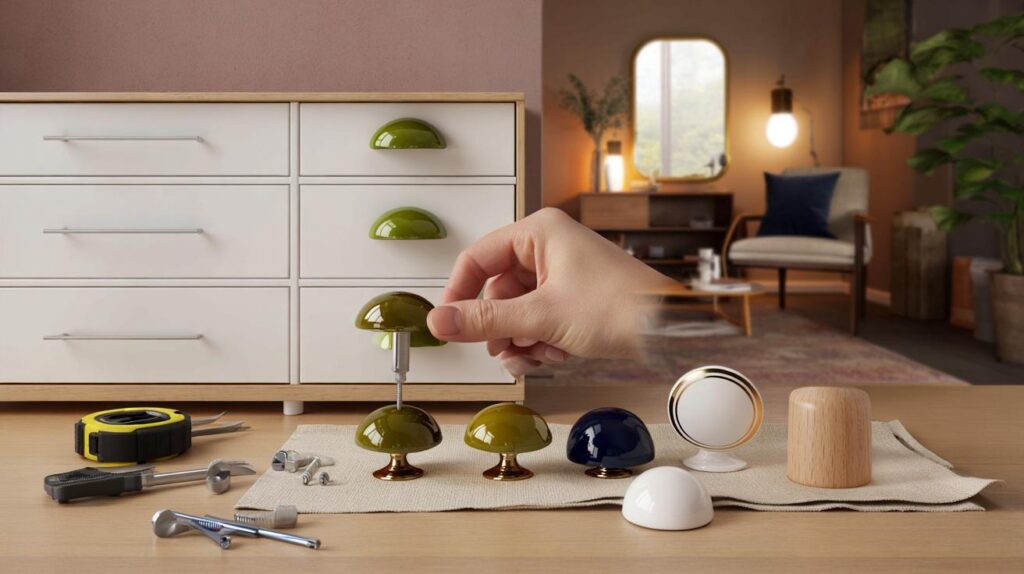
When colder days creep in, small shifts at home can lift rooms fast, long before you start repainting walls this season.
Stylists say one tiny change often carries the room. They point to a humble swap that costs less than a bus fare, takes minutes, and sends a budget piece in a new direction without sanding or paint.
The 89p detail stylists rate for instant impact
Across high-street homes, the quickest upgrade hiding in plain sight sits on your drawers and doors. Swap tired handles for a new ceramic or wood knob and you change the way a piece reads, feels and reflects light. Discount chain Action sells a broad mix of ceramic and wood designs for under €1 each (around 89p), so a six-drawer unit can shift from generic to characterful for the price of a takeaway sandwich.
Designers lean on hardware because it spares you mess. No tarps. No fumes. No dry time. The hand touches the knob dozens of times a day; that contact primes the eye to notice colour, texture and sheen. A matte white chest gains depth with moss green gloss ceramic. A utility cupboard softens under turned beech wood. Small part, big signal.
One knob, one hole, one minute. Multiply by six drawers and you have a fresh focal point before the kettle clicks.
Why stylists back the knob swap
Proportion and finish do the heavy lifting. Ceramic adds gloss and crisp edges that bounce autumn light. Wood brings warmth and a tactile grain that calms busy surfaces. Patterns carry personality—geometrics sharpen minimal rooms, delicate florals soften industrial frames, and marbled glazes add nuance without shouting.
Autumn 2025 palettes favour deep blue, moss green, taupe, pearly white and discreet gold detailing. A navy knob links to velvet cushions. White-and-gold reads festive without tipping into glitter. Choose one thread in your room and repeat it on the hardware to knit the scene together.
Under £6 to refresh a six-drawer unit versus £30–£60 for paint and tools—plus hours saved.
Your five-minute makeover playbook
Set a timer and get practical. You need a tape measure, a small spanner or adjustable wrench, a screwdriver, and the new knobs.
- Measure first: check the existing screw diameter and length by removing one old handle. Most Action knobs ship with an M4 screw that suits common furniture panels.
- Test fit: thread the new screw through the existing hole. If it feels loose, add a washer. If it is short, buy a longer M4 in the same finish.
- Protect the finish: place a soft cloth under the knob while tightening to avoid scuffs on glazed ceramic.
- Align consistently: point patterned knobs the same way across a unit. Symmetry calms the eye.
- Tighten and check: tighten by hand, then a quarter turn with a tool. Open and close the drawer to confirm grip.
Styling rules that keep rooms coherent
- Match materials to mood: ceramic loves painted pieces and clean-lined wardrobes; oiled wood suits rattan, oak and natural textiles.
- Repeat colours with intent: pair deep blue knobs with navy throws, or pearly white and soft gold with winter tableware.
- Mix, but mind the palette: combine shapes within one colour story—sage, taupe and bronze hold together; clashing brights can fragment a small space.
- Balance motifs: add geometrics to streamline a plain sideboard; choose stylised florals to warm a metal locker.
Pick one anchor hue, one texture and one metal tone. Repeat them three times in the room for balance.
Mistakes that trip people up
- Too many styles in one room: keep a family of finishes per space to avoid visual noise.
- Fussy shapes on heavy-use doors: choose a shape that allows a solid grip for kitchen and utility cupboards.
- Loose fittings: a wobble irritates fast. Tighten with a washer and revisit after a week of use.
- Random drilling: reuse holes where possible. If you must drill, mark carefully and use a 4 mm wood bit for a clean entry.
What the price buys you: materials, feel and care
| Material | Look and feel | Best for | Care tips |
|---|---|---|---|
| Ceramic (glazed) | Glossy, reflective, crisp edges | Painted furniture, wardrobes, hall consoles | Wipe with a damp cloth; avoid abrasive pads |
| Wood (beech/oak) | Warm, tactile grain, low sheen | Natural timbers, rattan, linen-heavy rooms | Dust weekly; refresh with a tiny drop of oil |
| Ceramic (matte) | Soft glow, contemporary profile | Minimalist pieces, neutral palettes | Spot-clean; rinse and dry to avoid marks |
Why this trend fits autumn budgets and moods
Colder light lowers contrast and asks for warmth. A small ceramic disc in a deep seasonal hue can stabilise a room faster than a new throw because hands meet it daily. Social feeds brim with before-and-after shots where a bland cabinet becomes a talking point with six small swaps. The sums add up: a chest with eight drawers costs under £8 to update at Action against triple digits for a pro respray.
Supply helps. Action rotates patterns—marbling, stylised blooms, simple dots—so renters and first-time buyers can trial character without a long commitment. If tastes change in spring, you can switch back for a few pounds and store the set for next year’s festivities.
Beyond drawers: clever second lives for spare knobs
- Wall hooks: mount a trio on a timber batten with wall plugs for scarves and dog leads.
- Jewellery stand: screw three knobs into a small board to hang necklaces and bracelets tangle-free.
- Tea-towel rail: add two knobs to each end of a short dowel for a compact kitchen holder.
- Artful peg shelf: line up five mixed shapes on a hallway plank for keys and hats.
Safety and maintenance notes
Measure screw length against the panel. A screw that runs too long can press into stored items; too short can work loose. In homes with toddlers, choose rounded profiles and mount hooks higher to avoid bumps. Check tightness monthly on high-traffic doors. For glazed ceramic, avoid harsh cleaners that cloud the shine; for wood, a light wax keeps the grain lively.
Quick cost scenarios you can copy
- Two-door sideboard, four knobs: 4 × 89p = £3.56. Match to cushion piping and a brass-framed mirror.
- Bedroom chest, six drawers: 6 × 89p = £5.34. Pick moss green to echo a plant corner and a wool throw.
- Hall cupboard, two doors, daily use: choose larger wooden mushrooms for grip and warmth, £1.78 total.
Spend under a fiver, gain a focal point, and save a weekend you would have lost to sanding and paint.
If you fancy a deeper project later, combine new knobs with a micro-sand and one coat of water-based satin on a top surface only. That hybrid approach keeps costs low while raising perceived quality. You can also trial a “seasonal set”: store a festive white-and-gold kit and a spring pastel kit, then rotate them in ten minutes twice a year.
Hardware tweaks carry low risk and high learning. You practise measuring, alignment and finish matching on a small canvas. Those skills scale to bigger upgrades—hinge swaps, shelf builds, even a full kitchen handle refresh—while the spend stays at pocket-money levels.



Honest question: do the 89p ceramic knobs chip or strip the M4 threads over time? I rent, so I’m wary of reusing holes—anyone had to upsize a 4 mm bit and then regret it? Also, how do they hold up on heavy-use kitchen doors (grease, kids, slaming)?