
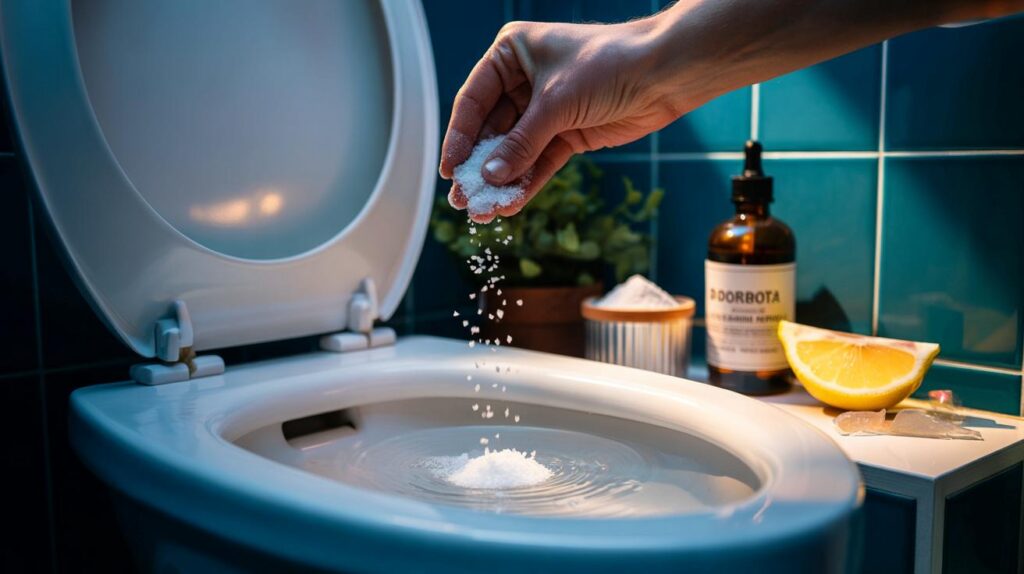
A quiet, thrifty routine from older generations is bubbling back into fashion. It involves a pantry staple and the hours you sleep.
Across social media and in WhatsApp groups, people swap late-night cleaning rituals. One keeps popping up: a pinch of salt in the toilet before bed. The idea sounds quaint. The reasoning leans on simple chemistry, household pragmatism and a bit of patience.
Why salt at night matters
Night brings stillness. The pan sits undisturbed. That pause gives ingredients time to work without constant dilution from flushing. Salt draws moisture, muffles some smells and adds gentle grit for the morning brush. Pair it with bicarbonate of soda and you lift freshness further. A few essential oil drops add scent, if you tolerate them.
Most of us visit the loo around 2,000 times a year. Two and a half minutes a visit adds up to years of our lives. Small tweaks that reduce odour, save money and cut bottles of harsh cleaners soon add comfort.
Salt helps with odours and light surface grime overnight. The morning brush then finishes the job quickly.
The chemistry at play
Coarse salt offers mild abrasion. It scuffs away soft films that hold smells. Bicarbonate raises pH and buffers acidity from urine residues, which also helps with odour control. None of this sterilises your toilet. It simply makes the morning clean faster and the bowl smell fresher.
What salt cannot do
Salt will not dissolve limescale. Hard-water deposits need an acid. White vinegar and citric acid both work well with enough contact time. A few spoonfuls of salt in a full bowl will not disinfect the pan either. You would need very high concentrations for a biocidal effect.
Salt alone does not remove limescale or sanitise your toilet. Use an acid for scale, and proper hygiene for germs.
Keep boiling water away from porcelain. Extreme heat can crack the pan or stress seals. Use warm tap water instead. Go easy with essential oils around children, pets and in pregnancy. Some oils irritate skin and airways. If you have a septic tank, avoid heavy doses of oils and aggressive products that can upset the bacterial balance.
Use warm tap water only; never pour boiling water into a ceramic toilet pan.
A calm-night routine you can copy
Here is a simple, low-cost method that fits busy evenings.
- Sprinkle 2 tablespoons of coarse salt into the bowl.
- Add 1 tablespoon of bicarbonate of soda.
- Optional: 3–5 drops of a mild essential oil, such as lemon or tea tree.
- Do not flush. Leave everything to sit overnight.
- In the morning, brush the sides, under the rim and the waterline.
- Flush once. Done.
Run this routine one to two nights a week. More does not bring extra gains and wastes product.
For limescale, use acid the right way
Hard-water rings and crusts need acidity. Target the marks with a soaked cloth or paper held under the rim to keep the acid in place. Brush after a soak.
| Aim | Product | Typical amount | Contact time | Notes | Estimated cost per use |
|---|---|---|---|---|---|
| Remove limescale | White vinegar (6–8%) | 200–250 ml | 30–60 minutes | Soak paper under rim; avoid metal fittings | 6–12p |
| Remove limescale | Citric acid solution (5–10%) | 150–200 ml | 20–40 minutes | Rinse well; safer scent than vinegar | 8–14p |
| Freshen overnight | Coarse salt + bicarbonate | 2 tbsp + 1 tbsp | Overnight | Brush in the morning | 5–12p |
Dealing with small slowdowns
If the water drains sluggishly, a half cup of coarse salt followed by a litre of warm tap water can nudge light build-up. Leave it 30–60 minutes before flushing. This will not shift a proper blockage. Use a plunger or an enzyme-based product, and call a plumber if the problem repeats.
Odour control that actually lasts
Bathrooms smell stale when moisture lingers. Open a window for 10 minutes daily, even in cold weather. Keep the cistern lid down when not in use to reduce aerosols. Brush under the rim each week, where films build and smells hide. Replace worn toilet seals if you notice seepage around the base.
Safety and materials
Porcelain dislikes thermal shock, so skip kettles. Chrome and metal fixings can pit if vinegar splashes sit on them. Wipe splashes at once. Store salt and bicarbonate high and dry to prevent clumping and curious hands. If you prefer fragrance-free cleaning, drop the oils and add a squeeze of lemon peel into the brush holder between cleans for a gentler scent.
What this means for your wallet and bin
Rock salt from a supermarket often costs 60–90p per kilo. Two tablespoons weigh roughly 30 g, which comes to 2–3p. A tablespoon of bicarbonate adds about 2–3p more. A few drops of oil might add several pence, or nothing if you skip it. Vinegar or citric acid sessions land around 6–14p each. Over a year, alternating methods trims plastic bottles and can shave pounds off your cleaning budget.
Hard water, soft water and regional quirks
Much of England has hard water, especially the South East and East Anglia. Limescale builds faster there, so plan more frequent acid soaks. Parts of Scotland, Wales and the North West sit on softer supplies, where odour and light film matter more than heavy scale. Match your routine to your postcode and pay attention to the ring that forms between flushes. Target that line first.
Households with septic tanks
Septic systems rely on bacteria. Keep acids moderate and avoid repeated heavy doses in a short window. Skip essential oils if you notice upset in tank performance. Salt and bicarbonate at the levels above are unlikely to disturb a healthy system, yet balance still matters.
If you want to go a step further
Try a monthly deep-clean cycle: one night of salt and bicarbonate; one day later, a citric acid soak; then a brush under the rim with a dedicated brush head. Keep a small mirror to check under the lip, where the flush holes sit. If you see chalky flakes, focus your acid there with a folded vinegar-soaked paper pressed for an hour.
Build a quick cost and time plan. A five-minute prep at night, a two-minute brush in the morning, and a weekly 10-minute acid soak will usually beat bottles of thick gel and save shelf space. If you share a home, leave a simple note near the loo with the routine and measurements so everyone can take a turn without guesswork.



Tried the overnight pinch last night: 2 tbsp coarse rock salt + 1 tbsp bicarb. By morning the light film brushed off faster and the odour was gone. I’m in East Anglia (very hard water), and you’re right—limescale still needed a 30–45 min white vinegar soak held under the rim with paper. The note about keeping boiling water away from porcelain is gold; I nearly did that before. Nice to see real costs (5–12p) instead of vague claims. Cheers for the calm, thrifty routine.