
Grey skies and shorter days don’t stop gardeners planning bold spring colour. One simple October task sets the stage.
Planting sweet peas now can turn a dull corner into a scented spectacle when the clocks go forward. The method is unfussy, the kit is cheap, and the payoff lasts for months.
Why sweet peas win in autumn
Autumn-sown plants build deeper roots while the soil stays mild. That early head start means earlier flowers, sturdier stems and more stems per plant when the season turns. Spring sowing still works, but October gives you stronger plants with less fuss in April.
Sow in october, keep seedlings at 16–18 degrees, pinch once, and you bank earlier blooms plus extra stems next year.
Sweet peas also deliver choice. Tall climbers soften a fence or arch; compact forms suit a balcony box. Some strains prioritise perfume, others length of stem for the vase. Choose to suit how you’ll use them.
Fragrance, colour and space-savvy choices
- For scent: heritage types such as ‘Matucana’ and old-fashioned grandifloras carry rich perfume.
- For cutting: Spencer forms give long stems and showy blooms for vases.
- For small spaces: dwarf or semi-dwarf lines stay neat in pots and baskets.
- Check the packet: not every modern mix is strongly scented.
What to buy and what you already own
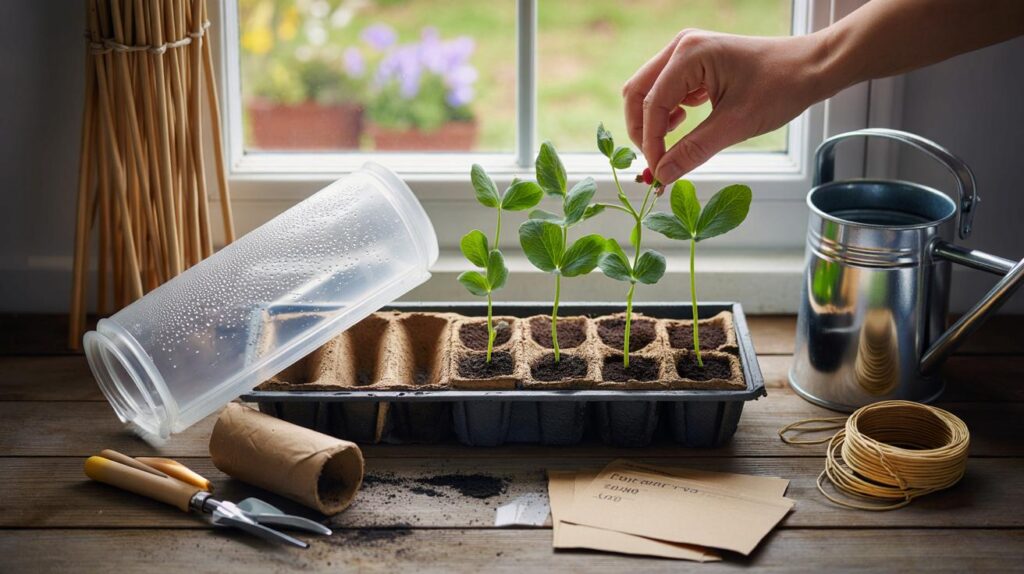
You can start with a £2–£5 packet of seed, multi-purpose peat-free compost, and something deep to root into. Purpose-made root trainers are ideal, but you can improvise with 9 cm pots, deep modules or rinsed loo-roll tubes in a tray. A clear cover deters mice, which relish seeds.
Depth matters more than width: aim for containers at least 10–12 cm deep so taproots drive straight and strong.
Step-by-step: sowing in october
Work on a bright windowsill, in a porch, or in an unheated greenhouse with a propagator lid. Keep the process simple and tidy.
Cold weather care without drama
After germination, shift plants somewhere cool and bright. A cold frame, porch or unheated greenhouse is perfect. Keep compost just moist; cold, wet roots sulk. On frosty nights, throw over horticultural fleece or a few layers of newspaper. Air on milder days to prevent mildew.
Plants won’t romp in midwinter. That’s fine. Short, stocky growth beats tall, sappy stems that snap in the wind.
Planting out and giving support
Move sweet peas outside in late March or April when soil drains freely and hard frosts ease. Choose sun and a site that doesn’t puddle. Add garden compost to the hole and a handful of grit if your ground sits heavy.
- Spacing: 20–25 cm between plants; 2–3 plants per cane for a tight, floriferous wigwam.
- Depth: plant to the same depth as in the pot; bury any wobbly stems a touch deeper for stability.
- Support: pea sticks, netting on a fence, or a bamboo teepee all work. Tie in loosely every 10–15 cm.
The first tie decides the direction: secure stems gently and let tendrils do the rest.
Feeding, watering and staying ahead of pests
Water deeply once or twice a week in dry spells to push roots down rather than out. From the first buds, a weekly high-potash feed (tomato fertiliser) boosts continuous bloom. Deadhead often and never let pods ripen, or flowering slows.
- Mice: use covers at sowing; snap traps in sheds if needed.
- Slugs: rings of wool pellets or copper tape around pots reduce damage.
- Mildew: keep air moving; water the soil, not the leaves; bin affected foliage.
Cut flowers that keep on paying you back
Pick two or three times a week from late May or June. Harvest when the first flower on a stem opens; the rest will unfurl in the vase. Recut stems and change water daily for 3–5 days of life indoors. Morning cuts keep petals fresher.
The more you pick, the more they push. Treat sweet peas like a crop and they’ll behave like one.
Autumn sowing versus spring sowing: what changes
| Stage | Autumn sowing | Spring sowing |
|---|---|---|
| Sow date | October | February–March |
| Germination | 10–14 days at 16–18 degrees | 7–12 days at 18–20 degrees |
| Plant out | Late March–April | April–May |
| First flowers | Late May–June | June–July |
| Yield | More stems per plant | Good, but starts later |
Quick fixes for common problems
Leggy seedlings
Cause: warmth with poor light. Move to the brightest spot you have and drop the temperature. Pinch tips and pot deeper at the next move.
Yellowing leaves
Often overwatering in cold. Let compost nearly dry before watering again. Check that trays aren’t sitting in water.
Floppy growth outdoors
Wind or lack of tying in. Add more canes and soft ties at hand height and knee height. Remove side shoots that crowd the frame.
Budget and time: what you actually need
- Seeds: £2–£5 for 20–40 seeds, enough for a fence run or a teepee.
- Compost: one 20-litre bag is plenty for autumn sowing.
- Time: 30 minutes to sow; 5 minutes a week to water and tie in; 10 minutes to pick.
For under £10 and an hour a month, you’ll turn a drab panel into a scented wall of colour.
Handy extras and safety notes
Cardboard tubes make perfect biodegradable pots; stand them in a tray so they don’t unravel. A layer of mulch after planting out keeps moisture even and roots cool. If your soil is alkaline, add a bucket of garden compost per metre to improve texture. Avoid high-nitrogen feeds, which push leaves over flowers.
Sweet pea seeds and pods are not edible. Keep them away from children and pets, and label vases clearly in kitchens where young hands roam. If you want something edible alongside, run mangetout or sugar snaps up a separate frame; they share supports but not feeding or picking rules.



Love this! I’ve always faffed in March, but the 16–18°C sowing and “pinch once” rule make it feel doable. Going to try root trainers (or loo-roll tubes) and water from below. Budget-friendly and clear — cheers for the propogator-lid tip 🙂