
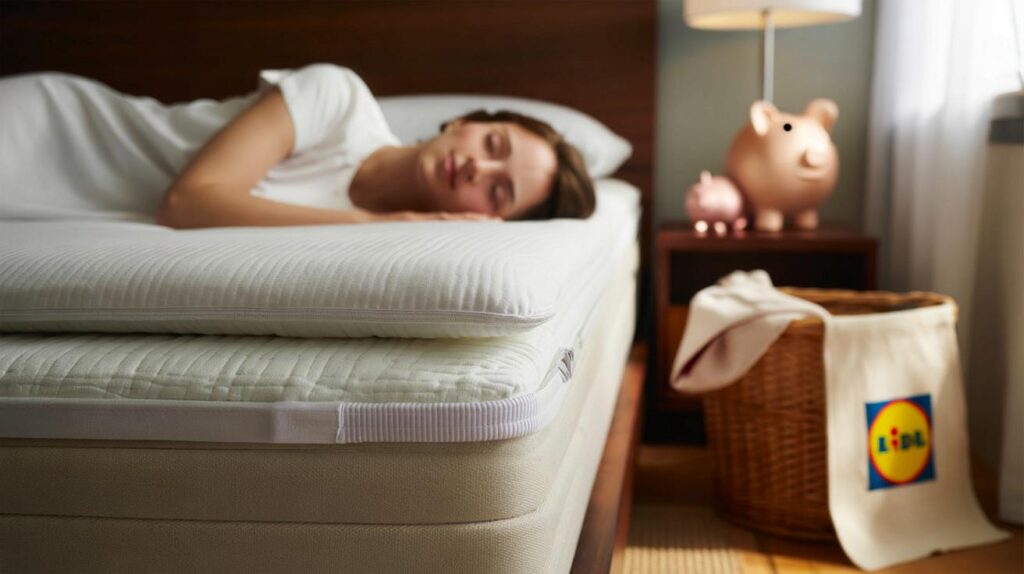
Money feels tight, sleep feels fragile, and shoppers are eyeing cheaper fixes as the colder nights draw in across Britain.
Instead of dropping hundreds on a new mattress, retailers are pushing budget toppers that promise extra support, cleaner surfaces and a quick comfort upgrade. This week, attention turns to a £40 option heading onto shelves with claims that speak directly to weary backs and overworked wallets.
What’s happening
Lidl is set to stock the Livarno Home mattress topper from Thursday 4 September at around £40. It is 5cm deep and cut for a standard UK double at 190cm x 135cm. The design uses a soft double-jersey surface, a microfibre underside and a removable polyester cover you can machine-wash. Elasticated corner straps hold it in place.
The retailer says the topper balances pressure points, adapts to the body with a soft nubbed texture and supports an anatomically correct sleeping position. It’s pitched as a way to prolong mattress life, calm morning aches and smooth out small lumps and dips.
On sale from Thursday 4 September: 5cm deep, £40, double size 190cm x 135cm, washable cover, elasticated straps.
Households weighing up bigger purchases may see this as a stopgap that adds comfort now and delays a costly replacement. Parents packing students off to halls have another motive: a hygienic buffer between a furnished rental and their teenager’s skin. Spills happen, and a topper is easier to wash than a mattress.
Why it matters
Many people wake with unexplained stiffness, then blame age or stress. Often the culprit is simple: a tired mattress. Sleep advisors suggest replacing a mattress every eight to ten years, yet budgets don’t always cooperate. A topper won’t fix broken springs or deep sagging, but it can add cushioning, even out the feel and buy time.
- If your mattress feels slightly too firm, a plush topper softens contact and eases pressure on shoulders and hips.
- If you notice minor dips, a topper can smooth the surface and reduce the “roll-to-the-middle” effect.
- If allergies worry you, a removable cover gives you a regular wash routine and a cleaner sleep surface.
- If you’re kitting out a guest room, a topper can lift a budget bed without replacing it.
What toppers can and cannot do
A topper adds a comfort layer. It does not correct a broken support core. If your mattress sags by more than a couple of centimetres or creaks, start planning a replacement. People who sleep hot should check materials: memory foam can trap warmth; wool, cotton or open-cell foams run cooler. Back pain can be sensitive to thickness. Too thick can let hips sink; too thin can leave shoulders unrelieved. Aim for a balance.
A topper masks minor issues and adds comfort. It does not mend a failing mattress.
How the Lidl topper stacks up
The Livarno Home model focuses on practical touches rather than luxury detailing. Here are the headline features and who they suit.
| Price band | Typical thickness | Common materials | Best for | Watch-outs |
|---|---|---|---|---|
| Under £50 (e.g., Lidl £40) | 3–5cm | Polyester fibre, microfibre, basic foams | Guest beds, students, short-term comfort boost | May compress faster, limited edge support |
| £50–£120 | 4–7cm | Memory foam, gel-infused foams, wool blends | Daily sleepers who want pressure relief | Heat build-up in closed-cell foams |
| £120+ | 5–8cm+ | Latex, high-density foams, premium wool | Targeted support, durability, cooler sleep | Higher weight, stronger mattress feel change |
Hands-on details buyers ask about
Fit and feel
• Size: the listed model is for a UK double at 190cm x 135cm. Check labels: a king is 200cm x 150cm. European sizes differ.
• Depth: 5cm adds noticeable plushness without swallowing you. Side sleepers usually like 4–7cm. Back sleepers often sit around 3–5cm.
• Fabric: double jersey feels soft against a sheet and stretches with movement. Microfibre underlayers help the topper settle flat.
Care and hygiene
• Cover: the removable polyester cover means you can wash it on a routine cycle. Aim for every 6–8 weeks in allergy season.
• Securing: elasticated straps reduce drift. Still, rotate the topper 180 degrees every month to spread wear.
• Spills: blot, don’t rub. Air-dry thoroughly to avoid trapped moisture and odours.
Risks and limits you should weigh
- Heat retention: dense foams can feel warmer. Pair with breathable cotton sheets and keep the room at 16–18°C.
- Edge feel: extra thickness can soften edges, which matters if you sit to dress.
- Sheet fit: deeper setups need deep-pocket sheets to prevent corner pop-offs.
- Motion: toppers can slightly change how movement transfers across a bed.
- Children: never use thick toppers in cots or with babies, as soft surfaces raise suffocation risk.
Value check: the maths
A mid-range mattress often costs £400–£800. If a £40 topper delays replacement by even 12 months, you’ve kept hundreds in your account during a tough year. Think in nights, not years. If a topper lasts two years, that’s roughly 730 sleeps. £40 divided by 730 is about 5.5p per night.
About 5p per night for extra cushioning, washable hygiene and a cleaner-feeling bed surface.
Who this looks right for
- Renters who can’t replace the landlord’s mattress but want a cleaner feel.
- Students moving into furnished rooms this autumn.
- Hosts upgrading a spare bed before holiday guests arrive.
- Anyone with a firm mattress seeking softer shoulder relief without losing underlying support.
How to choose a topper that actually helps
Start with your problem, not the product. If mornings bring shoulder ache, favour a plusher surface. If your lower back protests, keep the topper medium and ensure hips don’t sink. Test on your usual sleeping side. If your shoulder and hip just sink enough to keep your spine straight, you’re close. If your waist gaps or your hip drops, adjust thickness. Look for clear size labels, a removable cover, and secure straps. Certifications for foams, such as CertiPUR or OEKO-TEX, can add confidence on emissions and content. Always check store returns policies in case the feel isn’t right after a week.
Quick home trial
Unpack, air the topper for a few hours to clear factory odour. Use it for at least seven nights. Note pressure points each morning. If heat builds, swap to percale cotton sheets and lower the bedroom temperature by 1–2°C. Rotate the topper at the end of week two.
What Lidl is promising, in context
The company’s description highlights pressure-balancing and an “anatomically correct” sleep position, delivered by a soft, nubbed texture. Those claims fit what many users feel when switching from a flat, firm surface to a cushioned layer. The effect depends on your weight, your mattress condition and sleeping style. Light sleepers often need more plushness to feel a change. Heavier sleepers may compress a low-density topper faster, so they should watch for early flattening.
Extra angles that matter this autumn
Temperature control links directly to sleep quality. If your room runs warm, a microfibre topper can add comfort yet trap heat. A simple swap to a lighter duvet, a breathable protector above the topper, and a small gap between bed and wall for airflow can keep you cooler. If you use an electric blanket, place it above the topper unless the manufacturer states it’s safe underneath. Trapped heat can age foams and reduce comfort.
Think long term. A topper is a tool, not a cure. Use it to extend the useful life of a sound mattress, not to postpone the inevitable on a broken one. Keep an eye on sag depth. If you can measure more than roughly 2–3cm of body impression without pressure, start budgeting for a replacement. Meanwhile, a £40, 5cm layer with a washable cover gives you a cleaner surface, a softer first touch and a chance—at least for a season—to wake up feeling freer.



Bought the Livarno topper last time it appeared. For £40 it softened my too‑firm mattress and my shoulders stopped aching within a week. Straps kept it put, cover washed fine. Not magic, but a comfy stopgap—definately worth a punt.
Polyester fibre at 5cm won’t rescue a saggy bed. Any foam density stats? Otherwise it’ll pancake in 3 months and I’m £40 down.