
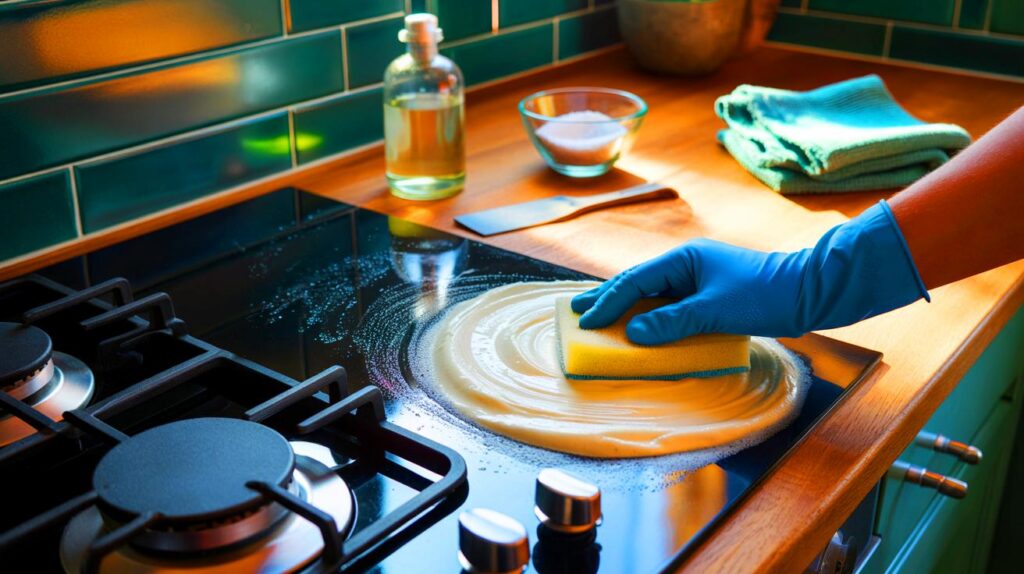
Grease splatters build up fast. This season, a two‑ingredient pantry fix is sweeping British kitchens, promising speed without scratches.
Across gas, ceramic and induction hobs, home cooks are ditching harsh sprays for a simple paste of white vinegar and fine salt. It cuts through the film that lingers after stews, stir‑fries and Sunday roasts. Most jobs take five to ten minutes, from spread to shine, with no need to scrub like mad.
Why this cheap mix is trending
Prices for branded degreasers have crept up again this year. A 750 ml bottle can sit at £2–£4. By contrast, a litre of white vinegar often costs under £1, and table salt starts around 25p. For a single clean, you use a few spoonfuls. That puts the cost per session at roughly 3–6p.
There’s a practical reason people trust it. Acetic acid in white vinegar loosens oily films and lifts light limescale. Fine salt adds just enough bite to break up browned‑on specks without gouging most finishes when used wet and gently.
Mix equal parts white vinegar and fine salt into a loose paste. Spread, wait five to ten minutes, wipe, rinse and dry.
Done with care, this method fits busy midweek routines. It suits the evening window between plates and bedtime, when you have minutes, not hours.
How to use it in five to ten minutes
- Turn everything off. If you cook on gas, shut the supply. Let the hob cool until warm, not hot.
- Lift off grates and burner caps. Shake off crumbs. Bin loose debris so the paste can reach grease.
- Stir 1:1 white vinegar and fine salt. Aim for yoghurt‑like thickness. Add a little water if it looks too dry.
- Spread a thin layer over rings and splatter zones. Don’t flood gaps or controls.
- Leave it there for 5–10 minutes. The acid softens residue while the salt loosens the crust.
- Wipe with a damp, non‑abrasive sponge. Rinse the sponge often. Follow with warm water.
- Buff dry with a microfibre cloth. Drying stops streaks and helps spot missed patches.
- If marks linger, treat only those areas again rather than scrubbing the whole surface.
Never combine bleach and vinegar. The mix releases a toxic gas. Keep them apart at all times.
What to do by hob type
Gas and cast iron
Go ahead with the 1:1 paste on enamel surrounds, burner caps and grates. Work the paste around rings where fat bakes on. For very stubborn rims, leave the paste a little longer, up to 15 minutes, then wipe. Remove and rinse grates in warm water to keep salt crystals from hiding under edges.
Stainless steel
Use the paste lightly and wipe along the grain. Keep the salt wet and moving. Rinse thoroughly to stop white spots forming as vinegar evaporates. Finish with a drop of washing‑up liquid and water if streaks remain, then dry with microfibre.
Glass, ceramic and induction
Skip dry granules. The risk of micro‑scratches rises when salt sits undissolved. Use a cloth dipped in diluted vinegar for daily films, then a quick buff. If a sugar spill or cheesy splatter has set, apply a very wet, thin paste and glide the cloth with almost no pressure. A plastic scraper, used flat and shallow, can lift brittle blobs once softened.
| Surface | Avoid | Typical dwell time | Notes |
|---|---|---|---|
| Gas enamel and caps | Wire wool, harsh scourers | 5–10 minutes | Rinse parts well to remove salt residue before relighting. |
| Stainless steel | Cross‑grain rubbing, undiluted acid left to dry | 5–8 minutes | Wipe with the grain; dry fully to prevent water marks. |
| Glass/ceramic/induction | Dry salt, metal scrapers at steep angles | 3–6 minutes | Use very wet paste or diluted vinegar; minimal pressure. |
Alternatives when buildup is heavy
- Lemon and salt: citric acid brings similar power to acetic acid. Halve a lemon, dip in fine salt, press gently, and let sit before wiping.
- Vinegar then bicarbonate: pour a light film of vinegar, wait, dust with bicarbonate of soda, let it fizz for a few minutes, then wipe. The foam lifts burnt sugar and cheese.
- Soft soap paste: a pea of black soap on a damp sponge can cut greasy films on stainless and enamel. Rinse well to avoid haze.
When a pan boiled over and left a caramelised ring, patience helps. Soften first with warm, damp cloths. Then use a plastic scraper low and flat, followed by a gentle round with one of the options above.
Safety, costs and outcomes
Keep windows open during cleaning. Wear gloves if your skin reacts to acids or salt. Move children and pets away while you work and until surfaces are dry.
The numbers stack up neatly. A 50 ml splash of vinegar and two teaspoons of table salt is plenty for one standard hob. That’s pennies per clean and less waste packaging. Time-wise, you need 5–10 minutes of dwell and 3–5 minutes of wiping and drying. Most people report a clear difference on the first pass, with only the darkest scorch marks needing a repeat.
Little and often wins. A 60‑second wipe after cooking beats a 30‑minute rescue at the weekend.
Keep it clean for longer
Adopt a tiny routine: while the hob is warm, not hot, pass a microfibre cloth dampened with diluted vinegar across high‑splash zones. You’ll strip the film before it hardens. Once a week, lift off gas grates and burner caps for a short soak in hot, soapy water. Dry fully before refitting to prevent rust creep on cast iron.
Consider small changes that stop mess at source. Use pan lids to limit pops of oil. Check that flames sit under the pan base, not licking around it, which bakes fat onto enamel. On glass hobs, wipe sugary spills immediately; melted sugar etches surfaces if it burns.
The science behind the shine
White vinegar sits around pH 2.4. That acidity breaks bonds in light grease films and helps dissolve mineral traces left by overheated water. Fine salt grains, kept wet, provide micro‑cutting that dislodges browned residue. Microfibre contributes too: millions of split fibres grab particles that sponges leave behind. Combined, you get chemical softening, gentle mechanical lift and mechanical capture.
Always patch‑test on a small area if your hob has a special coating or a brushed pattern that marks easily. Makers’ guidance varies. If your warranty warns against acids, stick with warm soapy water, a plastic scraper and frequent maintenance wipes. The aim is a clean surface that still looks new three winters from now.



Tried this on my stainless hob tonight—5 minutes and it’s shining. I’m definitley ditching the £3 spray. Also, thanks for the bleach warning; easy to forget.