
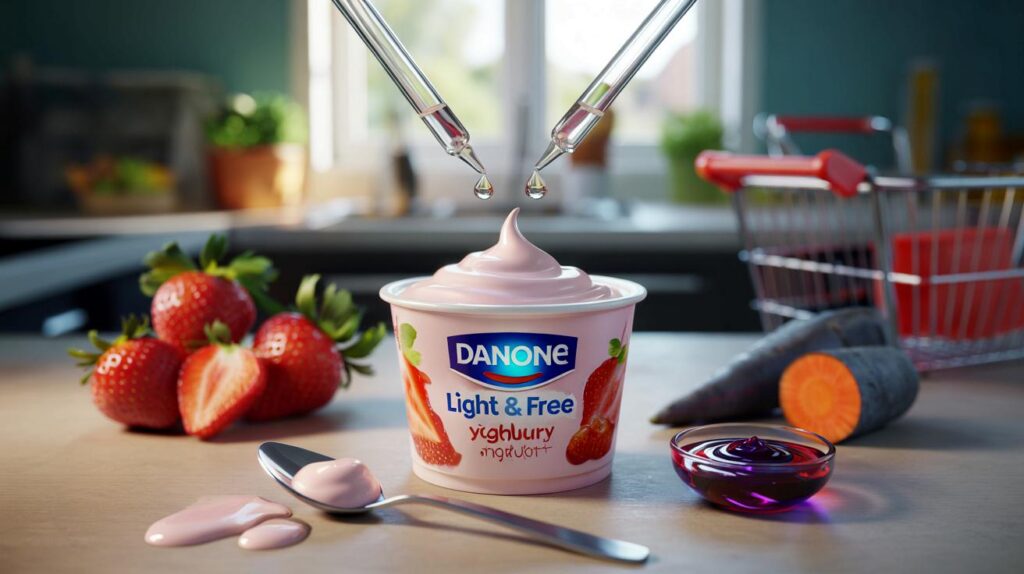
Shoppers reach for 0% pots to trim calories, yet a closer look at labels can unsettle even the savviest trolleys.
A French consumer group has zeroed in on a strawberry-flavoured, fat‑free yoghurt many families buy without a second thought. The pot looks light, fruity, convenient. The ingredient list tells a different story, with flavourings, colouring and two high‑intensity sweeteners in the mix.
What 60 Millions de Consommateurs flagged
The product under scrutiny is Danone’s Light & Free 0% strawberry yoghurt. Its label highlights 7.5% strawberries. It also lists added flavour, a black carrot concentrate for colour, and two synthetic sweeteners: acesulfame‑K (E950) and sucralose (E955). The magazine warns that the “light” promise leans on additives rather than fruit.
Two synthetic sweeteners — acesulfame‑K and sucralose — sit inside a ‘0%’ pot many households pick every week.
Numbers add context. Acesulfame‑K is around 200 times sweeter than table sugar. Sucralose is roughly 600 times sweeter. Manufacturers use tiny amounts to deliver sweetness with few calories. That trade‑off raises questions about longer‑term health signals and the overall nutritional value of the pot in your hand.
Why the sweeteners raise questions
Both additives are authorised in the EU and the UK, with safety limits known as acceptable daily intakes (ADIs). For acesulfame‑K the ADI is 15 mg per kilogram of body weight per day. For sucralose the ADI is 5 mg/kg/day. Regulators say these levels remain protective when daily intake stays below the limit.
Research still turns up caution flags. A large French cohort reported higher overall cancer risk among high consumers of low‑calorie sweeteners, especially aspartame and acesulfame‑K, compared with non‑consumers. Other studies suggest possible effects on glucose response, appetite signalling and the gut microbiome. Association is not causation, yet the pattern keeps health watchers alert.
Safety limits exist, but stacking several sweetened foods and drinks in one day can nudge you closer to those thresholds.
Yoghurts with sweeteners can help reduce free sugars. That benefit matters for people cutting sugar for dental health or diabetes management. The wider picture still counts: how often you consume sweeteners, what else you eat that day, and whether the product replaces simple, less processed choices.
‘0% fat’ is not a free pass
Fat‑free means milk fat has been removed. It does not mean the yoghurt is a nutritional upgrade across the board. Compare like for like. Switching from a whole‑milk yoghurt to a 0% version can save up to about 3 g of fat per 100 g. That is modest in the context of a balanced diet, especially when protein and natural milk sugars remain similar.
Some 0% fruit yoghurts stay sweet by relying on high‑intensity sweeteners and added flavour. Colouring concentrates such as black carrot can make a strawberry pot look more “fruity” than it is. A short, familiar ingredient list often signals a product closer to the base food you wanted in the first place.
0% means fat‑free, not sugar‑free — and not additive‑free. The label still sets the rules of the game.
How to decode a fruit yoghurt label
- Check the fruit percentage. Here, strawberries sit at 7.5%. More fruit often equals less need for flavourings.
- Look for “flavour” or “aroma”. If it does not say “natural”, assume artificial or nature‑identical.
- Spot colour claims. Vegetable concentrates, like black carrot, enhance hue rather than nutrition.
- Find the sweeteners. Acesulfame‑K (E950) and sucralose (E955) indicate added high‑intensity sweetness.
- Scan sugar per 100 g. Compare with plain yoghurt (about 4–5 g lactose per 100 g) to gauge added sweetness.
- Count ingredients. Fewer, recognisable items typically mean less processing.
- Note protein. Around 4 g per 100 g suggests a satisfying dairy base.
Typical 100 g comparisons
| Type | Energy (kcal) | Fat (g) | Total sugars (g) | Sweeteners |
|---|---|---|---|---|
| Plain yoghurt (whole milk) | 60–70 | 3.0–3.8 | 4–5 (lactose) | No |
| Fruit yoghurt (sugared) | 80–110 | 1.5–3.5 | 10–14 | No |
| Fruit yoghurt (0% with sweeteners) | 45–65 | 0–0.5 | 3–6 | Often yes (e.g., E950, E955) |
What this means for your trolley
If your goal is fewer additives, a plain yoghurt with fresh fruit achieves sweetness without flavourings or colour boosters. If you need lower sugars, a 0% pot with sweeteners can fit, but treat it as one tool rather than the backbone of your diet. Rotate choices across the week. Let whole foods do most of the heavy lifting.
Parents may want to check how many sweetened products children meet in a day — soft drinks, desserts, chewing gum, and yoghurts add up. For adults, a similar tally helps: a diet drink at lunch, a “light” dessert at dinner, and a sweetened yoghurt for breakfast can cluster several high‑intensity sweeteners into 24 hours.
How much is too much?
Regulators set daily limits to large safety margins. For a 70 kg adult, that means up to 1,050 mg of acesulfame‑K and 350 mg of sucralose per day. Labels rarely show milligrams per pot, so you cannot track intake precisely. Reducing the number of sweetened items you rely on remains the simplest way to stay well below those thresholds.
A shorter ingredient list and clear fruit content remain the most reliable shortcuts to a yoghurt you can trust.
Extra context that helps your choice
Flavour terms vary. “Natural flavour” comes from a natural source, but not necessarily the fruit pictured. “Strawberry flavour” can be nature‑identical or artificial. Colour concentrates from plants, like black carrot, beetroot or paprika, exist to manage appearance. They can make a pot look fruit‑rich when the fruit percentage is modest.
If you enjoy the taste and convenience of 0% products, try a simple swap experiment for a week. Buy one pack of plain yoghurt and one punnet of strawberries. Mash a few berries with a teaspoon of sugar or a drizzle of honey. Compare cost per serving, sweetness, and satisfaction. Many households find the homemade version hits the same craving with fewer additives and a predictable list of ingredients.
Allergens and tolerances also matter. People sensitive to very sweet tastes may find high‑intensity sweeteners shift their palate over time. Others appreciate the lower sugar load and the calorie savings. The best pick is the one that matches your health goals without leaning on lengthy ingredient lists to simulate a fruity experience.



So what does this mean in practical terms? For a 70 kg adult, roughly how many Light & Free pots would push you near the ADI for acesulfame‑K or sucralose? Labels never show mg per pot—any rough estimate?
0% fat yet two synthetic sweeteners and flavourings… this reads like a dessert wearing a gym badge. The “light” promise feels like marketing gymnastics more than real food, definitly.