
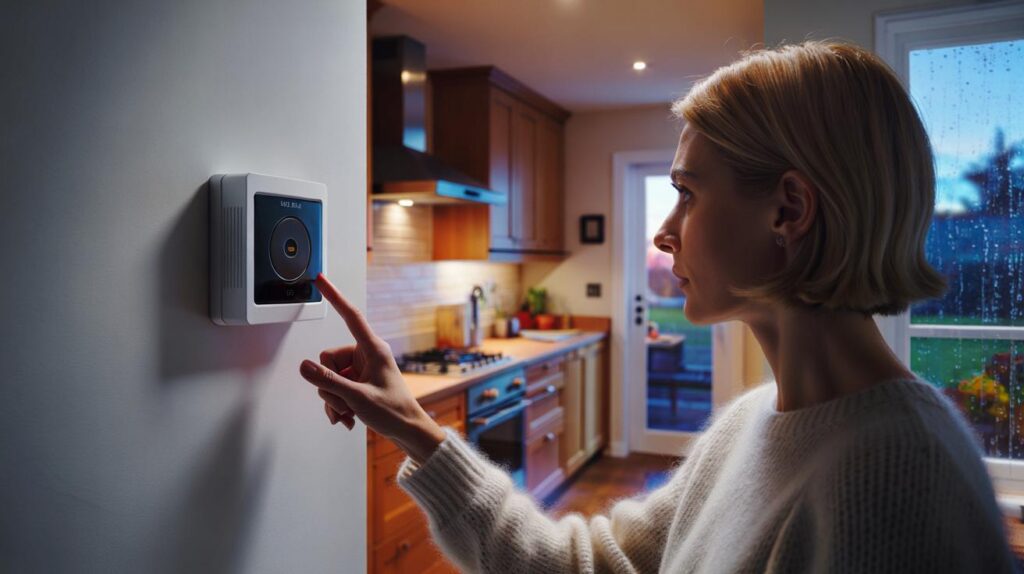
Colder nights push boilers, stoves and fireplaces back into daily use. A silent hazard follows them indoors without warning.
As temperatures drop, households reach for extra heat and hot water. A small, inexpensive device can decide whether your air stays safe.
Why carbon monoxide becomes the quiet house intruder
Carbon monoxide (CO) forms when fuel does not burn cleanly. Faulty boilers, poorly vented fireplaces, blocked flues or misused gas hobs produce it. The gas has no colour and no smell. It fills rooms without triggering your senses.
CO displaces oxygen in the bloodstream. It binds to haemoglobin and starves organs of what they need. Early signs include headache, dizziness and nausea. Symptoms often hit several people at the same time. High concentrations overwhelm quickly. Children, older adults and pets succumb faster.
Warning signs you can actually see
Look for lazy yellow flames on a gas hob instead of crisp blue. Watch for unusual soot around burners. Condensation that lingers on windows suggests poor ventilation. If symptoms ease outdoors and return indoors, suspect CO and act.
CO gives no visual or olfactory clue. A shared headache, dizziness and nausea indoors should trigger immediate action.
The crucial purchase: how to choose a detector that really protects
You cannot sense CO. You can only measure it. That is why a dedicated carbon monoxide alarm belongs in every home with fuel-burning appliances. Not all devices meet the mark, so check the standards before you pay.
Standards that separate life-savers from gimmicks
Pick alarms marked EN 50291. This European standard verifies response at different concentrations and temperatures. Check for the CE mark as a baseline. Favour models that show a clear end-of-life date. A large test button helps regular checks. A digital display shows ppm levels and recent peaks, which aids diagnosis.
Features worth paying for, and those you can skip
- Long-life lithium power: sealed batteries rated for 7–10 years reduce maintenance and missed replacements.
- Interlinked alarms: when one sounds, all sound, so sleepers hear an alert in time.
- Event memory: a visual cue that an alarm triggered while you were away.
- App notifications: remote alerts add a safety net for frequent travellers.
- Voice prompts: clear spoken messages help guests and children react.
Only buy detectors marked EN 50291 with CE, a visible expiry date and an easy-to-press test function.
Placement makes or breaks protection
CO mixes with room air. That means location matters more than shelf price. Put the alarm where it can sense changing levels quickly, and where you will hear and see it.
The one step most households miss
Mount the alarm at eye level, roughly 1.5–1.7 metres above the floor. Keep it clear of cupboards, curtains and shelves that block airflow. Do not push it into a ceiling corner or park it by the skirting. You need the indicator light in view and the sound where you will notice it.
Where to put them, room by room
| Location | Minimum count | Positioning detail |
|---|---|---|
| Rooms with a boiler, fireplace or fuel heater | One per room | Mount at 1.5–1.7 m on a wall, ideally 1–3 m from the appliance and away from corners |
| Kitchen with a gas hob or oven | One | Wall mount at eye level, not directly above the hob, away from extractor drafts |
| Bedrooms and hallways near sleeping areas | At least one | Place where the alarm can wake sleepers; avoid behind doors or heavy furniture |
| Boiler cupboard or utility room | One | Eye level on a clear wall; keep vents unblocked for proper airflow |
| Bathrooms and damp rooms | None | Avoid high humidity; mount outside the door instead |
| Near windows or extractor fans | Avoid | Strong airflow can dilute CO locally and delay a warning |
Place units in every room with a combustion appliance, and near bedrooms where people sleep with windows closed.
The safety routine: test and maintain so it actually works
An alarm only protects when it works on the day you need it. A short, regular routine keeps it ready without fuss.
Thirty seconds a month that could save a life
Press the test button once a month. A loud beep confirms the circuitry and sounder. Silence means action. Replace the battery if your model allows it. If the unit has reached its expiry date, replace the whole alarm. Mark a repeat reminder on your phone. Gently vacuum the vents to clear dust.
What to do when an alarm sounds
- Open doors and windows wide to bring in fresh air.
- Switch off fires, hobs, boilers and any fuel-burning appliance.
- Leave the building and stay in clean air.
- Call the gas emergency number or emergency services from outside.
- Seek medical advice if anyone feels unwell.
- Have a qualified engineer inspect appliances and flues before re-entry.
Three habits protect your home: certified alarms, eye-level installation at 1.5–1.7 m, and a monthly test.
Added context for UK homes
Rules differ across the UK. In England, private and social landlords must install carbon monoxide alarms in any room with a fixed combustion appliance (excluding gas cookers). Scotland and Wales set similar duties. Tenants should check alarms on move-in and report faults promptly. Owner-occupiers face no blanket legal mandate, yet the risk remains the same, so fit alarms regardless of tenure.
Service boilers, fires and flues annually with a qualified engineer. Keep vents open at all times. Chimneys need sweeping based on use and fuel type. Portable heaters require careful use and clearances. Never run a barbecue, generator or vehicle in a garage, even with the door open. CO builds up faster than you think.
Smart choices that widen your safety net
CO versus smoke and heat alarms
Smoke alarms detect particles from fire. Heat alarms track rapid temperature rise. Neither senses CO. A combined unit must carry both standards: EN 50291 for CO and EN 14604 (smoke) or EN 5446-2 (heat). Treat siting advice separately. Kitchens suit heat alarms, not smoke alarms. Bathrooms suit neither. CO alarms sit in living spaces with appliances and near bedrooms.
If you already have a smart smoke system, consider CO devices that interlink or add app alerts. Interconnection spreads a warning to each floor. That matters at night when bedroom doors are shut.
When replacement beats repair
CO sensors age. Most alarms reach end of life after 7–10 years. The date sits on the label. Replace the unit on or before that date. A longer warranty often signals better build quality. If an alarm suffers water damage, heavy dust or impact, replace it rather than gamble.
Want a quick self-check today? Confirm your alarm shows EN 50291 and CE. Move any unit stuck high on a ceiling edge down to 1.5–1.7 metres. Add alarms to rooms with a fire, boiler or gas hob. Set a recurring monthly test reminder. Those small moves change outcomes.
For families juggling costs, spread purchases by floor. Start with the boiler room and sleeping areas. Add the kitchen and lounge next. Finish by interlinking units or adding a hallway alarm. Each added device cuts risk, and the eye-level placement multiplies that benefit.



Quick clarificaiton: is the 1.5–1.7 m height measured to the center of the unit, and do I still keep 1–3 m from a boiler even in a small utility cupboard?
I’ve heard folks claim CO is “heavier than air” so alarms should go low. Your piece says eye level. Do you have a solid source I can show my landlord to settle this once and for all? Also, what about vaulted ceilings or big open-plan rooms—same guidance, or any tweaks?