
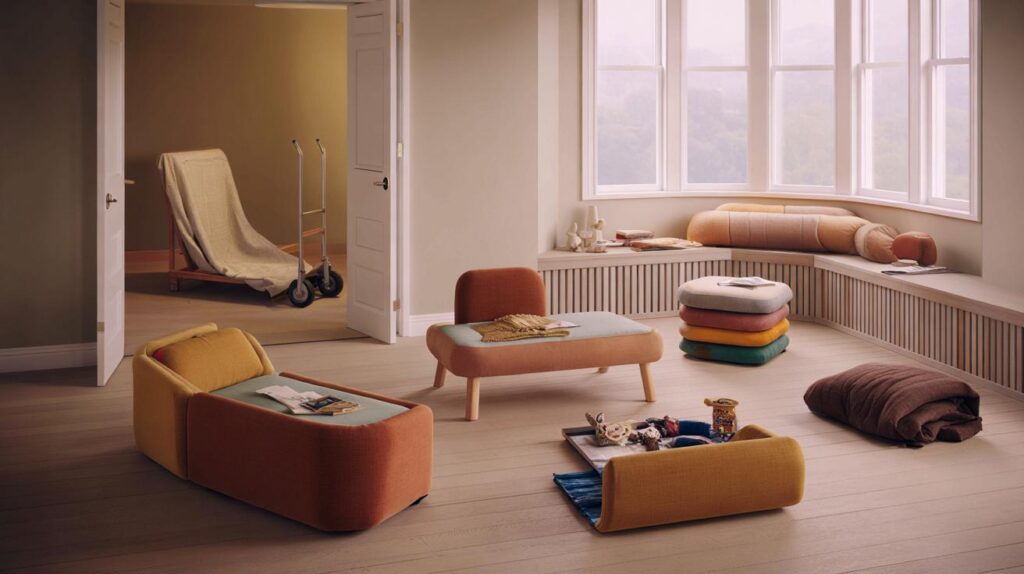
Space, budgets and family life are colliding. Living rooms are shifting shape, and the seating you rely on is changing.
Across Britain, households are rethinking how they sit, socialise and switch off. As 2026 nears, flexible seating is edging ahead of bulky single chairs, promising more room to play, work and host without spending a fortune.
Why the armchair is losing ground
Armchairs once signalled comfort and status. Now they often block the flow of compact rooms, dominate sightlines, and limit how a family rearranges a space for study, screens or guests. A fixed chair locks a layout in place. A piece you can nudge, stack or slide gives you options.
Most new-build lounges are smaller than those of a generation ago, so every centimetre matters. The moment you remove a pair of deep armchairs, the room breathes. You can pull a coffee table off-centre, roll out a playmat, or set up a laptop without a wrestling match with upholstery.
Swap out two 90 cm armchairs and you can free roughly 1.6 sq m — enough for a play zone, a yoga mat or a compact desk.
Families also want furniture that adapts to life’s rhythms: film night, homework hour, weekend visitors, quiet reading. A single-use chair struggles to keep pace. Pieces that zip together, stack or sprawl across the floor meet that brief with less visual clutter.
What’s replacing it in 2026
Designers are leaning into soft, mobile seating that can reset the mood in seconds. Here are the front‑runners:
- Modular floor sofas: low-slung blocks that join like Lego, great for corners and bay windows.
- Giant beanbags: supportive beads, washable covers, easy to drag to the best screen angle.
- Chaise longues and daybeds: stretch out solo or seat two; instant napping zone for guests.
- Ottomans and pouffes: perch, prop or serve as a tray surface; stash toys inside lidded versions.
- Floor cushions and tatami mats: stackable, light, and calm the room with a lower horizon.
- Loveseats with wheels: compact two‑seaters that glide for quick re‑layouts.
- Convertible futons: daytime seating that flips to a sleep surface when cousins stay over.
- Nesting stools: pull out extra perches for parties, tuck them away the next day.
- Corner bolsters: sculptable wedges that turn a wall or radiator bench into a snug nook.
Modular floor sofas
These break free of standard sizes. Start with two or three modules and add as your family grows or your budget allows. Curved corner pieces soften a boxy room, while armless blocks slot neatly under windowsills. Most covers unzip for washing — a relief after spaghetti night.
Giant beanbags
Not the floppy sacks of your student days. Denser fills hold shape, spreading weight and easing pressure points. Look for double‑stitched seams, child‑safe zips and machine‑washable textiles. Two large bags can morph into a sprawling movie nest faster than you can say “remote?”.
Chaise longues and daybeds
These earn their keep. Set one by a window for solo reading, rotate it for extra seating when guests arrive, and use it as an overflow bed after midnight. Slim wooden feet keep the profile light, which helps smaller rooms feel airy.
The winning brief for 2026 is simple: lighter, lower, and easier to move — with covers you can clean without a drama.
Design cues shaping the look
The shift away from upright chairs arrives with a warmer palette and softer geometry. Curves and rounded corners ease traffic flow and reduce stubbed toes. Natural fibres such as linen, cotton and bouclé add texture without visual noise.
Earthy colours are everywhere: terracotta, saffron and chocolate sit well with off‑white walls and pale oak floors. A low horizon increases the sense of width, while a few tall lamps or plants keep the room from feeling too grounded.
| Option | Typical footprint per seat | Approx price (UK) | Best for | Moves easily |
|---|---|---|---|---|
| Modular floor sofa | 70–90 cm square | £250–£450 per module | Families, renters, awkward rooms | Yes |
| Giant beanbag | 80–110 cm diameter | £60–£200 | Gaming, films, teens | Yes |
| Chaise/daybed | 70 x 150–180 cm | £250–£800 | Lounging, guests | Moderate |
| Ottoman/pouffe | 50–80 cm square/round | £80–£300 | Extra perch, storage | Yes |
| Floor cushions | 60–90 cm square | £25–£70 | Kids, quick seating | Yes |
How to plan your swap
A quick plan avoids regret and returns. Treat it like a mini layout project.
- Measure the clear floor once your current chairs are out; mark maximum footprints with masking tape.
- Map your routes: doorway to sofa, sofa to kitchen, sofa to plug sockets and screens.
- Set the seating brief: six for films, four for gaming, two quiet corners for reading or calls.
- Pick a low anchor first — a chaise, two modules, or a daybed — then layer in mobile perches.
- Choose performance covers: removable, washable, tightly woven, stain‑resistant where possible.
- Keep at least 60 cm walkways so vacuuming and toy tidying don’t become obstacle courses.
Budget for textiles. A spare set of covers often costs less than one professional clean after a spill.
What families of five ask first
Will the room still feel cosy? Yes, if you tie elements together: a thick rug, warm throws and two or three colours repeated across cushions and lamps. Will there be enough back support? Add triangular bolsters along walls and choose modular pieces with firmer foam for edge seats.
Is it child‑safe? Look for rounded edges, anti‑tip feet, zipper guards, and fabrics rated for high rub counts. Store small toys in an ottoman so you can convert the space from playroom to lounge in minutes.
Costs, care and lifespan
Entry routes vary. A pair of large floor cushions can start under £100. A solid daybed lands mid‑range. Modular seating spreads spending: buy two blocks now, add a corner and ottoman later. Removable covers keep items out of landfill for longer, as you can refresh fabric without replacing frames.
Care is simple but routine matters. Rotate modules monthly to even wear. Vacuum seams where crumbs gather. Wash covers on cool cycles and air‑dry to protect fibres. A small spot‑clean kit — mild soap, white cloths, enzyme remover — pays for itself the first time juice goes flying.
Small-space tactics that pay off
Push seating a touch off the walls to create airflow and cable runs. Use a slim console behind a chaise for chargers and remotes. Add a nesting side table set so each person can pull a surface close, then tidy them into one stack.
A wall shelf at shoulder height can replace a bulky bookcase. That frees lower space for a rolling ottoman that shuttles between leg rest, coffee table and extra seat when the doorbell goes.
If you still love a chair
Keep one, but make it earn its spot. Choose a lightweight frame with open legs, a swivel for flexible conversations, and a fabric that matches your modular pieces. Place it where it won’t pinch walkways, and pair it with a small footstool that tucks away.
Extra ideas to try now
Test the concept without a big spend. Temporarily remove a chair for two weeks and track how you sit each evening. Sketch alternative layouts, or tape outlines on the floor to simulate module sizes. If you host often, consider a foldable guest mattress that slides under a daybed; it beats inflatables at 2 a.m.
Thinking longer term, pieces that split and rejoin help with house moves and room reassignments. They also suit renters who face narrow stairwells. One final check: if you rely on floor seating, add a firm back support to reduce slouching during long film marathons. Your spine will thank you in 2026 and beyond.



Swapped two hulking chairs last month and the room literally breaths. Your tape-out plan plus a low chaise + pouffe combo made game night way easier, and the washable covers saved my sanity after spaghetti night. This piece nailed the ‘lighter, lower, movable’ brief—definately keeping this trend into 2026.