
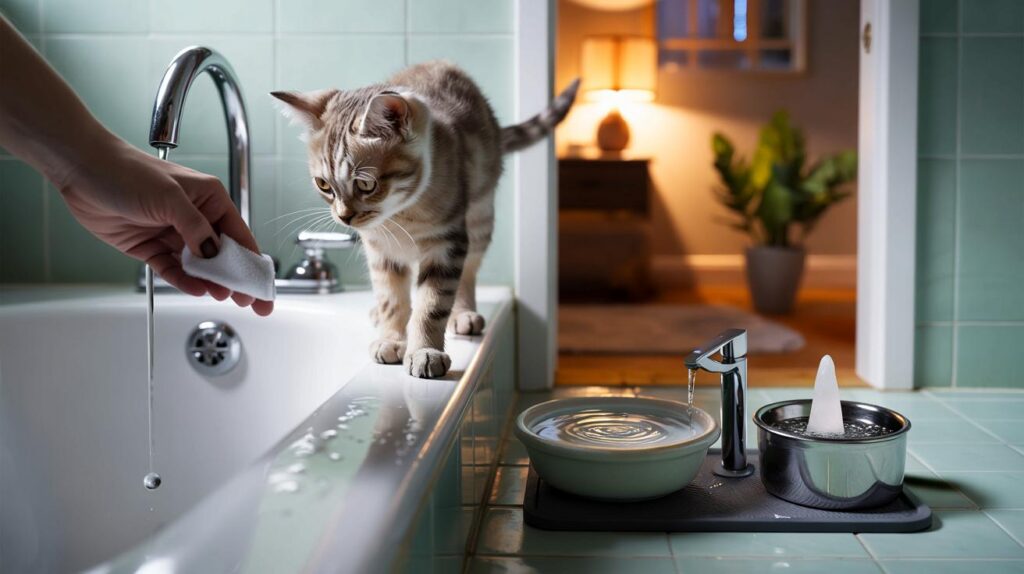
As cold nights set in and radiators click on, household routines shift. Many cats quietly change where, when and how they drink.
Across the country, owners are spotting damp pawprints on enamel and a nose peering into the tub. Behaviourists say the bathroom’s lure has simple causes, and quick, practical fixes can restore the humble water bowl to centre stage.
Why the bathtub beats the bowl for many cats
Freshness and movement matter
Cats prefer water that smells fresh and moves a little. A thin film forms on standing water, and that subtle change can put a cautious feline off. The bathtub often holds tiny droplets after a shower, and those look and taste livelier than a day-old bowl.
Sound plays a role. Trickling taps draw attention. A short drip can mimic a stream, which feels safer to drink from than a silent surface.
Scent and material issues owners miss
Odour is the hidden deal-breaker. Plastic bowls can trap smells from washing-up liquid, old food or the cupboard where the bowl sits. Limescale clings to rough surfaces and taints flavour. Even a clean-looking bowl can carry a scent that your cat detects instantly.
Metals and glazed ceramics resist odours better. Wide, shallow shapes also cut “whisker fatigue”, the uncomfortable brush of sensitive whiskers on high sides.
Placement and routine shape drinking choices
Many cats avoid water beside food or the litter tray. In the wild, resources sit apart; the same preference shows up in the home. The bathroom offers quiet, cool tiling and distance from busy spots. That calm zone can beat a bowl placed near clattering kitchens or doorways.
Healthy hydration target: around 40–60 ml of water per kilogram of body weight per day, including moisture from wet food.
Nine fixes you can try in 24 hours
- Move the bowl away from food and litter. Pick a quiet, low-traffic corner where the cat can scan the room.
- Refresh water morning and evening. In heated homes, water warms quickly and loses appeal.
- Add a few ice cubes on warmer days or when rooms feel stuffy. A slight chill boosts interest.
- Switch to stainless steel, ceramic or glass. Avoid plastic, especially if it looks scratched or retains a smell.
- Choose a wide, shallow bowl. Keep water below the rim so whiskers do not press against the sides.
- Create two or three “hydration stations”. Distance encourages casual sipping during normal patrols.
- Rinse with hot water only. Skip scented detergents; if used, rinse thoroughly to remove residue.
- Offer a slow fountain for running water lovers. Aim for a gentle burble rather than a noisy cascade.
- Trial lightly flavoured water. A splash of tuna water (unsalted, in spring water) or low-salt chicken broth can tempt picky drinkers.
Quick win: wash bowls every 48 hours, change water daily and position at least a room apart from food and litter trays.
Choosing the right bowl: what actually helps
| Material | Odour retention | Ease of cleaning | Best for | Watch-outs |
|---|---|---|---|---|
| Plastic | High | Fair | Temporary use | Scratches, lingering smells, possible taste transfer |
| Stainless steel | Low | High | Daily use | Clanging noise if placed on hard floors |
| Ceramic (glazed) | Low | High | Home stations | Check glaze; replace if chipped |
| Glass | Low | High | Odour-sensitive cats | Heavier; avoid slippery placements |
Make the bowl the headline act, not the bath
Build quiet hydration stations
Set bowls on non-slip mats in peaceful corners. Keep them away from loud appliances, swinging doors and busy walkways. Provide a clear view of the room so a cat can drink without surprise from behind.
Near a window works for some, but not in harsh sun. Mild shade prevents warm, stale water. Avoid radiator ledges where heat speeds evaporation.
Multiply options without clutter
Two cats benefit from three or more stations. Spread them across levels if your home allows. A landing, a study corner and a living room nook create choice without crowding one spot.
Rotate bowl shapes and heights. A low ramekin on the floor, a raised shallow dish, and a fountain serve different preferences through the day.
Observe, measure and tweak
Track intake for a week. Fill a measured jug in the morning and note how much you use to top up all bowls. Compare this with your cat’s weight to see if targets are met.
If intake falls short, increase wet food. A 4 kg cat eating mostly wet food may meet half its needs from meals alone. Aim for complete, balanced recipes rather than treats in gravy.
Red flags: sudden thirst, frequent urination, weight loss, vomiting or lethargy. Book a veterinary check if any appear.
Seasonal context and health angles owners should know
Autumn and winter central heating dries the air. Low humidity encourages mild dehydration and concentrates urine. That raises the risk of urinary discomfort in some cats, especially neutered males. Extra water stations and regular cleaning help counter that shift indoors.
Bathroom drinking can be harmless habit or a useful clue. A cat that seeks running water may dislike bowl odour, depth or placement. Fix those variables before assuming mischief. If the change is sudden and paired with night-time vocalisation or litter tray floods, consider conditions such as kidney disease, diabetes or hyperthyroidism. Early advice from a vet avoids delays in treatment.
Practical add-ons that make a difference this week
- Test a silent, low-flow fountain for two weeks; clean its filter weekly to prevent biofilm.
- Use a water diary. Note times your cat drinks and the station chosen; move neglected bowls closer to preferred routes.
- Offer rainwater or filtered tap water if your area tastes strongly of chlorine; introduce changes gradually.
- Try puzzle feeders for dry food in a separate room so the water area stays calm and welcoming.
One final tip: give the bathtub a fair contest. After showers, wipe residual droplets so the tub loses its sparkle. When the bathroom stops offering fresh, cool beads, the redesigned bowl stations regain the spotlight and your cat finds a reliable, pleasant place to drink.



Great breakdown. Moving the bowl away from the food and switching to a wide, shallow ceramic dish was the missing piece here. My tabby was definitly whisker-fatigued. Also didn’t realize detergent smells linger—rinsing with hot water only made an immediate difference.
Funny thing: mine ignores bowls but goes for the shower drip and the plant vase. If I get a fountain, how do I stop it turning into a biofilm swamp or a noisy splash zone?