
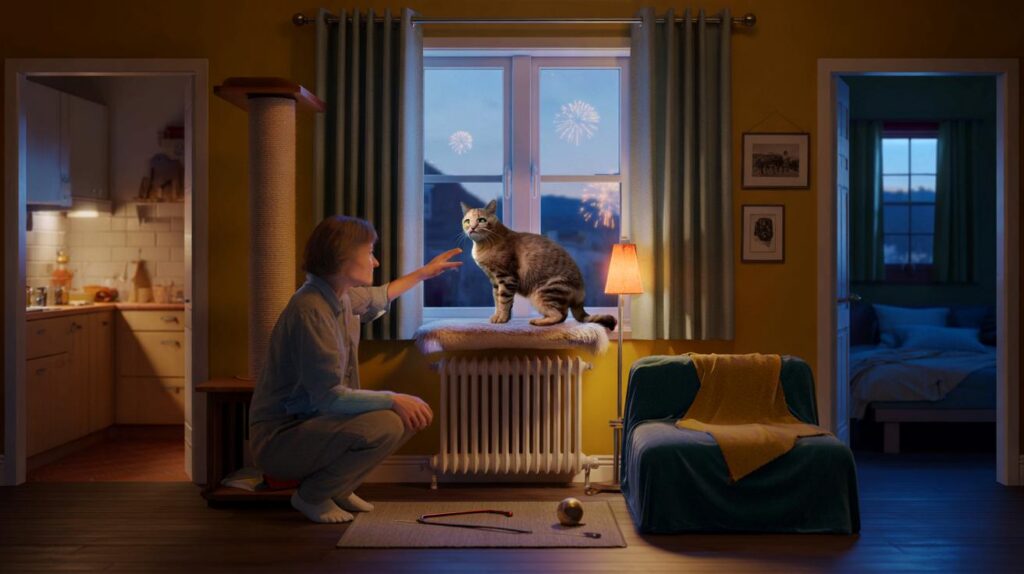
As nights draw in, households across Britain report puzzling shifts in feline mood, from silent retreats to frosty stares and skittish paws.
If your cat dodges your hand, vanishes under the bed or stares you down from the doorway, it isn’t a sulk. It’s feedback. This guide maps the warning signs and shows how to respond without force, panic or guilt.
Why your cat is stepping back
Domestic routines change in autumn. Heating clicks on. Windows stay shut. Bonfire Night noise arrives. Work hours shift. Cats notice it all. Sensitive animals recalibrate to feel safe again. Some withdraw. Others bristle. Pain can sit underneath the behaviour and skew everything. Start by treating distance as a message, not a slight.
Withdrawal is a safety strategy. It says “something feels wrong” long before you spot the cause.
The seasonal triggers you might miss
- New sounds: boilers, radiators, fireworks, louder TVs behind closed windows.
- New scents: strong detergents, seasonal candles, perfume, DIY sealants or paint.
- New traffic: visitors, a baby’s gear, school bags, parcels, ladders and tools.
- New rules: doors shut, furniture moved, litter tray relocated, feeding time shifted.
- New pain: arthritis flares in cold, dental aches, tummy upsets after diet changes.
Eleven red flags that point to deeper stress
One sign can come and go. Several together signal a genuine problem that needs action.
- He avoids your path or leaves the room when you enter.
- She hisses, growls or spits when you approach.
- Claws come out during routine contact or near doorways.
- Nips or full bites appear during petting or handling.
- Toileting happens off the tray, on beds, sofas or in corners.
- A hard, hostile stare holds for several seconds.
- He flinches from strokes or rebuffs touch he once liked.
- Scratching starts on your bag, shoes or the sofa you use most.
- She won’t eat while you stand nearby, but eats when you leave.
- He blanks you entirely, even at meal times.
- The tail whips on approach; ambush swats or sharp, tense meows follow.
If three or more red flags show for a week, investigate for pain first, then fix the environment.
What your cat’s body is trying to say
Cats telegraph discomfort in tiny, specific ways. Ears angle sideways. Whiskers pull back. Paws tuck under the chest. Pupils blow wide in daylight. The tail trembles or flicks. Many people miss the slow retreat that starts days before a scratch or bite. Watch the path your cat chooses through the room. Detours mean avoidance.
Pain, fear, or both?
Fear makes a cat create space. Pain makes the space non-negotiable. Older cats often hide joint pain when floors feel cold. Dental disease causes irritability and food fussing. Gut discomfort links to tray avoidance. If you see stiffness after naps, small jumps declined, or a change in grooming, book a vet check.
| Likely cause | Tell-tale clue | Practical check | First step |
|---|---|---|---|
| Arthritis | Reluctance to jump, overgrown claws | Place food on a low surface; watch effort | Warm resting spots; vet pain assessment |
| Dental pain | Head tilt at bowl, chew on one side | Offer soft food; note drool or pawing | Dental exam; adjust texture of meals |
| Noise stress | Hiding at dusk, startle at pops | Track reactions around fireworks | Quiet room, sound masking, den boxes |
| Scent shock | Avoids cleaned spots or new rug | Compare behaviour before/after cleaning | Use unscented cleaners; re-scent with cloth rubs |
| Social conflict | Blocked doorways, stare-downs | Watch interactions near resources | Duplicate bowls, trays, beds, high routes |
What to stop doing this week
- Don’t follow, scoop up or corner a hiding cat.
- Don’t stare, clap, scold or shut access to safe rooms.
- Don’t move the litter tray to punish accidents.
- Don’t flood the house with strong fragrance or loud music.
- Don’t pet past the cat’s choice; count three strokes, then pause.
Permission changes everything: let the cat choose the distance, the place and the timing.
Seven fixes vets and behaviourists rate
Create calm in three rooms
Sit room by room. Kitchen: keep feeding predictable within a 30‑minute window. Living room: carve a high, warm perch away from footfall. Bedroom: assign a door-open policy during the day so the cat can scent-mark the duvet and decompress.
- Offer two exits in main rooms to avoid blocking.
- Add a fleece-lined hideaway; place it above knee height.
- Mask fireworks with steady brown noise or a spoken radio station.
Upgrade the litter set-up
- Follow the rule “cats + 1”: two trays for one cat, three for two cats.
- Use unscented clumping litter; keep depth at 5–7 cm.
- Place trays in two separate, quiet locations, not side by side.
- Clean daily; wash weekly with hot water only.
Make touch optional
Turn side-on. Crouch. Extend a finger and wait for a cheek rub before any stroke. Pet for a few seconds and stop. If the cat leans in again, repeat. If not, you respect the answer. Short sessions rebuild trust faster than long, needy cuddles.
Switch to low-effort play
Arthritic or tense cats still benefit from hunting games. Use a wand toy that glides, not darts. Keep sessions at five minutes, twice daily. End with a snack to complete the hunt‑eat‑groom‑sleep cycle that lowers stress hormones.
A 48‑hour reset that calms the house
- Day 1 morning: map resources. One water bowl on each floor, one food station per cat, one scratch post per room you use most.
- Day 1 evening: set a warm zone at 20–22°C with a covered bed and a view.
- Day 2 morning: scent-swap. Rub a soft cloth over the cat’s cheeks and stroke door frames at cat height.
- Day 2 evening: five-minute wand play, then a high-value treat given on the floor, hands still.
When to call the vet or a behaviour pro
Book a veterinary exam if withdrawal lasts more than seven days, if you see weight change, if the cat cries when moving, or if toileting shifts away from the tray twice in a week. Pain relief often flips the whole picture within days. If the medical check clears, a qualified feline behaviourist can audit the home and coach gentle routines by video or in person.
Medical rule of thumb: any sudden change in behaviour is a clinical sign until a vet says otherwise.
How to track progress without pressure
Use a simple scorecard for two weeks. Note approach distance in metres, daily play minutes, and whether the cat eats near you. You want small upticks, not perfection. Normalisation looks like this: the cat grooms in view, naps with back exposed, blinks slowly and resumes short hallway greetings.
Extra context that helps decisions land
Think like a landlord of tiny territories
Cats divide our homes into micro-zones. Food belongs to quiet corners. Toilet sites need privacy and easy escape. Sleep belongs to warm heights. When zones overlap, stress rises. Your job is to separate them by a few steps and keep each zone predictable.
Budget and time: what to expect
- Heat pads or radiator beds: £20–£35; often reduce joint stiffness and grumpiness.
- Vet assessment with pain trial: £60–£120; life-changing if arthritis hides in plain sight.
- Behaviour consult: £80–£250; useful if multi-cat conflict blocks progress.
- Daily time: 15–20 minutes split between feeding routine, play and quiet presence.
Small risks to avoid while you rebuild trust
- Overfeeding treats can trigger tummy upsets and worsen litter issues.
- Laser pointers can frustrate; always end with a catchable toy or food.
- Closing off favourite hideouts can prompt frantic door-scratching or spraying.
A quick note on scent games
Scatter a few dry treats across a textured mat once a day. Hide two under a paper cup. Let the cat solve it. Scent work builds confidence, burns stress and keeps minds busy when nights come early and the garden loses appeal.



This is the first guide that actually explains the “doorway stare”! We tried steady brown noise last night and my skittish tabby definitley settled—no 2 a.m. zooms, just a calm loaf. Also switching to unscented litter made a massive difference within a day. The hunt‑eat‑groom‑sleep cycle tip is gold; 5‑minute wand sessions are sustainable after work. Thanks for the pragmatic, no‑guilt tone.