
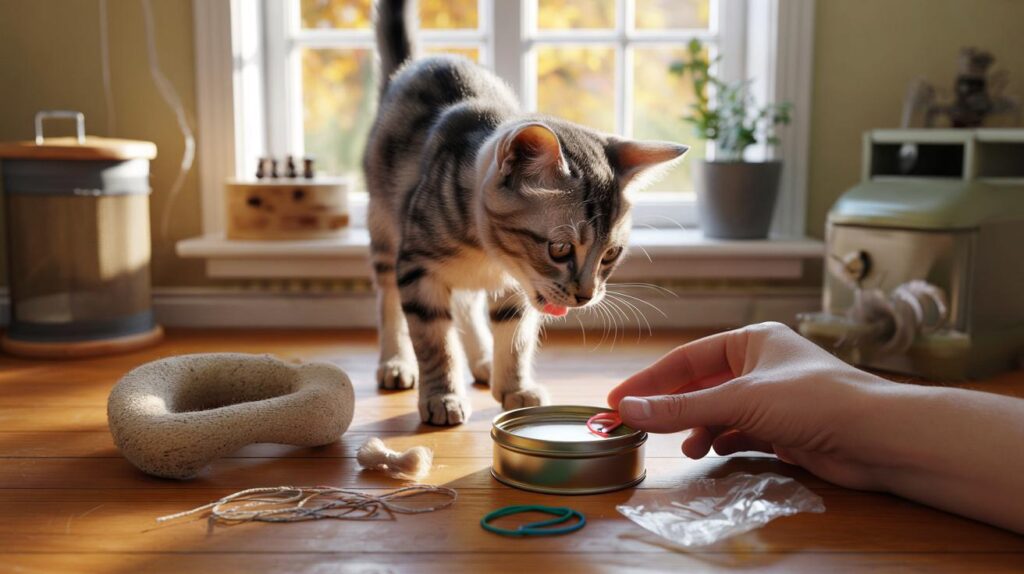
Autumn clear-outs keep turning up chewed bands, frayed threads and shredded wrappers. The scene looks comic until the bill lands.
Owners across the UK report cats hoovering up elastic bands, hair ties and stray packaging. Curiosity can slide into a pattern that risks pain, surgery and a drained savings pot. Here is how to tell play from peril, and the low-cost actions that change the outcome fast.
When curiosity tips into risk
Most cats bat, chew and spit. They mouth a string, then walk away. The line blurs when the object vanishes and your cat keeps looking for more. That pattern has a name: pica. It means repeated eating of non-food material such as fabric, plastic or wool. It shows up in young cats and in some oriental-type breeds more often. It also appears after routine changes at home.
Normal mouthing versus pica
- Normal: brief chewing, object remains intact, no tummy upset after.
- Concerning: items go missing, chewing lasts minutes, your cat hunts similar textures.
- Urgent: vomiting follows, stools stop, belly feels tight, your cat hides or cries.
Medical triggers can sit behind the habit. Nausea drives cats to lick and chew. Dental pain, parasites, gut disease, hyperthyroidism and anaemia belong on the checklist. A vet can rule these in or out.
Chewing is not the problem; swallowing is. Track what disappears and how your cat behaves in the next 24 hours.
Red flags you cannot ignore
Foreign bodies block, cut or bunch the bowel. Thin “linear” items such as thread or ribbon can saw the gut from the inside. Time matters.
- Repeated vomiting or gagging within hours of a suspected swallow.
- No stools or only tiny dry pellets for 24 hours.
- Hunched posture, belly pain, lip licking, drooling or reluctance to move.
- Sudden loss of appetite, unusual sleepiness, rapid breathing.
- String seen in the mouth or from the anus (do not pull).
If any red flag appears after an object goes missing, phone your vet the same day. Do not wait overnight.
Proven fixes you can start today
Enrichment that steals back attention
Cats hunt, pounce and dissect. Replace random foraging with controlled tasks. Two daily play bursts of 10 minutes drain energy. Use a wand toy, let your cat catch, then swap for food. Puzzle feeders satisfy the need to work for meals. A window shelf adds safe novelty. Rotate toys weekly to keep interest high.
Home safety audit
- Collect elastic bands, hair ties, sewing thread and ribbon every evening.
- Cut handles from paper bags; store plastic bags in a closed drawer.
- Close laundry baskets; use a lidded bin; empty food packaging promptly.
- Tape loose cables; hide cords in trunking; tie back blind strings.
- Offer chew-safe options: silvervine sticks, large kicker toys, silicone teething rings made for cats.
| Object | Main risk | Do this now | Safer swap |
|---|---|---|---|
| Elastic bands | Intestinal blockage | Remove from sight; keep in a tin | Wide fabric hair scrunchie locked away after play |
| Thread or ribbon | Linear foreign body | Do not pull; call vet if seen in mouth/anus | Thick fleece strip used under supervision |
| Plastic wrap | Choking; obstruction | Bin immediately in lidded container | Puzzle feeder with slow-release kibbles |
| Hair | Hairballs; constipation | Brush daily; add fibre after veterinary advice | Cat grass grown in a heavy pot |
Spend £1 on a tin for bands and ties, and save hundreds by removing the temptation at source.
When to see a vet and what they may do
Call if you suspect swallowing and any sign looks off. Vets triage by phone and set an exam time. They may take abdominal X‑rays. They may use ultrasound to find thread or a scrunched wrapper. Bloods check for infection, dehydration and thyroid shifts. Activated charcoal rarely helps with plastic or string; it suits toxins, not objects.
Endoscopy can retrieve items from the stomach without a cut when timing is tight and the shape allows it. Surgery removes objects in the stomach or bowel when they lodge or perforate. UK fees vary. Expect £300–£600 for imaging and fluids. Endoscopy can sit near £800–£1,400. Surgery with hospital care often reaches £1,200–£2,500. Insurance limits matter, so keep policy details to hand.
Your vet may also treat the cause, not just the crisis. Deworming, pain control, antinausea drugs and diet adjustments can calm the drive to chew. They may refer for behaviour support if stress leads the pattern.
The behaviour behind the habit
Stress flicks the switch from play to compulsion. New baby, house move, builders, a change in work hours or a cold, quiet autumn can do it. Cats like predictability. They also need safe places to hide and perch. Give vertical routes, quiet sleeping zones and a stable feeding plan. Keep the litter tray spotless. Scent matters. Swap harsh cleaners for mild products and keep diffusers steady if used.
Train simple cues. Pair “drop” with a treat. Start with a toy, then use larger objects. Reward the release instantly. Never chase. Freeze, trade, and praise. Bitter sprays can deter chewing on cables, but test for staining and avoid anything spicy or caustic. Supervision stays key.
A seven‑day reset plan
- Day 1: two 10‑minute play sessions; start the nightly two‑minute floor sweep.
- Day 2: move feeding to two puzzle feeders; remove free‑feeding bowl.
- Day 3: add a window perch and one cardboard hideout.
- Day 4: teach “drop” with a soft toy; 10 reps; reward every release.
- Day 5: cable tidy hour; bag audit; label a “bands and ties” tin.
- Day 6: brush session; note stools and hairball frequency.
- Day 7: review; keep what worked; book a vet check if chewing persists.
Extra context that helps you act
Texture preference guides risk. A cat hooked on crinkly wrap needs noisy toys and shreddable cardboard. A thread hunter needs wand games that end in a food scatter. Match the fix to the lure. Track costs, too. A £10 set of foraging toys can cut food waste and flatten midnight raids on the bin. A £5 cable cover prevents a £150 electrician call and a vet visit.
Measure progress. Keep a log: missing items, play minutes, vomiting events, stool quality and appetite. Patterns reveal triggers. A routine change might correlate with a spike in scavenging. Small tweaks then land better than big reforms. That steady approach protects your cat and your home, while keeping your wallet out of the firing line.



Brilliant guide—never knew “linear foreign body” was a thing. The ‘don’t pull’ rule could save lives. Printing this for the fridge.
Is pica really that common, or are we over‑pathologising normal mouthing? My three cats chew threads then spit them out; no issues in 10 yrs. Genuine question.