
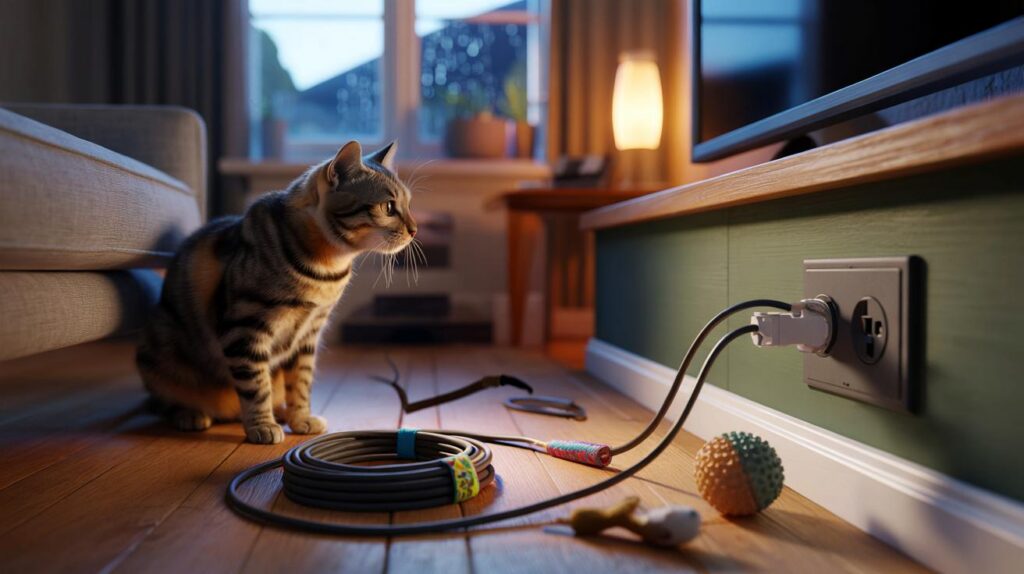
Autumn brings longer nights and curious whiskers. Behind the sofa, a quiet hazard lurks as households juggle chargers, lamps and leads.
As homes fill with extension blocks and phone chargers, many cats see dangling wires as toys with bite. Mains power sits at 230v, plastic tastes novel, and one careless nibble can end in a vet visit or a ruined gadget. Here is how to act fast, spend little, and keep both pet and power safe.
Why cats target your cables
Chewing as play and teething
Young cats test the world with their mouths. Chewing relieves teething pressure and turns loose wires into game pieces. Texture and movement add to the thrill. A flex that swings when a tail brushes it invites another pounce and a bite.
Stress, boredom and routine
Indoor life can leave a cat under‑stimulated. Boredom drives foraging and fiddling. Stress pushes some pets to repetitive behaviours, including gnawing. A predictable routine with short, rich play sessions reduces that urge. So does offering legal “chew targets”.
Chewing tells you something: your cat needs to play, to forage, or to soothe. Meet that need and the wires stop mattering.
The risks you face in a 230v home
A frayed live cable can do more than trip the breaker. A cat can suffer oral burns, muscle spasms and breathing trouble. In some cases, current can pass to a metal object and start a fire. Splintered plastic can also lodge in the gut and cause a blockage.
Act on the first tooth marks. A damaged flex is a live risk, not a cosmetic flaw.
Make every cable boring: physical and taste barriers
Start with the obvious: put a shield between teeth and copper. Then remove the fun by fixing movement and access.
- Braided sleeving or split conduit: slide it over chargers and lamp leads to create a tough, rounded surface.
- Cable boxes for power strips: box in the tangle and feed out only what you need.
- Stick‑on trunking: route wires against skirting or along furniture edges so nothing dangles.
- Shorten excess: use Velcro ties to coil slack and keep loops off the floor.
- Taste deterrent sprays: apply a cat‑safe bitterant to any exposed sections you cannot route away.
- Furniture layout: pull devices forward, push cables behind, and block crawl‑through gaps with storage cubes.
| Fix | Approx cost | Install time | Best for |
|---|---|---|---|
| Braided cable sleeve, 2 m | £6–£10 | 10 minutes | Laptop and phone chargers |
| Split conduit, 5 m | £8–£15 | 15 minutes | TV and console leads |
| Cable box for power strip | £12–£18 | 5 minutes | Home office corners |
| Stick‑on trunking, 3 m | £10–£16 | 20 minutes | Skirting runs to lamps |
| Bitter spray, 250 ml | £7–£10 | 2 minutes | Exposed sections you cannot hide |
Choose deterrent sprays labelled for pets and electronics. Test a small patch first. Reapply after cleaning or every few days until interest fades. Replace any lead with cracked insulation; do not cover damage and carry on.
Unplug, isolate, replace: never tape a chewed lead and hope for the best.
Redirect the bite with daily play
Ten‑minute sessions, twice a day
Short, intense play burns energy and reduces the need to gnaw. Use a wand toy to mimic prey. Let your cat catch and “win” at the end. Rotate toys so novelty stays high. Two sessions of ten minutes, morning and evening, suit most indoor cats.
Give legal chew targets
Offer rubber chew mice, textured balls, matatabi sticks and fabric pouches stuffed with catnip. Keep a few by high‑risk zones such as the TV unit or the charging station. Swap items weekly to refresh scent and feel.
Quick safety audit: room by room checklist
- Sitting room: tie up TV, console and speaker leads; box the power strip; route lamp flexes along skirting.
- Home office: lift laptop chargers off the floor; sleeve the cable; unplug when not in use.
- Kitchen: keep small‑appliance cords off counters; use a hook rail; avoid dangling toasters or mixers.
- Bedroom: charge phones on a high shelf; use a short cable; add a bedside trunking strip.
- Hallway: block under‑unit gaps so cats cannot creep behind shoe cupboards to reach a socket.
Spot the warning signs after a chew
Check for scorched whiskers, singed fur, drooling, pawing at the mouth, rapid breathing or lethargy. If you suspect a shock, switch off power at the wall before you touch the lead, then call your vet. Offer water. Do not apply creams to burns. Keep your cat warm and quiet while you travel.
Autumn timing and small changes that pay off
Shorter days shift play to indoors. That change pushes many cats towards cables, especially in flats with few climbing spots. Add a window perch, a cardboard scratcher and a puzzle feeder. These low‑cost tweaks reduce frustration and keep teeth busy in the right places.
Budgeting your fix: what £20 can buy this week
With £20, you can sleeve two chargers, buy a bottle of bitter spray, and add a pack of Velcro ties. That bundle removes the dangling temptation, makes remaining cables taste awful, and shortens the rest. If you have more to spend, add a cable box and trunking to lock down the living room.
When gadgets tempt, change the environment
Cats return to spots that reward them. Reduce rewards and you break the habit. Coil spare leads and store them in a lidded box. Charge devices at set times and unplug after. Close off the back of the TV unit with a thin board, or slide in storage cubes to block access. The less movement and light behind the screen, the less hunting drive you trigger.
If you rent, go reversible
Use adhesive trunking that peels cleanly. Strap conduit to furniture legs rather than walls. Run cables under rugs with a non‑slip underlay. Choose freestanding cable boxes and floor‑standing shelves to hide sockets without drilling.
Training adds a quiet layer of safety
Pair a gentle “leave” cue with a reward. When your cat glances away from a wire, mark it with a click or a “yes”, and pay with a treat. Keep sessions short. You build a safer default choice for curious moments. Combine training with management for the strongest effect.
Aftercare for damaged kit and insurance tips
Retire any cable with dents, cuts, or exposed copper. Replace third‑party chargers with certified versions. Photograph damage for contents insurance if a surge takes out a device. Some pet policies contribute towards emergency treatment after electrical injury; check your terms before you need them.
Need a plan for tonight?
Do a 10‑minute sweep before bed. Unplug idle chargers. Tie and lift one messy cluster. Spray exposed leads. Toss a chew toy by the TV. Set a reminder for a morning play burst. Small actions, repeated daily, keep curiosity away from 230v — and keep your cat safe from the danger humming behind the cabinet.



Do bitter sprays actually work long‑term, or do cats just acclimate and chew anyway once the taste fades? Wondering if braided sleeving + trunking is enough for a serial nibbler who targets phone chargers specifically.