
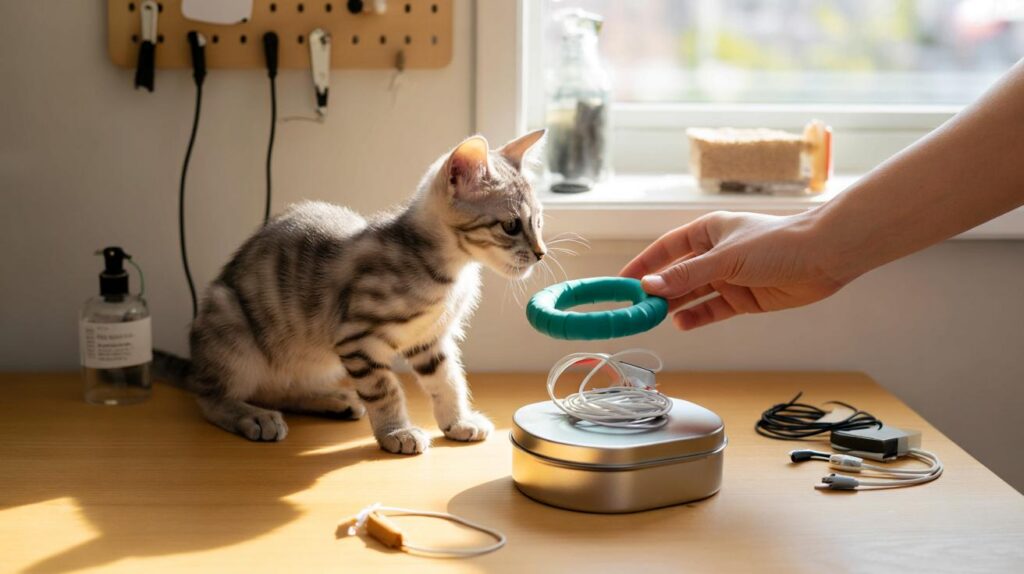
New gadgets fill your desk this season, yet the real hazard stalks the leads: curious teeth, quick paws, and expensive repairs.
Across the country, owners return home to frayed wires and silent earbuds. Cats don’t plot sabotage; they chase textures, odours and movement. A thin, springy cable feels like prey, smells like you, and twitches when you set it down. The result is predictable: bite marks, faults, and the nagging fear of a shock. You can turn that cycle around within days.
Why cats chew cables
Cats chase stimulation. Chewing meets several needs at once. The soft sheath gives a satisfying give. The human scent reassures. Dangling cords invite a pounce. Kittens teethe, adults relieve stress, bored cats create their own fun. Some gnaw to grab your attention during calls or gaming. These triggers guide the fix.
Match the texture, remove the temptation, and add structure. Three moves beat most cable-chewing habits fast.
Quick wins you can apply today
Redirect with chew-friendly toys
Offer your cat something better than a wire. Choose silicone chew rings, knotted fabric ropes, catnip stems, or plush mice with crinkly cores. Keep three textures in rotation so novelty stays fresh. Schedule two five-minute play bursts each evening. End play with a chew toy and a small treat. This channels the urge away from your earbuds.
Stage an enriched territory
Set up a small hunt trail: a window perch, a scratching post, and a puzzle feeder near the usual cable battleground. Add a cardboard tunnel where movement rewards curiosity. Raise activity before your commute or screen time. A cat tired in mind and body ignores limp, boring cords.
Create a no-cat zone for your earbuds
Make storage automatic. Keep earbuds in a lidded tin, a zip case, or a drawer with soft-close runners. Park your charging base inside a simple cable box with a lid. Label one shelf “tech only” and stick to it. This one habit cuts most accidents.
- Put earbuds away the moment you stand up.
- Wind the lead with a fabric tie; no dangling loops.
- Park charging hubs at least one metre off the floor.
- Close doors to rooms with trailing wires during your absence.
Make your cables bite-resistant
Fit protective sleeves
Wrap vulnerable leads in a sleeve that resists teeth. Split-loom tubing, spiral wrap, or braided PET sleeving adds thickness and a tougher bite feel. For earbuds, choose 4–6 mm diameter sleeves so controls still operate. Cut cleanly and cap ends with heat-free end caps or a small strip of electrical tape. Thicker texture makes chewing unrewarding.
Use safe scent deterrents
Pair sleeves with a taste or scent cats dislike. Bittering sprays, citrus hydrosols, or a mild vinegar solution can help. Apply only to the sleeve, never to bare cable or connectors. Test a tiny patch first. Reapply every three days; scents fade. Store treated cables away from bedding to avoid scent transfer.
Tidy high and out of reach
Clip wires along furniture edges. Lift slack with Velcro ties. Coil earbuds and place them in a glass jar or metal tin. Mount a small pegboard above the desk and hang cases there. Fewer dangling shapes mean fewer ambushes.
| Method | Time to set up | Typical cost (UK) | Best for |
|---|---|---|---|
| Split-loom sleeve (1 m) | 5 minutes | £6–£9 | Earbuds, phone chargers |
| Spiral wrap | 7 minutes | £5–£8 | Multiple thin leads together |
| Bitter spray | 2 minutes | £7–£12 | Persistent chewers |
| Lidded cable box | 10 minutes | £10–£20 | Desktops and charging hubs |
Owners who combine a sleeve, a storage rule, and a chew toy report far fewer bite marks within 48 hours.
Train the behaviour, not the instinct
Reward what you want
Keep small treats in your pocket. When your cat looks at a cable but chooses a toy, mark the moment with praise and reward. If a mouth moves towards a lead, calmly place a chew ring between teeth and reward when the cat bites that instead. Use the 3×3 routine: three sessions a day, three minutes each, for three days, then taper.
Observe patterns and pre-empt
Note when attacks happen: before meals, during video calls, or when you return home. Offer play five minutes before those windows. Scatter a few dry treats in a puzzle feeder right as you sit down to work. Close curtains at dusk if reflections trigger pounces near TV wires.
Practise gentle vigilance
Adopt micro-habits. Unplug idle chargers. Replace any frayed cable immediately. Keep spare earbuds in a sealed case. Praise every good choice you catch. Small, steady actions reshape the routine.
Safety notes and extra ideas
Health checks and real risks
Chewed insulation can expose live cores. That risks burns, shocks, or a fire. A swallowed eartip or sheath fragment can cause a blockage. If chewing starts suddenly, ask your vet to check for dental pain or stress. Use RCD-protected sockets where possible and keep mains leads inside a proper cable box. Never coat bare wiring with liquids. Never heat-shrink near delicate earbud cables; use sleeves that fit without heat.
Going wireless, with caveats
True wireless earbuds remove the long lead, yet cases, tips and lanyards still attract playful mouths. Treat the case like jewellery: store it high, inside a tin or drawer. Add a silicone case with a smooth finish that discourages gripping. Keep desiccant packs away from pets.
Set a budget and a plan
Allocate £20 this week for sleeves and a chew toy. Spend 15 minutes fitting protection and clearing slack. Schedule two daily play bursts for seven days. Track incidents on a sticky note. Most homes see a sharp drop by day two, and steady improvement after a week.
Need a rapid start? Day 1: sleeve the earbuds and charger, spray the sleeve, and place both in a lidded box. Put two chew toys where cables used to lie. Day 2: add a short chase game before work and again before streaming. Day 3: move clips higher, reward every calm glance away from wires, and refresh the spray. Continue the routine and rotate toys twice weekly to beat boredom.
For multi-cat households, expand resources. Add an extra scratcher and a second feeding puzzle to reduce competition. Keep one quiet storage spot per room for tech. If a kitten shares the space, pick softer silicone chew rings and supervise closely. With structure, texture and tidy habits, you protect your earbuds and give your cat better choices every single day.



Kittens teething—any extra tips?
Did the split-loom sleeve + ‘put it away’ rule last night. Today: no frays, no drama. Under £10 and 20 mins, not bad!