
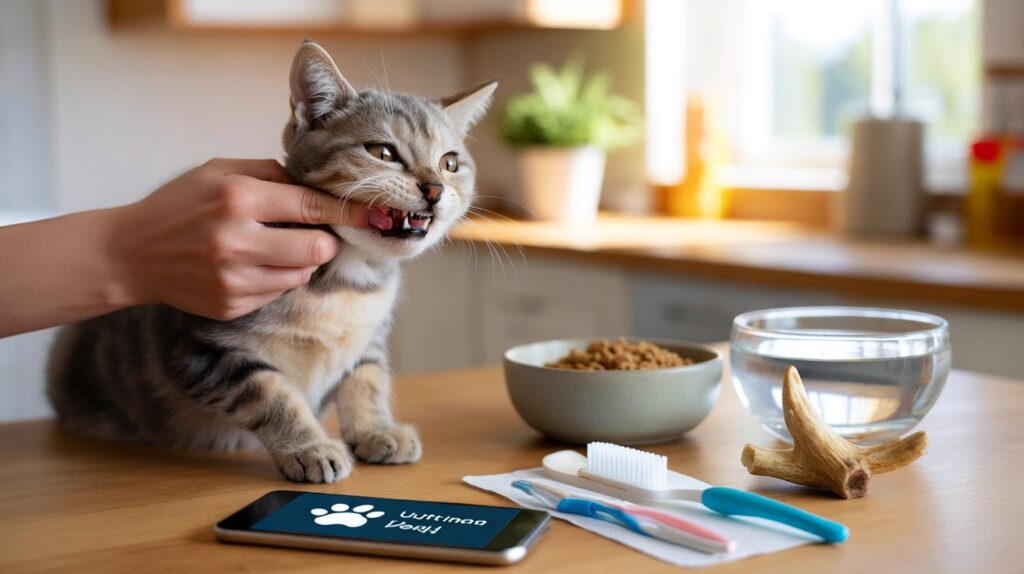
Cats hide mouth pain, but tiny shifts in appetite, grooming or head posture often point to dental trouble brewing this season.
Owners across Britain face the same trap: habits that feel caring can quietly damage a cat’s teeth. Here’s what to stop doing and what to change before a tooth is gone for good.
Spot the red flags before they snowball
What you can see, smell and hear
Watch for food dropping from the mouth, sudden fussiness with crunchy meals, a head tilt at the bowl, pawing at the face, drooling, or a sour odour. Bright red gum margins, a chipped tooth, or a coat that looks greasy because grooming hurts are classic signs. Some cats carry on eating despite pain. That does not mean the mouth is fine.
Any sudden change in eating or grooming is dental until proven otherwise.
When 72 hours matter
If drooling, bad breath, bleeding, or a broken tooth appear and do not settle within 72 hours, call your vet. Waiting lets inflammation deepen and infections track under the gum. Fast action shortens treatment and protects other organs, including heart and kidneys.
- Bad breath that wasn’t there last month
- Reluctance with dry food, yet eagerness for soft food
- Head tilt, jaw flinch, or chewing on one side
- Red, puffy gum lines or a grey tartar ridge
- Blood on toys or the water bowl
Four costly mistakes that make adult cats lose teeth
Mistake 1: trusting hard kibble to scrub teeth
Crunchy biscuits feel logical, but most shatter too quickly to clean below the gum line. Very hard foods can micro‑chip enamel, worsen existing disease and push cats to swallow pieces whole. Bones and antlers belong on the no‑go list. Choose diets proven for dental care, or balance textures with vet guidance.
Hard food does not brush teeth; plaque forms where kibble never touches — along the gum.
Mistake 2: skipping the brush and the weekly look
A 30‑second mouth check once a week catches problems early. Gentle brushing two to four times a week slows plaque. Use a cat toothbrush or finger cot and enzymatic cat paste. Never use human toothpaste. Start small: touch a canine tooth, praise, reward, and stop. Build seconds, not minutes.
- Set a weekly alarm: lift the lip, scan gum colour, sniff for sour odour
- Brush front teeth for 10 seconds; add back teeth next week
- Use dental gels, water additives or dental chews as add‑ons, not replacements
Mistake 3: waiting for pain to speak up
Cats mask pain to feel safe. By the time a tooth drops out, disease may have been active for months. A yearly dental exam suits most adults; high‑risk cats need checks every six months. Delays raise costs. Professional cleaning under anaesthesia typically ranges from £250 to £600; complex extractions can exceed £1,000.
Book the visit when you first think “Is that smell new?” not when the tooth is missing.
Mistake 4: feeding extremes and ignoring age
Diets that are too hard can crack or stress fragile teeth. Diets that are very soft let plaque thrive. Middle ground works best. Senior cats often benefit from mixed textures and warmed wet food that smells stronger. Ask your vet to match texture with the mouth you have, not the cat you wish you had.
What to feed and when to see the vet
| Situation | Better choice at home | Book a visit in |
|---|---|---|
| Red gum line, halitosis | Start brushing, add dental gel, offer softer texture for comfort | 72 hours if unchanged |
| Drooling, pawing mouth | Switch to soft food, remove hard chews | 48–72 hours (earlier if lethargic) |
| Broken or loose tooth | No chews; keep cat indoors | Within 24–48 hours |
| Heavy tartar, brown collar near gum | Daily brushing, dental diet trial | Non‑urgent check within 2–4 weeks |
A simple home routine that works
Keep water bowls brimful and clean. Offer a dental chew verified for cats two or three times per week. Rotate textures: wet food morning, dental diet evening, to limit plaque without stressing teeth. Play with soft wand toys rather than string or sticks that can chip incisors. Mark a calendar: mouth check every Sunday, weigh‑in every month to catch appetite changes early.
The science behind the sore mouth
Three problems dominate adult cats. Gingivitis begins at the gum edge where bacteria thrive; it is reversible with cleaning. Periodontal disease follows when ligaments and bone erode; pockets deepen and teeth loosen. Tooth resorption, common from four years onwards, dissolves the tooth from the inside. Cats may chatter their jaw when a lesion is touched. These conditions can overlap, which is why X‑rays under anaesthesia often reveal more than a surface look.
Pain management matters. Short courses of anti‑inflammatory medicine after dental work speed recovery. Many cats eat within hours following extractions and groom better within days. Anaesthesia risk remains low when clinics perform pre‑op checks and use tailored protocols for older cats or those with kidney issues.
Numbers you can act on today
- 2–4 times per week: brushing frequency that actually slows plaque
- 30 seconds: a realistic weekly lip‑lift inspection
- 72 hours: the window to call if drool, odour or bleeding persist
- 6–12 months: interval for dental checks, halved for high‑risk cats
Spend £5–£10 per month on prevention and you could avoid £500–£1,000 procedures later.
More ways to stay ahead
Pick chews with a soft give; avoid bones and hard plastics. Warm wet food slightly to boost aroma without extra salt. For anxious cats, train tooth care after play when endorphins are high, and pair each touch with a tiny treat. If brushing is a non‑starter, combine dental diets with gels applied to the gum line using a cotton bud; aim for contact time rather than scrubbing.
Adopt a checklist for vet visits: ask for a dental score, gum pocket depth, and whether dental X‑rays are available. Request a written estimate that separates cleaning, X‑rays and extractions. Small decisions like these put you in control and keep your cat’s smile — and appetite — steady for the long term.



Does the 72‑hour rule apply to mild bad breath too, or only if there’s drool/bleeding? My 5‑year‑old is fussier with kibble but eats wet fine—should I definately call the vet if it lasts 3 days?
Not convinced kibble doesn’t help at all. My last two cats had shiny teeth on dry only. Anecdotal, sure, but the blanket “hard food does not brush teeth” sounds too absolutist tbh.