
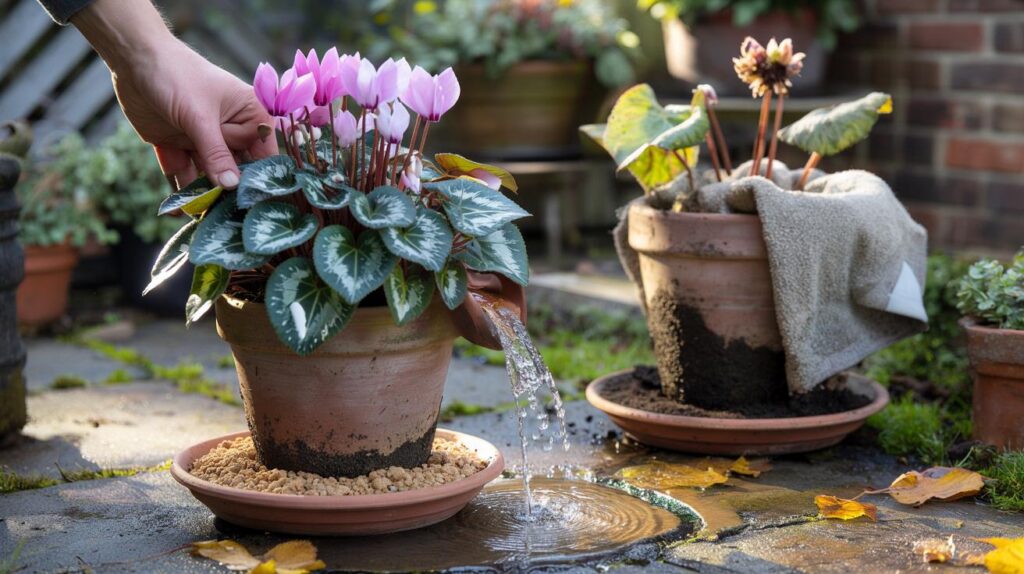
Cold nights creep in, borders fade, and pots turn silent. You water, you tuck, you hope. The flowers still stall.
Across the UK, thousands of gardeners face the same puzzle each October: cyclamens that should sparkle from November to February sit stubborn and green. The cause rarely lies in genetics or bad luck. It often starts with one overlooked autumn habit that throws the plants off before winter even bites.
The overlooked autumn misstep that stops winter bloom
Most failures trace back to water and where it goes. As days shorten and soil cools, cyclamen roots slow. Gardeners who keep summer habits flood sleepy tubers, starve them of air, and prime them for rot. Another frequent slip begins months earlier with a poor planting spot that keeps moisture trapped around the crown.
Reduce autumn watering and improve drainage by a notch or two, and most reluctant cyclamens respond within weeks.
Watering and covers when temperatures dip
Heavy, frequent watering in October suffocates roots just as growth slows. A cold, wet substrate triggers bud abortion and leaf collapse. Protective fleeces can also backfire. They trap damp air against foliage and feed fungal issues on mild, wet nights.
- Cut watering by 30–50% once night temperatures drop below 8–10°C.
- Water in the morning, not late afternoon, so foliage dries before dusk.
- Raise pots on feet and remove saucers to stop water pooling.
- Use fleece only during short frost snaps, and ventilate on milder days.
Placement and drainage decided in late summer
Hardy garden cyclamens prefer bright shade, dappled under trees, and free-draining soil. A low spot with slow runoff or dense mulch leaves the tuber sitting damp for days. That single decision in August or September often decides whether buds form properly in winter.
Set tubers shallow in light, gritty soil and on a slight slope. Water must leave quickly, every time.
Reading your cyclamen’s warning signs
Brown buds, flaccid leaves, slow growth
Buds that darken and shrivel before opening point to waterlogging or a sharp temperature swing. Yellowing leaves followed by collapse usually mean chronic saturation and poor air around roots. Slow, tight growth under glass or inside a warm room signals air that is too dry and nights that are too warm.
The hidden threat of trapped moisture
Stagnant moisture is the winter enemy. Thick, matted mulch, compacted compost, clogged pot holes, and saucers left full after rain build a damp basin around the crown. That setting invites Botrytis on leaves and soft rot in the tuber. Good drainage and moving air prevent most of it.
What cold cyclamens really tolerate
Not all cyclamens behave the same in winter. Florist cyclamen (Cyclamen persicum) sold for indoor use dislike frost. Hardy garden species, such as Cyclamen hederifolium and Cyclamen coum, shrug off chilly nights if the soil stays free-draining.
| Species/type | Typical setting | Approximate cold tolerance | Key note |
|---|---|---|---|
| Cyclamen hederifolium | Ground, bright shade | Down to about -15°C in drainable soil | Autumn flowers; keep crown just above soil line |
| Cyclamen coum | Ground, bright shade | Down to about -12°C in drainable soil | Winter flowers; tolerates cold if never waterlogged |
| Cyclamen persicum (florist) | Cool indoor room or porch | Damaged near 0°C | Needs nights of 5–12°C and bright, indirect light |
Not the houseplant many imagine
Hardy cyclamens thrive outdoors. They like cool nights, soft light, and steady moisture without saturation. Indoors, central heating and dry air stress the plant. A porch, a bright but unheated utility, or a sheltered doorstep suits potted cyclamen better than a warm lounge.
Conditions that trigger winter flowers
Give bulbs a loose, gritty compost, bright shade, and light, regular moisture. A spot on the north or east side of a hedge or small tree often creates the right microclimate: calm, cool, and bright. Keep direct midday sun off the foliage and keep water moving through the root zone.
Errors that wreck bloom—and how to dodge them
Misjudged watering as the stealth enemy
Soak–dry cycles beat constant damp. In pots, apply a modest drink only when the top 2–3 cm feel dry. For a 12 cm pot, half a mug may suffice in cool weather. In borders, rely on rainfall unless the soil turns dusty. Every watering should leave the pot lighter and the surface dry by evening.
Temperature shocks and parched indoor air
Moving a plant from a 20°C living room to a 2°C balcony in one go causes bud drop. Dry indoor air near radiators shrivels petals. Stage moves over several days. Use a cool windowsill or porch for acclimatisation. Shield pots from cold winds with a screen, not a sealed cover.
Target nights of 5–10°C, days of 10–15°C, and consistent, bright shade. That range sets buds fast.
An autumn routine that changes everything
A five-step plan for pots and borders
- Refresh the top 3–5 cm with a gritty mix: 50% peat-free compost, 30% horticultural grit, 20% fine bark.
- Thin heavy mulches and clear leaf mats so crowns breathe and stems stay dry after rain.
- Lift pots onto feet, remove saucers, and check drainage holes for roots or sludge.
- Water in small doses, mornings only, and skip a cycle after any soaking downpour.
- During forecast frost, use fleece at night but vent by day to prevent trapped humidity.
Quick checks when buds refuse to open
- Feel the compost: cold and clammy means reduce water and add grit; dusty means give a light drink.
- Look under the pot: white roots and clean holes signal health; brown mush hints at rot.
- Check light: north-facing window or dappled shade beats dim corners or harsh midday sun.
- Test airflow: a gentle breeze dries leaves; stagnant corners breed mould.
Extra help for a longer, cleaner show
Feeding and hygiene
Use a low-nitrogen, high-potash feed at half strength every 3–4 weeks from bud formation to peak bloom. Deadhead promptly by twisting spent stems at the base to reduce mould risk. Remove yellow leaves before they fall onto the crown.
Pests, diseases, and simple defences
Vine weevil grubs chew tubers and halt flowering. In containers, apply biological nematodes in late summer and again in spring. Botrytis creates grey mould in still, damp air. Improve airflow, water at the base, and space plants so leaves dry by noon.
Smart positioning and microclimates
Border edges, raised sleepers, and rock crevices shed water quickly and keep crowns dry. A slight slope helps in clay-heavy gardens. If your plot sits wet in winter, plant in shallow trays sunk into the ground and lift them before long soaks.
Know your cyclamen and plan for next year
Place hardy species outdoors for a natural show and treat florist types as cool-season pot stars under cover. After flowering, reduce watering and let foliage feed the tuber. Re-pot in late summer with fresh gritty compost, keeping the crown slightly proud of the surface. This rhythm sets a reliable cycle of buds when the cold returns.



This makes so much sense—I’ve been babying my cyclamens like summer geraniums. Cutting watering by 30–50% and lifting pots on feet is a tip I’ll definately try. Also didn’t realise fleece could trap damp air on mild nights. Thanks for the pragmatic, UK-specific advice!
Quick one: should I ditch the saucers entirely once nights hit 8–10°C, or only after heavy rain? South London balcony, clay-based compost mix.