
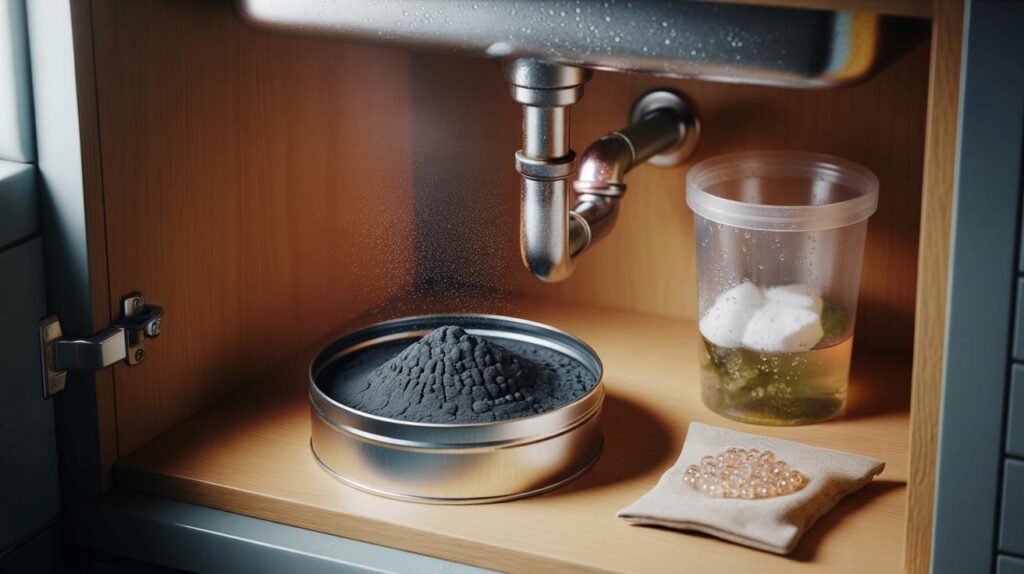
Kitchen tins, musty cupboards and soggy trainers: a cheap black powder is trending as a no-chemical moisture fix.
Social feeds and family group chats love a homespun hack. This one claims a pinch of activated charcoal inside a perforated tin dries out cramped cupboards and neutralises odours fast. The promise sounds bold and oddly specific: up to 20 times its weight in moisture, with no harsh chemicals and barely any effort.
What sparked the claim
The tip arrived with a simple recipe. Take a clean food tin. Punch neat air holes. Add a thin layer of activated charcoal powder, often made from coconut shells. Place it where smells linger and air sits still, like under the sink, a shoe cupboard or the back of a fridge. Replace the powder every seven days.
The internet’s promise: activated charcoal in a pierced tin that sips up moisture and bad odours, week after week.
The method leans on charcoal’s maze of microscopic pores. The material traps molecules on its surface, a process chemists call adsorption. That same property helps water-treatment systems and cooker hoods. The viral tip extends the idea to humidity control in confined spaces.
What the science says
How activated charcoal works
Activated charcoal holds an enormous internal surface area. The pores latch onto vapour molecules and many smelly compounds. The effect is strongest with odours such as sulphur notes from drains or aldehydes from stale shoes. Water vapour also sticks, but the capacity depends heavily on relative humidity and the exact pore structure.
Expect activated charcoal to excel at smells and to gather some moisture; for bulk water removal, specialist desiccants win.
Lab data show typical water uptake of roughly 5–10% of the charcoal’s weight at 50% relative humidity, rising to around 20–30% at 80–90% relative humidity for some grades. That falls far short of “20 times its weight”, which would mean 2,000%. By contrast, calcium chloride can drink in several times its own weight because it turns to brine.
A practical check helps set expectations. Load 30 g of charcoal into a vented tin and place it in a shoe cupboard at 70% relative humidity. Over a few days, the charcoal might gain 6–9 g from water. It will also blunt the sour odour that laces damp trainers. The cupboard will smell fresher, even if the air remains moderately humid.
DIY setup that actually helps
You can still use the hack effectively if you tune it to the material’s strengths. Focus on small, stale pockets of air and keep the charcoal exposed to airflow without letting the powder spill.
- Container: a clean 400 ml food tin, a metal pencil pot, or a small terracotta pot with a saucer.
- Ventilation: 15–20 holes of about 3 mm around the sides. Keep holes above the powder level.
- Charge: 1 cm of charcoal powder or pellets, roughly 25–35 g.
- Placement: upper shelf in a cupboard, behind a kickboard, or on a fridge door shelf where air circulates.
- Care: refresh weekly in very damp spots, fortnightly in drier ones.
- Reactivation: dry the charcoal on a tray at 110–120°C for 60 minutes to drive off adsorbed moisture and odours.
- Odour boost: some households sprinkle a pinch of fresh ground coffee on top to target strong smells.
Small volume, good airflow and regular reactivation make the difference between a mild effect and a noticeable one.
Where it shines and where it struggles
- Shines: closed shoe cabinets, under‑sink cupboards, gym lockers, camera bags, and the back of a pantry.
- Struggles: large rooms with persistent condensation, bathrooms after showers, wet cellars, or laundry rooms.
- Won’t fix: rising damp, leaks, or structural moisture ingress. Those need repairs and ventilation upgrades.
Numbers that matter
| Material | Typical water uptake at 50% RH | Typical water uptake at 80% RH | Reusability | Odour control | Notes |
|---|---|---|---|---|---|
| Activated charcoal | 5–10% by weight | 20–30% by weight | Yes, oven‑reactivated | Strong | Best for smells, modest moisture control |
| Silica gel | 25–30% by weight | 30–40% by weight | Yes, oven‑reactivated | Moderate | Reliable desiccant for small boxes and wardrobes |
| Calcium chloride | 50–100% by weight | 200–300% by weight | No, becomes brine | Low | Powerful room desiccant; needs drip container |
| Bicarbonate of soda | 1–5% by weight | 5–10% by weight | Limited | Moderate | Cheap, mild deodoriser; weak moisture uptake |
If you need odour control first, choose charcoal. If you need dry air first, choose silica gel or calcium chloride.
Costs, waste and safety
Activated charcoal costs roughly £8–£12 per kilogram in bulk. A 30 g charge comes to 24–36 pence. Weekly reactivation cuts waste and cost. Spread exhausted charcoal on garden soil only if it does not contain kitchen grease, fragrances or other contaminants.
Handle powder gently. Charcoal dust travels everywhere and marks surfaces. Avoid inhaling fine dust. Keep tins away from children and pets. Do not heat charcoal in a microwave. Use an oven, ventilate the kitchen and allow it to cool before handling.
A quick reality check
The catchy “20 times its weight” line does not reflect typical lab behaviour for activated charcoal and water vapour. People still report fresher cupboards because smell removal drives most of the perceived benefit. The air can feel cleaner even if humidity shifts only a little. That gap between perception and physics explains the hack’s popularity.
How to measure your results at home
Place a cheap digital hygrometer inside the cupboard next to the tin. Note readings at the same time each day for a week. If relative humidity drops by 3–8 points and odours fade, you have a win. If the number barely moves, upscale the approach: add silica gel sachets or fit a passive vent in the door.
Extra ways to beat small-space damp
Charcoal works best as part of a simple routine. Wipe spills immediately. Prop cupboard doors open for 20 minutes after cooking or washing up. Leave trainers to air in a hallway for an hour before putting them away. Slide a cedar block beside leather boots to tame mustiness. Fit adhesive door grilles to add a trickle of airflow without power.
For stubborn cases, mix solutions. Use a 500 ml calcium chloride tub for two weeks to pull bulk moisture, then switch to an oven‑reactivated charcoal tin for odour control. In wardrobes, distribute multiple small sachets rather than one large unit. More surface area means more contact with air and steadier performance.



Interesting breakdown. The lab numbers (5–10% at 50% RH, 20–30% at 80–90%) basically debunk the “20x its weight” myth, right? Do you have a primary source for the high‑RH adsorption curves you cite? I’d love to compare grades (coconut vs coal) and pore size distributions. Also, any data on pellets vs powder for airflow vs surface trade‑offs?
Put a pierced tin in my shoe cupboard; trainers smell like silence now. Progress!