
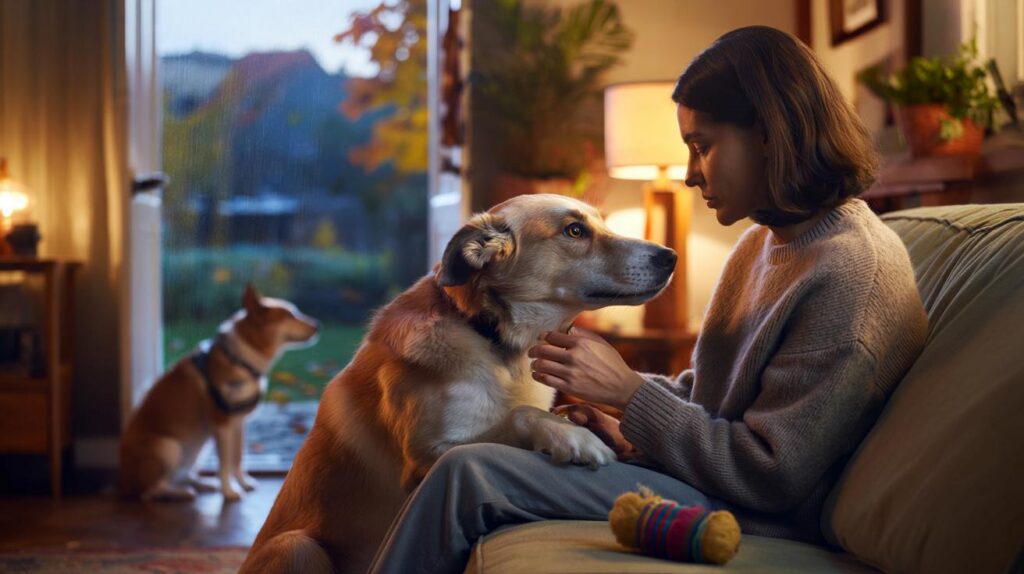
Low light, long nights, and a watchful pair of eyes follow you room to room, waiting for your next cue this autumn.
Many owners sense that their dog “just knows”. New research now maps those quiet moments: the head on your lap, the slower wag, the gentle nudge towards the door. These behaviours do not happen by chance. They build from a keen reading of your body and a routine that trains both of you to tune in.
How dogs read your feelings
Body language your dog never misses
Your dog watches your gait, the set of your shoulders, and the way your hands move. A slumped posture or a heavier step can cue it to approach softly. A clipped stride and tight jaw often prompt caution. Dogs also track breath rate and sighs, which change with stress. Tone matters too. A flat or thinner voice signals low mood, while a higher pitch suggests excitement or worry.
Your posture, pace and voice pitch form a language your dog reads every minute of the day.
Scent rounds out the picture. Studies indicate that dogs can detect changes in human sweat and breath linked to stress. That chemical snapshot pairs with what they see and hear, and the sum guides how they respond. Over time, your daily patterns teach your dog what each clue means for you specifically.
Faces and voices your dog can decode
Dogs show a bias for scanning human faces and can distinguish basic emotions such as joy, fear and sadness by expression. A tense brow, pressed lips or damp eyes draw their focus. Many dogs also respond to prosody. A slow, low voice often invites close contact, while sharp or choppy speech can signal “give me space”. With repetition, your dog builds a reliable map of your emotional ranges and the safest way to join you in them.
When sadness shows, dogs switch gear
Comfort behaviours you’ll likely see
When you feel low, your dog often dials down energy and offers simple, steady contact. Not every dog cuddles; many choose calm proximity. Look for these signs.
- Leaning against your leg or placing a head on your knee
- Following at a closer distance from room to room
- Softer eye contact, slower tail wag, ears at half-mast
- Offering a favourite toy and then settling near you
- Guiding you to the door or lead to prompt a mood-lifting walk
- Licking your hand once or twice, then pausing to gauge your reaction
- Choosing to lie between you and the doorway, as a quiet form of watchfulness
Many owners report a change in under a quarter of an hour. Short, calm touch and rhythmic stroking can ease your stress response and regulate your breathing. Measured across many households, mood lifts often arrive within 10–15 minutes of gentle interaction.
Brief, quiet contact—often under 15 minutes—can lower stress markers and steady your breath.
What changes in the background chemistry
During soft contact, oxytocin can rise in both human and dog, while cortisol often drops. Heart rate variability may improve, which points to better nervous system balance. None of this requires high energy. A still hand, a slow stroke, and a steady voice do most of the work.
A bond shaped by training and routine
Small habits that strengthen emotional attunement
Attunement grows from consistent cues and rewards. You can teach your dog how to help without creating clinginess.
- Teach a “settle” on a mat for calm, predictable comfort on cue.
- Reward check-ins with quiet praise, not frantic fuss.
- Use a soft phrase (“it’s okay”) to pair your low mood with a calm routine.
- Schedule daily sniff-heavy walks; scent work lowers arousal and clears your head.
- Keep mealtimes and bedtimes regular, especially as daylight fades.
| Sign you show | What your dog likely reads | Best response from you |
|---|---|---|
| Shoulders drop, longer exhale | Low mood, need for quiet support | Invite “settle”, slow stroke for five minutes |
| Rapid pacing, clipped speech | Rising stress, uncertainty | Pause, breathe, ask for a simple cue-and-reward sequence |
| Blank stare, no movement | Withdrawal, reduced engagement | Gentle name cue, short outdoor break for daylight and movement |
| Tearful, hunched posture | Distress, need for closeness | Allow leaning contact; keep touch slow and predictable |
What you should avoid
- Do not force hugs; some dogs find restraint stressful.
- Avoid rewarding frantic attention with food or squeals; reinforce calm instead.
- Watch for pain or stiffness; grumpiness can signal discomfort rather than aloofness.
- Build independence with place training and short absences to prevent over-attachment.
- Keep greetings and goodbyes neutral to reduce separation stress.
Autumn blues and what your dog senses
Shorter days shift human routines. You move less, see less daylight and speak in a flatter tone. Dogs notice these changes and often adapt by slowing themselves. A mid-morning daylight walk helps regulate both circadian rhythm and mood. On wet days, swap distance for sniffing time. A ten-minute scatter of treats in leaves or on a snuffle mat tires the brain without ramping up excitement.
Practical ways to harness your dog’s support
- Two-minute reset: sit, one hand on your dog’s chest, breathe in for four, out for six, repeat 10 times.
- Comfort cue: say a chosen phrase as your dog settles on a mat; reward the stillness with slow touch.
- Sniff break: scatter ten tiny treats across a small area; let your dog search while you stretch shoulders and jaw.
- Daylight quota: aim for 20 minutes outside before noon; pair it with a warm drink and a simple fetch routine.
- Wind-down: dim lights after 8 pm, soft music under 60 beats per minute, three minutes of gentle ear strokes.
Name the feeling, reward the calm, and your dog will learn the version of comfort that suits you.
When to seek extra help
If your dog paces, whines, or chews when you close a door, seek advice from a vet or a qualified behaviour professional. New clinginess can track with pain, digestive upset, or reduced hearing. For you, persistent low mood, sleep changes or loss of pleasure deserve timely support from a healthcare professional. A dog can lift you, but it cannot replace treatment.
Useful extras you can try this month
Run a two-week “check-in diary”. Each evening, rate your mood from 1 to 10, note your dog’s three main behaviours, and record what helped. Patterns emerge quickly. You might find that five minutes of nose work beats a long, wet trudge for resetting both of you.
Set a “comfort budget” to avoid over-attachment: three brief settle sessions per day, spaced by independent rest. Add a simple trick—chin rest, touch, or spin—to keep your dog’s brain engaged. The aim is balance: your dog learns to soothe with you and to relax without you, which protects both wellbeing and harmony at home.



Loved the ‘two-minute reset’ idea—tried it after a rough day and my spaniel actually matched my breathing. Within about 12 minutes I felt calmer. The reminder to swap distance for sniffing on wet days is gold 🙂 Thank you for the practical, non-gimmicky tips!