
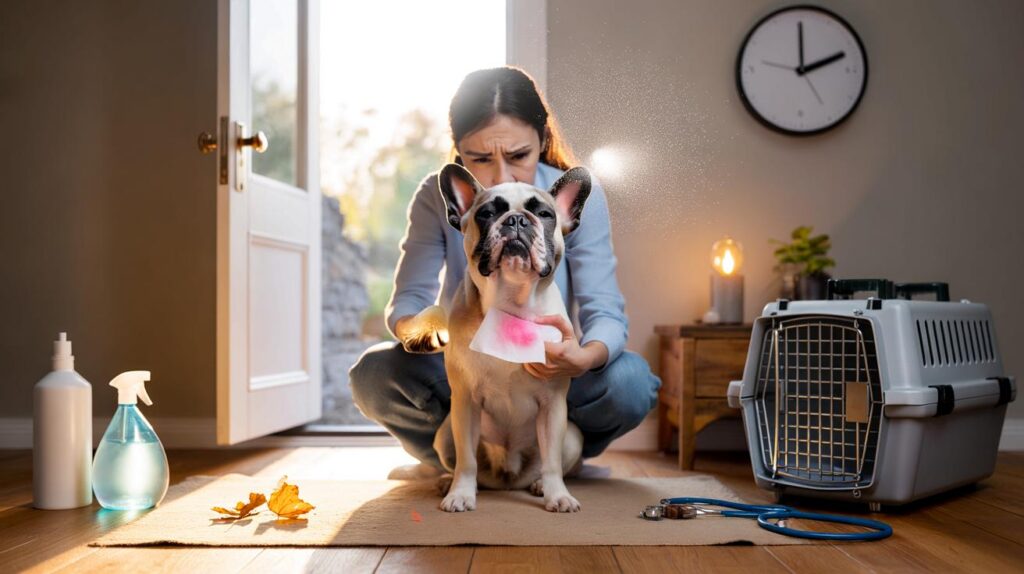
Cold air, dust and autumn walks can turn a harmless atchoo into a nagging puzzle for worried dog owners.
A quick sneeze now and then is part of life. Bursts of sneezing for days tell a different story. Timing, triggers and the company of other symptoms decide whether you wait, tweak the environment, or book a vet visit.
What counts as normal sneezing
Dogs sneeze to clear irritants from the nasal passages. A single sneeze after sniffing soil, rummaging through leaves, or when a perfume cloud drifts past is expected. Many dogs also sneeze during play because air turbulence and excitement tickle the nose. These moments pass quickly and the dog returns to normal behaviour.
Reflex triggers you can spot
- Household dust, strong cleaning sprays, air fresheners and scented candles.
- Cold draughts at the door or in the car, especially after exercise.
- Dry indoor air when heating starts, which irritates nasal lining.
- Pollen and mould spores raised by damp leaves and autumn grasses.
Brief, isolated sneezes linked to a clear trigger rarely signal disease. Repeated sneezes, nasal discharge or effort to breathe point to a problem that deserves attention.
When a sneeze signals illness
Some causes go beyond a simple tickle. Infections, foreign bodies, parasites and dental issues can all drive frequent sneezing. The pattern of discharge, the sound of breathing and changes in appetite help narrow the field.
Red flags you can check at home
- Sneezing fits several times a day for more than 48–72 hours.
- Thick yellow, green or blood‑stained nasal discharge.
- One‑sided discharge, pawing at one nostril, or head tilting.
- Rattly breathing, open‑mouth breathing, or coughing.
- Lethargy, fever, or a sudden drop in appetite.
- Face pain, swelling over the muzzle, or bad breath.
Blood from the nose, noisy breathing at rest, or a foreign body suspected after a walk demands same‑day veterinary care.
Likely culprits and what they look like
| Sign or clue | Possible cause | How soon to act |
|---|---|---|
| Bursts of sneezing after walks, pawing at one side | Grass awn or seed lodged in a nostril | See your vet within 24 hours |
| Watery discharge both sides, itchy skin or eyes | Environmental allergy to pollen, dust or mould | Book a non‑urgent consult to plan control |
| Thick discharge, cough, kennel contact | Infectious tracheobronchitis (kennel cough) | Call your vet for advice within 24–48 hours |
| Reverse whistling snorts in short episodes | Reverse sneezing from soft palate irritation | Monitor unless episodes are frequent or distressing |
| Facial pain, bad breath, one‑sided discharge | Tooth root infection affecting nasal passages | Vet visit within a few days |
| Blood‑tinged discharge, weight loss, older dog | Nasal tumour or polyp | Prompt veterinary assessment |
| Grey‑green discharge, sore nose, depigmentation | Fungal infection (e.g., Aspergillus) | Vet visit for tests and targeted treatment |
| Repeated sneezing, nose irritation, rural walks | Nasal mites | Vet diagnosis and antiparasitic treatment |
The 24–72 hour rule: when to call your vet
Time and severity guide your next move. If your dog has three or more sneezing bouts a day for two to three days, or any discharge changes colour, ring your practice. Struggling to breathe, fainting, or any nosebleed tips the balance to urgent care. Puppies, elderly dogs and flat‑faced breeds deserve earlier checks because they tire quickly and swell more easily.
Frequent sneezing plus a coloured or bloody discharge, reduced appetite, or lethargy warrants a vet appointment within 24–48 hours.
Practical steps that calm the nose
- Aerate rooms twice daily and vacuum with a HEPA filter to cut dust and dander.
- Skip strong sprays, plug‑ins and incense; switch to unscented products.
- Run a cool‑mist humidifier to keep indoor humidity near 40–50%.
- Brush your dog after walks; wipe the face and nostrils with saline on a cotton pad.
- Use a harness instead of a collar if your dog coughs or reverse‑sneezes on lead pressure.
- Wash bedding weekly at 60°C to reduce mites and mould.
- Keep grass short; avoid long, seedy verges when awns are rife.
Do not give human cold remedies or decongestants. Some contain xylitol or pseudoephedrine, which can harm dogs.
Reverse sneezing versus true sneezing
Reverse sneezing sounds like sharp snorts with the head extended and the chest pumping. Episodes last seconds to a minute and stop on their own. Gently stroking the throat or briefly covering the nostrils can trigger a swallow and end the spasm. If attacks are frequent, long, or your dog seems panicked, seek veterinary advice to look for polyps, elongated soft palate, or nasal irritation.
Why autumn and winter change the game
Heating dries the air, which irritates nasal tissue. Damp weather lifts mould spores and leaf debris. Cold air tightens airways, especially after exercise. Dogs breathe closer to the ground, so they meet road dust, chimney ash and grass seeds head‑on. Short‑nosed breeds like Pugs and French Bulldogs have narrow nasal passages, so a small swell can cause big noise.
What your vet may do
Assessment starts with a nose and mouth exam, temperature and oxygen checks. Swabs can identify bacteria, fungi or viruses. If a foreign body or mass is suspected, sedation with rhinoscopy allows removal and biopsy. Dental X‑rays spot tooth root infections that leak into the nose. Many allergic dogs respond to trigger control, medicated nasal rinses, or targeted anti‑itch therapy. Mite infestations resolve with specific antiparasitic drops or tablets.
Make a two‑minute sneeze log
A brief record speeds diagnosis. Note the number of sneezes per day, any discharge colour, smells, coughs, and what your dog was doing before the fit. Add where you walked, cleaning products used, and whether windows were shut or open. A photo or short clip of an episode helps the vet distinguish reverse sneezing from a cough or a true sneeze.
Extra angles that save you stress
Think of “trigger stacking”. A dusty hoover bag, a new diffuser and a windy park can combine to tip a sensitive nose over the edge. Remove one factor at a time for three to five days and watch for change. This simple experiment often finds the culprit faster than guesswork.
Plan for grass‑seed season. Keep a pocket torch and saline in your dog‑walking bag. After rural walks, check nostrils, eyes, between toes and ears for awns. A five‑minute routine prevents weeks of sneezing and a trip for endoscopy. If you live near arable fields, ask your groomer for a tidy trim around the muzzle during peak seed months.



Enjoyed the breakdown, but “9 hidden causes” feels a bit clickbaity. Are there peer‑reviewed studies backing the nasal mite prevalence or the 24–72 hour rule? Links would definately help. Also, reverse sneezing being “normal”—any data on frequency thresholds before it’s a problem?