
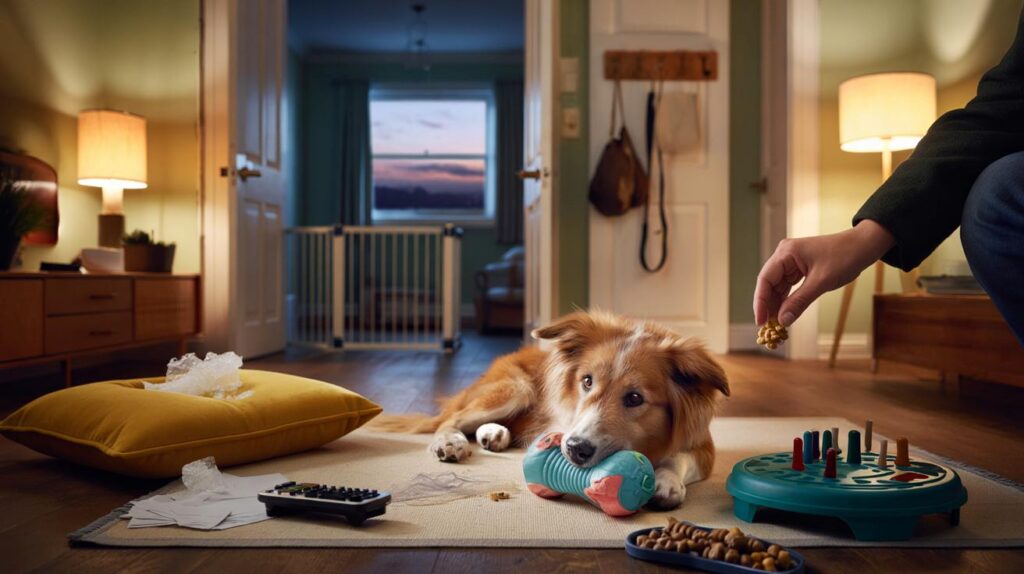
Dark evenings and longer commutes leave dogs restless and homes at risk. Many households face it now, and there is relief.
Across the country, people return to shredded cushions, tipped bins and anxious neighbours. Shorter walks and busier diaries strain a dog’s nerves. The mess feels personal, yet the behaviour has clear causes and workable fixes. Here is what changes outcomes within days, not months.
Why the chaos starts when you close the door
Dogs do not act out of spite. They act because stress, boredom or pent‑up energy spill over. Separation anxiety can look like pacing, barking, salivating, or attempts to escape. Simple under‑stimulation can look similar. The difference matters, because the plan changes with the cause.
Routine swings trigger many cases at this time of year. Early meetings replace morning walks. Kids return to school, and the flat falls silent. Predictability drops, and the dog searches for a job. Soft furnishings become the target because they smell like you and tear easily.
Chewed cushions are communication, not revenge. Your dog is saying, “I’m stressed, bored or under‑exercised.”
Scolding after the event does not connect with the behaviour. It risks raising anxiety and eroding trust. Calm structure works better. So do clear pre‑departure signals and rewarding settled choices.
Four fixes you can start today
1) Front‑load exercise and sniffing
Give a proper outlet before you leave. Aim for a 25–40 minute morning walk with slow sniffing and problem‑solving. Sniffing lowers arousal and tires the brain. Add two short training bursts at home: two minutes of “find it” games and two minutes of simple cues. Avoid frantic fetch right before departure, which can spike adrenaline.
- Target: at least 15 minutes of nose‑led walking within the morning slot.
- Pre‑departure calm window: 10–15 minutes of quiet time before you go.
- Water and toilet break last, so the dog can settle comfortably.
2) Make staying in a job
Occupy the mouth and brain. Use a stuffed chew, a puzzle feeder, or a scatter of kibble around a safe room. Rotate three different toys across the week. Freeze a stuffed rubber toy to stretch engagement to 20–35 minutes. Choose natural chews sized to the dog and supervise the first sessions if you are unsure of durability.
Give the dog a task you approve of, and you remove time and motive for the task you dread.
Check ingredients and hardness to protect teeth. Avoid cooked bones. Inspect toys weekly and replace if they crack. Label containers so each household member keeps the rotation consistent.
3) Depart low‑key and train the gap
Keep exits boring. No drama, no long hugs at the door. Run two or three “absence drills” daily while you are home. Start with 30 seconds out of sight, return, and drop a treat on the bed if the dog stayed calm. Build to 5, then 10 minutes. Add a gentle audio backdrop, such as talk radio, to soften hallway noises.
Record a short video on an old phone or a baby monitor. Watch for the moment arousal rises and plan your return just before that time. Expand slowly. If your dog panics fast, reduce the distance or shorten the gap.
4) Reward calm and align the family
Pay for the behaviour you want. Drop a piece of kibble when the dog lies on the mat while you make coffee. Use a quiet “good” and move on. Ignore pawing or whining for attention. Agree house rules so every person responds the same way. Consistency shortens learning time.
Set up a safe zone: a bed in a quiet corner, a stable chew nearby, and a water bowl. Some dogs relax in an open crate if it has been introduced kindly. Others prefer a baby‑gated room. Choose the option your dog visibly settles in.
What the first week can look like
| Time | Action | Why it helps |
|---|---|---|
| 07:00 | 25–40 min sniff‑walk, two 2‑min training bursts | Tires brain and body; builds confidence |
| 08:00 | Calm window, prepare frozen chew | Lowers arousal before departure |
| 08:15 | Leave without fuss, soft radio on | Removes departure spikes; masks noises |
| Evening | 5–10 min absence drills at variable times | Teaches independence in tiny steps |
| Bedtime | Reward relaxed settling on the mat | Reinforces calm as the default |
Costs, savings and small maths
Typical damage adds up. A new cushion set can cost £60. A remote control, £25–£40. Minor skirting repairs, £120. A starter kit of two puzzle toys and two safe chews often totals under £40 and lasts months. A frozen chew that buys 25 minutes of calm can prevent a £60 nibble in a single morning.
Spend £40 once on enrichment, and you can dodge £300 of avoidable repairs this season.
Use a simple rule of thumb: one minute of planned mental work saves five minutes of unwanted chaos. Track your spend and your dog’s calm time for a fortnight. People see a clear return when the plan is followed by every family member.
When to seek extra help
Flag urgent support if your dog hurts themself, claws doors raw, or vocalises non‑stop for 30 minutes or more. Speak to your vet to rule out pain or urinary issues if you find repeated indoor puddles. A qualified behaviour professional can tailor a structured separation programme if panic is severe. Ask for methods based on gradual exposure and positive reinforcement only.
Extra tools to widen your results
Try scent games that fit a cramped flat. Scatter a handful of kibble on a towel and roll it up. Hide three treats in paper cups and let the dog choose. Start easy. Raise difficulty only when success is smooth. Consider one day of trusted day care per week as a pressure valve, if your dog enjoys group settings.
Teach a “settle on a mat” behaviour with a clicker or a soft verbal marker. Reward any contact with the mat at first. Build to longer downs while you move about the room. This skill transfers to cafés, offices and guest visits, which reduces stress across the week.
Watch for over‑arousal from high‑calorie chews. Balance the diet by adjusting meal portions. Rotate textures to protect teeth. If your dog guards items, swap for high‑value food rather than grabbing. Safety first, learning second.
Seasonal change often exposes gaps in a dog’s coping skills. Fill those gaps with predictable routines, meaningful work and calm rewards. People who treat absence as a trainable skill usually report quieter neighbours, cleaner floors and a more relaxed companion within 7–14 days.



I tried front‑loading exercise today—30 minutes of slow sniffing and two tiny training bursts—and then left a frozen chew. Zero barking on the cam and no shredded cushion. This is definately more doable than I expected. Thanks for the clear steps!