
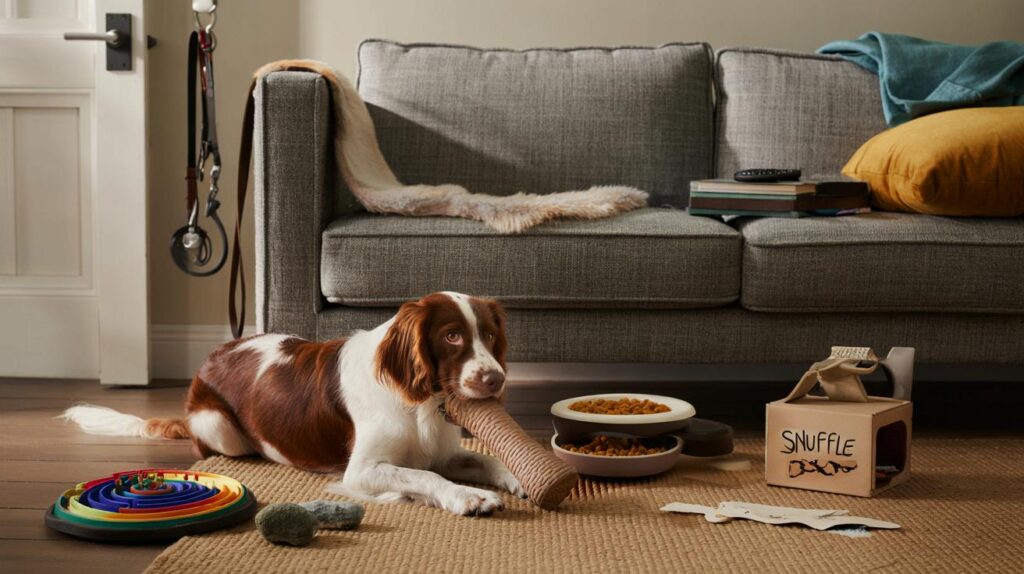
Cold nights, shorter walks, longer shifts. You step in the door and find foam snow, a chewed remote and frayed nerves.
Across Britain, owners report a seasonal spike in canine chaos as routines stretch and daylight shrinks. Behaviourists warn that shredded cushions rarely signal spite. They signal a dog struggling with stress, boredom or uncertainty about when you will be back.
Why the chaos starts when you leave
Dogs are social. When you vanish for hours, many struggle to self-soothe. Some pace. Some bark. Some grab the closest cushion. Chewing releases tension and offers comfort. It is a coping mechanism, not a vendetta.
Separation anxiety sits on a spectrum. True panic can bring howling, drooling puddles and door-scratching until the paws bleed. Milder frustration looks like bin raids or sock theft. The best plan depends on where your dog sits on that line.
Autumn can amplify it. Commutes lengthen, school runs shift, and walks shrink when the rain sets in. Inconsistent timing unsettles dogs. Predictability calms them.
Chewing and tearing often signal stress, not spite. Prevention beats punishment every single time.
Four fixes you can start this week
1. Burn off energy before the door closes
Take a brisk 20–30 minute walk before work. Favour sniff-heavy routes over sprints. Sniffing lowers arousal and tires the brain faster than fetch. Mix in two minutes of simple cues—sit, down, hand-target. Short training boosts confidence and focus.
On wet days, swap in indoor brain work. Ten minutes of hide-and-seek with kibble. Two short “find it” scatter feeds. Five repetitions of a settle-on-mat cue. Small blocks add up.
2. Make your living room do some of the work
Give your dog a job while you are out. Use puzzle feeders, lick mats or a stuffed chew. Rotate three or four options so novelty stays high. Freeze soft fillings to last longer.
- Easy start: a rubber toy packed with wet food, frozen for four hours.
- Medium: a cardboard “snuffle box” with paper strips and dry treats mixed in.
- Hard: a puzzle bowl that takes 15–20 minutes to empty.
Offer legal chews that satisfy jaws—natural chews sized to your dog, or a safe nylon chew. Remove fragile temptations before you go. Close doors to laundry and bedrooms. Leave a worn T-shirt with your scent near the bed. Soft background sound can mask sudden hallway noise.
3. Practise calm comings and goings
Drama fuels anxiety. Keep departures low-key. Pick up your keys. Feed a chew. Step out for two minutes. Return and ignore the fuss until paws are on the floor. Repeat and vary the time. Add five-minute, then ten-minute absences. Build up to 45–60 minutes over several days.
Film short trials with a pet cam or an old phone. Watch for panting, pacing and long stretches of barking. If distress kicks in within minutes, cut the duration and slow the plan. Crates help only if your dog sees the crate as a safe den. Do not lock a stressed dog in a crate and hope for the best.
4. Pay the behaviour you want
Reward calm. Drop a treat on the bed when your dog settles. Hand a chew just before you grab the coat. Say “good” in a soft voice when you return to a quiet dog. Silence is a reinforcement plan too—ignore frantic greetings until calm returns.
Agree a house script with family. Same words, same rules, same schedule. Mixed messages keep dogs guessing. Consistency shortens the learning curve.
Small, repeatable routines—walk, chew, quiet return—do more to protect your sofa than any stern lecture.
Spot the red flags that need expert help
- Relentless barking or howling that runs past 20 minutes after you leave.
- Chewed doors, windows or crate bars, broken nails or bleeding gums.
- Puddles or poo only when alone, despite being toilet-trained.
- Refusal to eat high-value food when left.
These signs point to separation distress. Speak to your vet to rule out pain. Ask for a referral to a qualified clinical behaviourist. Some dogs need a tailored plan, medication or both.
Turn guidance into your daily plan
| Time alone | Preparation idea |
|---|---|
| 0–30 minutes | Short sniff-walk, frozen chew ready, low-key exit, record on camera. |
| 30–120 minutes | Puzzle feeder plus lick mat in rotation, curtains part-closed, radio murmuring. |
| 2–6 hours | Split into two blocks if possible, midday walker or neighbour check-in, second enrichment drop. |
What to do about damage that already happened
Skip the telling off. Dogs link feedback to the last two seconds, not the cushion you found ten minutes later. Clear up in silence. Reset the environment. Pay calm the next time.
Audit your rooms like a toddler-proofing exercise. Move bins, remotes and shoes out of reach. Add an extra bed in the quietest corner. Place chews where mischief used to begin. Make the right choice the easy choice.
Low-cost enrichment that stretches time
Build a “chew bank” once a week. Prepare three frozen toys, two cardboard puzzles and a bag of scatter-feed portions. Total cost stays low if you use part of the normal ration. Most dogs nap after a solid chew-and-sniff session.
Create a scent trail before leaving. Drag a treat pouch along the skirting, hide five pieces, then cue “find it” as you head out. Many dogs spend ten quiet minutes working the trail. Quiet time buys your sofa breathing space.
If your dog struggles with longer days
Consider a midday option one or two days a week. A trusted walker, a friend or daycare with small groups can break up long blocks. Meet providers, ask about ratios and rest breaks, and start with trial sessions. Watch how your dog behaves at pick-up. Tired and relaxed beats wired and wild.
Extra context you can use this month
Weather shifts reduce outdoor time. Add indoor scent games after dark to compensate. A towel “sausage” with treats rolled inside works well. So does a muffin tin with tennis balls covering kibble pockets. Rotate ideas every two days to keep curiosity high.
Track progress. Note time alone, enrichment used and behaviour on camera. Patterns emerge after a week. You will spot which chew lasts 25 minutes, which playlist softens barking, and which departure cue triggers pacing. Adjust one variable at a time. Precision shortens the journey from chaos to calm.



Just tried the “sniff-heavy” pre-work walk plus a frozen Kong, and my spaniel actually napped instead of redecorating the lounge. The bit about predictability really landed—setting the same exit routine seems to lower his fizz. Also loved the reminder that chewing is stress, not spite; stopped scolding and started prepping. Quick Q: do you find radio vs. white noise matters, or is any steady background sound fine?
Foam snow is my winter décor too 🙂 I’ll be building that weekly “chew bank” like a pension plan. If my beagle invests in cardboard puzzles instead of the remote, my sanity might finally earn some interest.