
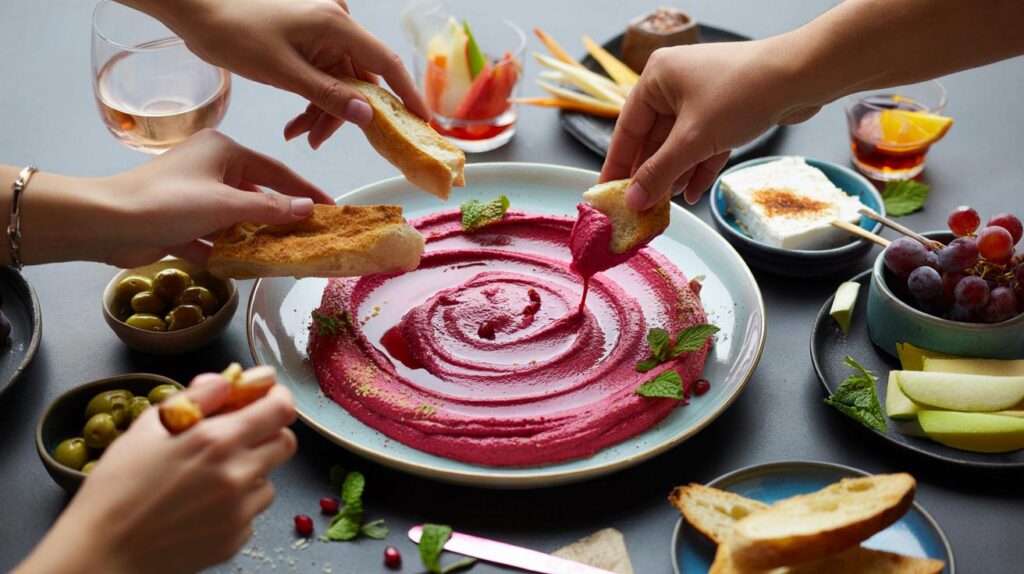
Cold nights call for warm tables and bold colours; a pink bowl could be the conversation starter you didn’t expect.
Hosted drinks are changing this season, leaning lighter, cheaper and brighter. A silky beetroot hummus sets the tone, brings colour, and keeps costs down without skimping on flavour.
Why beetroot hummus is everywhere this month
Autumn nudges people indoors, but nobody wants a heavy spread. A beetroot hummus lands with a vivid ruby hue and a soft, whipped texture. It brings comfort without the price of a cheese board. The base is familiar — chickpeas, tahini, olive oil — but beetroot adds sweetness, earth, and a clean finish. The result feels fresh, not fussy.
Home cooks praise three things. First, speed: it blends in the time it takes to warm bread. Second, price: the ingredients are pantry-friendly and supermarket beets remain affordable. Third, theatre: one swipe across a shallow plate looks like a chef plated it. You get impact with almost no effort.
Under £3, about 12 minutes, feeds 6–8 people. Texture you can spread, scoop or swipe across toast.
What you need
Core ingredients
- 250 g cooked beetroot, well drained (vacuum-packed or home-roasted)
- 250–270 g cooked chickpeas, drained (one small tin), plus a splash of aquafaba
- 2 tbsp tahini (sesame paste)
- 2 tbsp extra-virgin olive oil
- 1 small garlic clove, crushed
- 1–2 tbsp fresh lemon juice
- 1/2 tsp ground cumin
- Fine salt and black pepper
Optional upgrades
- Lemon zest for brightness
- A few drops of balsamic for depth
- Smoked paprika or mild chilli for warmth
- Fresh herbs: coriander, parsley or mint
- Toasted sesame or gomasio for crunch
Method in minutes
- Rinse and drain the chickpeas. Cut beetroot into chunks for easier blending.
- Add chickpeas, beetroot, tahini, olive oil, garlic, lemon juice, cumin, salt and pepper to a processor.
- Blend until very smooth. Scrape the sides, then blend again for a lighter, aerated finish.
- Adjust: more lemon for lift, extra tahini for richness, a spoon of aquafaba or ice-cold water for a looser, mousse-like texture.
- Spread in a wide, shallow dish. Make grooves with a spoon. Finish with olive oil, sesame, herbs or paprika.
Blend longer than you think. A full extra minute turns grainy purée into a creamy, spoonable spread.
Serve it like you mean it
Make the colour work for you. Use clear glass or a light plate to show off the pink. Add a scatter of chopped walnuts, a few mint leaves, or ruby pomegranate seeds for sparkle. It looks generous, even when you’ve spent very little.
Pairings that work
- Warm bread: focaccia, pitta, or toasted sourdough soldiers
- Crunchy veg: carrots, celery, endive, cauliflower florets
- Salty contrasts: crumbled feta, olives, or a sprinkle of za’atar
- Something sweet: apple slices or roasted grapes on skewers
- Something hot: a chilli oil drizzle or harissa marble
Nutrition, budget and yield
This dip brings fibre, plant protein and heart-friendly fats. You can keep it vegan, or fold in yoghurt for extra creaminess. Costs vary by brand, but the figures below reflect typical UK supermarket prices and pantry brands.
| Measure | Per batch | Per serving (1/8) |
|---|---|---|
| Time | ~12 minutes | — |
| Cost | ~£3.00 | ~£0.38 |
| Protein | ~32 g | ~4 g |
| Fibre | ~24 g | ~3 g |
| Calories | ~1,200 kcal | ~150 kcal |
Chickpeas add protein and fibre; beetroot brings folate and colour without piling on the calories.
What’s driving the appeal
People want food that photographs well, tastes balanced, and doesn’t dominate the table. This dip hits that brief. Beetroot’s natural sugars mellow garlic and cumin. Tahini rounds everything out, adding body and a nutty finish. A modest drizzle of olive oil gives shine and mouthfeel. The flavour sits between sweet and savoury, so it flatters both wine and soft drinks.
Common pitfalls and quick fixes
- Too earthy: add lemon juice, zest, and a pinch of salt. A dot of honey can rebalance if needed.
- Too thick: loosen with ice-cold water or aquafaba for a lighter texture without extra oil.
- Too thin: pulse in more chickpeas, a spoon of tahini, or a few walnuts.
- Flat flavour: bloom the cumin in a warm pan for 30 seconds, then blend again.
- Grainy finish: blend longer and scrape down the bowl twice. Patience pays off.
Make it your own
For a creamier style, swirl through Greek yoghurt or crème fraîche just before serving. For heat, lace with harissa and a squeeze of lemon. For a nutty twist, fold in crushed pistachios. You can also layer it: spread the hummus, add a trail of olive tapenade, and scatter herbs for a two-tone centrepiece.
Storage, safety and leftovers
Keep chilled in a sealed container for up to three days. Stir before serving. If you batch-cook, freeze portions in small tubs; thaw overnight in the fridge and refresh with lemon juice and a splash of oil. Serve cold or at room temperature, but avoid leaving it out for more than two hours on a crowded table.
Leftovers work well in sandwiches with cucumber and feta, as a base for roasted veg bowls, or diluted with water and lemon as a quick dressing for grain salads. A spoon under a poached egg on toast makes a bright breakfast that uses what you already have.
If you want to go further
Try roasting raw beetroot with a little salt and oil at 200°C until soft for a deeper, sweeter flavour. Save the chickpea cooking liquid when using dried pulses; it whips like egg white and softens the blend. For a heartier apéro, serve alongside a small board of pickles and nuts, keeping the total under £8 for a group of six.
For a drinks pairing, lean into freshness. A dry rosé or a citrusy spritz lifts the sweet-earthy notes. For a no-alcohol option, ginger beer with a squeeze of lime adds zip and a welcome kick. The goal stays the same: colour, contrast, and an easy spread people actually eat.



Just tried this tonight—blended for the extra minute and wow, the texture turned from grainy to cloud-smooth. Can’t believe it cost under £3 and fed a crowd. The ruby colour actually made the table look fancy without the cheese-board prices. Adding lemon zest + smoked paprika was a game-changer.