
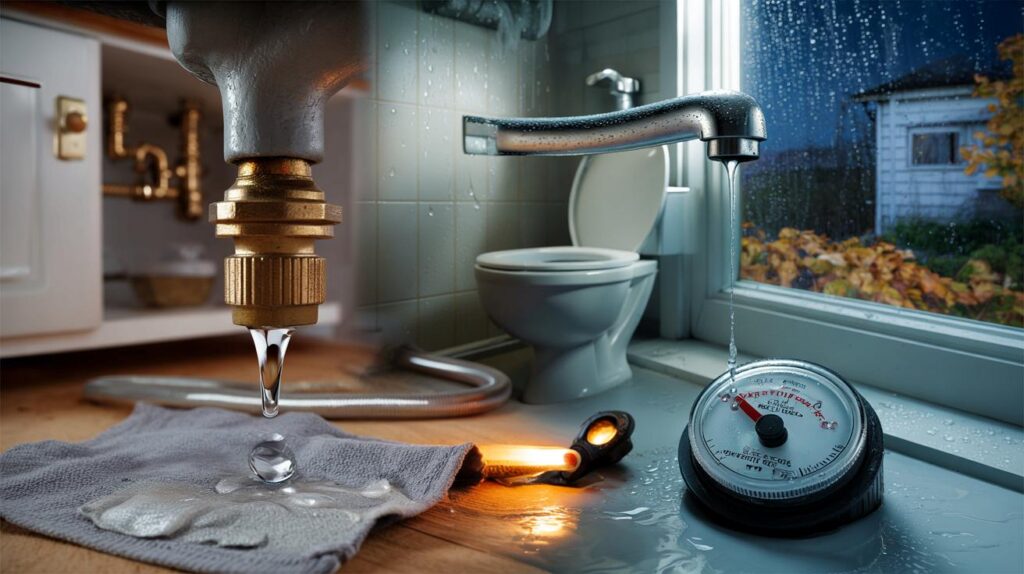
Cooler days mask quiet household problems that nibble away at money and comfort as taps, cisterns and joints tire together.
As temperatures fall, small leaks multiply. In British homes, a dripping tap or a running loo can waste hundreds of litres within days. The good news: fast checks and simple fixes stop the flow before damage spreads and bills climb.
The autumn trap: why small leaks surge now
Metal contracts in cooler weather, loosening compression joints that felt fine in summer. Warmer showers lengthen, raising hot-water use and pressure on fittings. Condensation hides seepage under sinks and behind loos, so moisture sits unseen in cupboards. Log-jammed gutters push water back towards walls, raising indoor humidity and masking plumbing seepage. These seasonal shifts give small faults a head start.
Short days and cooler pipes expose weak seals. Catch them early and you avoid soaked cabinetry, swollen floors and mould.
Detecting invisible leaks: signals you can trust
Most leaks whisper rather than roar. You hear a faint hiss behind the cistern. You notice a musty smell in a kitchen cupboard. Your meter spins when nobody is showering. Each sign points to a slow but costly loss.
The quick meter test
Turn off all taps and appliances. Note the meter reading, including the small spinning dial. Wait 30 minutes without using water. If the reading changes, water is escaping into the system. This confirms a hidden leak and narrows the search to indoor plumbing or the supply line.
Thirty quiet minutes tell you more than guesswork: any meter movement without use equals a leak.
In the bathroom
Running toilets are common. Drop food colouring into the cistern and wait ten minutes. Colour in the bowl without flushing means a failed flapper or a mis-set float. Feel around the base of taps and under basins for moisture. A faint line of limescale on chrome usually points to a slow seep.
In the kitchen
Slide a dry tissue around compression nuts under the sink and along flexible hoses to the mixer tap and dishwasher. A dark patch signals a tiny drip. Check the trap for hairline cracks and the worktop base for swelling.
Behind walls and floors
Watch for peeling paint near pipes, a warm patch on a floor over hot-water lines, or a boiler that loses pressure overnight. These clues suggest a concealed leak that may need professional tracing.
Act now: simple moves that halt the flow
Once you spot a suspect area, isolate the supply to limit damage. Each fixture usually has a local valve. Turn it a quarter-turn to stop the water. Then inspect and tighten what you can reach.
- Toolkit to keep handy: adjustable spanner, screwdriver set, PTFE tape, spare washers, torch, microfibre cloths.
- Tighten compression nuts a quarter-turn; over‑tightening can deform olives and worsen leaks.
- Dry the area fully, then recheck after five minutes to see if moisture returns.
- Use PTFE tape on threaded joints to improve seals when reassembling.
- If water keeps flowing, shut the mains valve near the stop tap to prevent damage.
Cut water locally first. If in doubt, close the main stop tap and buy time for a safe repair.
Replacing a washer or toilet flapper: a five‑minute fix
Dripping taps usually need a new washer or cartridge. Running loos often need a new flapper or adjusted float. These parts are inexpensive and widely available.
A single dripping tap can waste around 120 litres per day; a running toilet can waste several hundred.
What it saves: numbers that hit your bill
Small leaks add up fast. At 180 litres per day, your home loses 0.18 m³ daily. Over a month, that’s about 5.4 m³. Depending on local tariffs, combined water and wastewater charges often range between £2 and £5 per m³. That puts the monthly waste from one unseen leak around £11 to £27, before any damp repairs.
Heat magnifies losses. Every litre of hot water carries energy you have already paid for. A dripping hot tap sends money down the drain twice: once for the water, once for the gas or electricity used to heat it.
| Fault | Simple test | Typical loss per day | Likely fix | Approximate part cost |
|---|---|---|---|---|
| Dripping tap | Visible drip at spout | Up to 120 L | Washer or cartridge | £2–£20 |
| Running toilet | Food dye appears in bowl | 100–400 L | Flapper or float adjustment | £5–£15 |
| Sweating or seeping joint | Tissue test on fittings | 10–60 L | Tighten, PTFE, or new olive | £1–£5 |
A £5 part can stop tens of pounds in monthly losses and prevent mould that ruins cupboards and floors.
When to call a professional
Call in help if damp patches spread, the meter moves with all internal valves shut, or boiler pressure drops daily. Specialists use acoustic listening, tracer gas or thermal imaging to pinpoint hidden faults without ripping out entire walls. Supply‑pipe leaks before the internal stop tap may fall under different responsibilities, so check your water company guidance and home insurance terms.
Older properties with galvanised or lead supply lines benefit from a professional survey. Replacing tired pipework cuts leak risk, boosts flow and improves water quality. Costs vary by region and access, but early intervention beats repairing water damage later.
Preventive habits that pay all year
Set a monthly five‑minute routine. Read the meter, lift the loo lid, slide a tissue under sink joints, and run a hand along flexible hoses. Turn each isolation valve twice a year to stop them seizing. Fit tap aerators and efficient showerheads to reduce flow without losing comfort. Insulate exposed pipes and the cold side of cisterns to limit condensation that hides leaks.
- Keep a small box of mixed washers, a spare toilet flapper and PTFE tape at home.
- Label the main stop tap and show every adult where it is and how to use it.
- Consider a battery leak alarm on the floor beneath sinks and cylinders.
- If you have a smart meter, set alerts for unusual night‑time use.
Your autumn checklist: five quick wins
Use this weekend to lock in savings before winter demand ramps up.
- Test the toilet with food colouring and fix any colour transfer.
- Tighten one loose compression nut you have been meaning to address.
- Replace the washer in the noisiest dripping tap.
- Clear gutters to keep walls dry and reveal genuine plumbing moisture.
- Record a night‑time meter reading, then compare in the morning to spot hidden flow.
Extra tips to go further
Run a simple home simulation. For one night, switch off appliance feeds, then the boiler fill loop, leaving only cold taps live. If the meter still turns, the issue sits on the supply side. If it stops, re‑enable lines one by one. This isolates the problem without tools.
Think about risk as well as cost. Persistent moisture drives mould, triggers allergies, and can void insurance if neglect is proven. A small investment in parts and habit change reduces those risks, protects timber and plasterboard, and keeps your heating system efficient. The payoff arrives on your next bill and in a drier, healthier home.


