
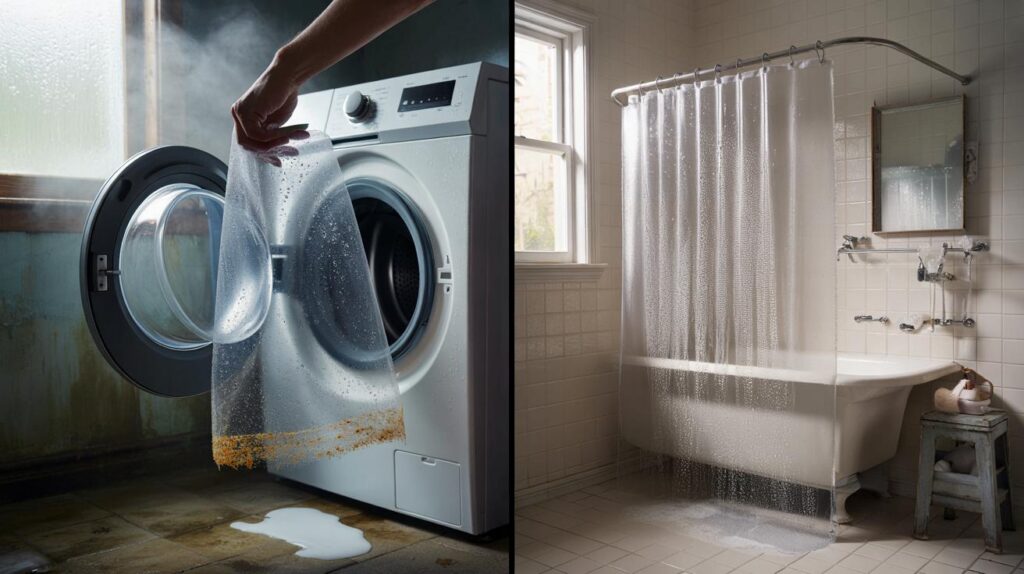
Steamy showers and autumn damp create the perfect storm in British bathrooms. A familiar habit is making curtains misbehave.
As moisture builds and temperatures drop, liners and curtains take a beating. Many people reach for an easy fix that backfires.
Why machine washing ruins a waterproof shower curtain
Putting a shower curtain or liner through a laundry cycle seems sensible when soap scum appears. Yet drum friction, heat and detergent surfactants erode the thin hydrophobic coating that keeps water out. After a few spins, beads no longer roll away. The fabric clings to skin, turns dull and starts to harbour odours.
Plastic and coated textiles such as PEVA, PVC or polyester rely on a smooth, water-repellent surface. A wash cycle scuffs that surface. Detergent leaves residues that trap moisture. Spin speeds crease the fabric and open tiny cracks where mould takes hold. A quick wash can cost months of usable life.
Skip the laundry cycle: detergent and drum friction wear down the hydrophobic layer and invite leaks, cling and musty smells.
Autumn compounds the problem. Colder air holds less moisture, so condensation rises on every surface. A compromised curtain stays wetter for longer and dries slowly, which speeds staining and mould growth along the hem and in folds.
The simple, detergent-free routine that preserves waterproofing
A manual clean keeps the coating intact and clears grime without harsh chemistry. You need only a basin or bath, white vinegar, bicarbonate of soda and a soft sponge.
What you need and the quantities that work
- 1 litre of white vinegar
- 2–3 tablespoons of bicarbonate of soda
- 3–5 litres of warm water
- 1 soft sponge or soft-bristled brush
- Gloves if you prefer
Step-by-step: 30 minutes to a fresh, watertight curtain
- Unclip and lay the curtain flat in the bath or a large tub.
- Make a warm solution: 1 litre vinegar into 3–5 litres water. Submerge fully.
- Soak for 30 minutes to loosen biofilm, odours and soap residue.
- Rinse thoroughly with warm water.
- Spot-treat marks with a paste: 2–3 tbsp bicarbonate plus a splash of water. Dab and gently rub with the sponge.
- Rinse again until water runs clear and surfaces feel smooth, not gritty.
- Dry by hanging fully extended in a well-aired space or outdoors.
Remember the order: vinegar soak first, bicarbonate spot paste second, thorough rinse last. Do not mix them in the same bath.
Why this order matters: vinegar breaks down mineral deposits and neutralises odour-causing bacteria. Rinsing avoids turning the bath into a frothy fizz that reduces cleaning power. Bicarbonate then provides mild abrasion for stains without stripping the coating.
Note for natural stone bathrooms: keep vinegar off marble, limestone or travertine; it can etch them. Soak the curtain in a plastic tub away from stone and rinse in the bath with care.
Moisture control: small daily moves that stop mould
Prevention beats scrubbing. A few habits protect waterproofing and keep stains away between monthly cleans.
- After each shower, pull the curtain fully open so air can circulate through the folds.
- Squeegee tiles and the curtain edge. Wipe the bottom hem with a microfibre cloth.
- Ventilate for 10–15 minutes: open a window or run the extractor fan after bathing.
- Keep the lower edge 2–3 cm above the bath rim so it doesn’t sit in pooled water.
- Clean the rail and hooks monthly; grime there transfers to the top edge.
- If you use a liner and a decorative outer curtain, wash only the outer fabric (as per label) and treat the liner by hand.
| Task | Frequency | Time | Cost estimate | Main benefit |
|---|---|---|---|---|
| Vinegar soak + bicarbonate spot clean | Every 4–6 weeks | 30–40 minutes | £0.30–£0.50 | Preserves waterproofing and colour |
| Post-shower wipe of hem | Daily | 1 minute | £0 | Stops mould and orange staining |
| Ventilate bathroom | After each use | 10–15 minutes | £0–£0.03 | Cuts condensation and odour |
| Check hooks and rail | Monthly | 5 minutes | £0 | Prevents grime transfer and snags |
Material matters: choose care that matches the fabric
PEVA and PVC liners resist water by design, but their smooth surface marks easily. Manual cleaning suits them best. Coated polyester gives a fabric look with a thin waterproof layer; keep detergent away to avoid peeling or tackiness. Uncoated fabric curtains (cotton or linen) need a separate waterproof liner; treat the liner as above and wash the fabric outer on a gentle, low-temperature cycle with minimal detergent, then dry quickly.
If a label explicitly allows machine washing of a liner, use cold water, no detergent, no softener, and a laundry bag or pillowcase to limit scuffing. Skip the spin and hang to dry fully extended. That said, a hand routine still extends life further.
When stains persist: safe escalations that won’t wreck the coating
Rust marks and stubborn mildew sometimes need more than a paste. Try a 3% hydrogen peroxide dab on the spot. Leave for five minutes, then rinse well. Test on a hidden corner first. Oxygen-based powder (non-chlorine) can help on fabric outers, not on plastic liners. Never mix peroxide with vinegar or use bleach after vinegar without a thorough rinse and time gap.
Hard-water streaks along the hem respond to a second short vinegar dab followed by a rinse. For silicone seal lines that transfer grime, clean seals separately with a mild bathroom cleaner and a soft brush.
Time, money and environmental gains
A 40°C machine cycle can use 0.5–1.0 kWh of electricity plus detergent and softener. A hand soak uses pennies’ worth of vinegar and a few litres of warm water. You save the £8–£20 cost of a replacement liner by keeping the current one going an extra season. You also cut microplastic shedding and reduce wastewater additives from surfactants and fragrances.
One litre of white vinegar and a few teaspoons of bicarbonate can replace a year’s worth of detergent cycles for your liner.
Practical add-ons that make the routine easier
Upgrade the setup
- Swap metal hooks that rust for plastic or stainless options to prevent orange drips.
- Choose a weighted hem so water runs off and the curtain doesn’t cling.
- Add a small dehumidifier or place a hygrometer in the bathroom; aim for under 60% relative humidity after showers.
Set reminders and track outcomes
- Put a monthly alert on your phone titled “Vinegar soak – curtain”.
- Note the date on a piece of tape on the rail to keep the schedule visible.
- Do a quick “bead test”: sprinkle water after cleaning; if it beads, the coating is intact.
If your curtain already smells musty, a rescue is still possible. Wash hooks and rail, deep-clean the curtain as above, then dry it outside in daylight if you can. Ultraviolet light helps neutralise odours. Follow with consistent ventilation for a week to reset the bathroom’s moisture balance.
Thinking ahead pays off when guests arrive or flu season spikes shower use. Keep a spare liner folded in a cupboard, and rotate it at the next clean. The active one gets its soak, the spare goes up dry, and your bathroom stays crisp, bright and watertight without touching a drop of detergent.



I always tossed the liner in with towels thinking it was ‘gentle’. Didn’t realise friction + surfactants wreck the hydrophobic coating. The clingy, dull fabric makes total sense now—good explainer.
So the £0 mistake is… me? I’ve been sandblasting my PVC liner in a spin cycle and wondering why it hugs me like an octopus. Vinegar bath it is.