
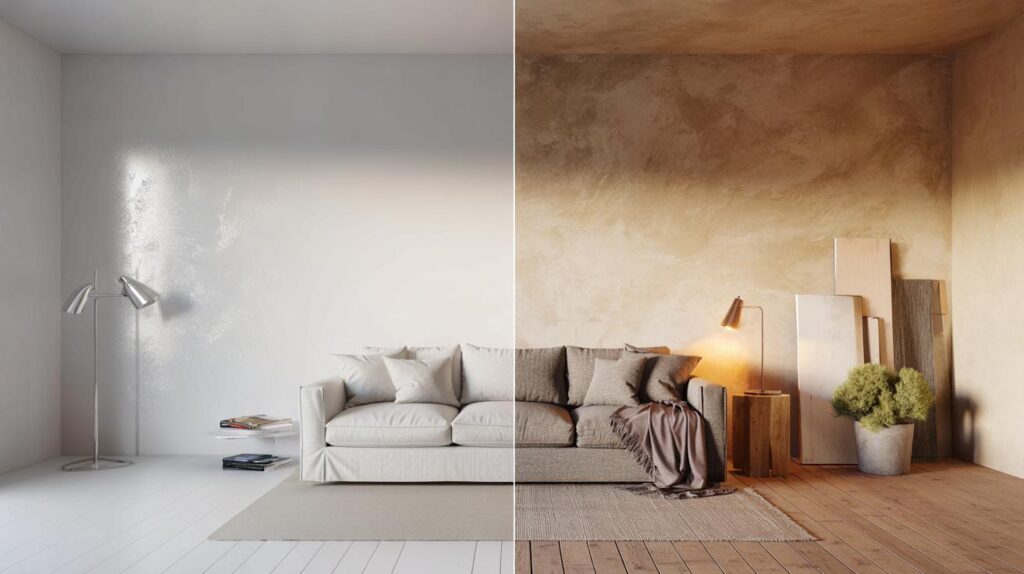
As days get shorter, flat paint stops flattering. Designers whisper that touch, shadow and grain do what gloss never will.
Across the UK, a quiet revolt is underway. Smooth emulsion yields to lime-rich plasters, limewash and velvety matt patinas, prized for warmth, depth and calm. The shift is practical as much as aesthetic, and homeowners are asking for it by name.
Why smooth walls are losing favour
Flat, flawless walls looked sharp in open-plan spaces. Then reality set in. Autumn light shows every scuff. Rooms echo. Surfaces feel chilly to the eye and to the hand. Decorators report that clients want character without clutter, and texture does that job better than more furniture.
Trade polls this year point to a measurable swing: around 62% of UK decorators say textured finishes top client briefs since January, with enquiries climbing faster in smaller homes where acoustics and cosiness matter most.
Texture alters light, softens sound and adds tactility. These three effects deliver the warmth many seek from colour alone.
Light and shade work harder on grain
Raking light needs something to catch. Micro-relief creates tiny shadows that make walls look richer without going darker. The room gains visual layers, especially across north-facing spaces where plain paint reads dull.
Touch and acoustics change how rooms feel
A gentle grain reduces glare and can dampen high-frequency flutter echo. People spend longer in rooms that feel calm to ear and fingertip. That sense of calm is driving choices just as much as fashion.
What decorators now prefer in 2025
Natural materials set the pace. Lime plasters breathe, Venetian-style stuccos bounce light softly, and tadelakt brings a subtle sheen that resists splashes. Limewash paints, applied in translucent coats, add cloud-like movement that a roller can’t mimic.
| Finish | Typical cost (£/m²) | Breathability | Wet areas | Maintenance |
|---|---|---|---|---|
| Lime plaster (traditional) | 45–85 | High | With sealer | Re-wax or repaint in 5–7 years |
| Limewash (brush-applied) | 8–20 | High | No, unless sealed | Touch-ups blend easily |
| Venetian stucco | 70–140 | Medium | Feature walls only | Periodic waxing for sheen |
| Tadelakt (lime + olive soap) | 120–220 | Medium | Yes, for splash zones | Soap-care builds waterproofing |
| Microcement | 80–150 | Low | Yes | Sealant refresh every 2–3 years |
Lime and limewash lead the shift
Lime plaster regulates humidity and suits older homes that need to breathe. Limewash lies between paint and plaster: it is mineral, vapour-open and layered by brush, which prevents a flat look. In rented spaces, modern mineral paints with a chalky finish offer a similar feel with easier removal.
Polished options for kitchens and baths
Tadelakt brings a stone-like gloss and shrugs off splashes once soaped and burnished. Venetian stucco offers a soft gleam on feature walls. Both read luxurious without glare, and both elevate small rooms where daylight is scarce.
In client surveys, 38% said one textured wall made their living room feel warmer and more inviting within minutes.
Where to use what
- Living room: lime plaster in warm neutrals, paired with timber and wool to cut echo.
- Bedroom: limewash in powdery tones with a soft brush direction for gentle movement.
- Kitchen splash zone: tadelakt behind sinks; limewash elsewhere for depth.
- Hallway: hard-wearing microcement up to dado height, limewash above for softness.
- Home office: mineral matt paint with a light stipple to reduce screen glare.
Colour moves that suit texture
Textured walls thrive on nuanced colour. Think clay, oat, lichen and river-stone greys rather than stark white. Darker shades gain lift when brushed in thin passes that allow the undercoat to whisper through. In the evening, table lamps skim over grain and reward it with quiet drama.
Time, money and pitfalls
Texture is a craft, not a gimmick. Build costs into the plan and start small before committing. Thin coats beat thick ones for strength and beauty. Good substrates matter: seal dusty plaster, remove flaking paint, and test a metre-square sample near a window.
- Allow drying: lime needs carbonating time; rushing invites chalking.
- Mind corners: feather edges with a soft brush to avoid lap marks.
- Use the right sealer: vapour-open for lime; food-safe soap for tadelakt.
- Budget for labour: a skilled applicator often saves money by avoiding rework.
Low-commitment options for renters
Not every home allows wet trades. You can still add tactility with removable fibre panels, cork tiles, linen wall fabric on staple battens, or mineral-look paints that sand back cleanly. Large canvases coated in limewash become portable feature “walls” that move with you.
Sustainability and wellbeing angles
Many mineral finishes carry low VOC ratings and last longer between repaints. Lime absorbs a small amount of CO₂ as it cures. Breathable walls help reduce condensation in older properties where sealed acrylic paint traps moisture. These gains add up across a whole home.
Think of texture as infrastructure for comfort: light sits better, sound softens, and surfaces invite touch instead of retreating.
Practical extras to get it right
Create a sample board: two coats of base, then your chosen finish in three densities, labelled and dated. Move it around the room at 9am, 1pm and 7pm. Note which section calms glare and which feels heavy. That forty-minute test avoids expensive regrets.
Plan care from day one. Limewash touches up well with a damp brush. Tadelakt prefers gentle soap rather than detergents. Microcement wants resealing on a set schedule. A small maintenance kit—wax, soap, soft pads—keeps the finish lively without starting again.
If you face irregular walls, texture can help. Fine-grain plasters disguise small waves that a gloss would shout about. In listed homes, breathable systems keep masonry dry. In new builds, wait for moisture to leave the fabric before applying dense coatings, or choose vapour-open products to stay safe.



Finally, someone says it: flat paint is unforgiving. The bit about raking light and micro‑relief making walls read richer is spot on. I’m trying limewash in a north-facing hallway next week—any brand recs that stay vapour-open and don’t chalk on touch‑ups?
Is this just the texture lobby talking? My smooth walls look fine tbh.