
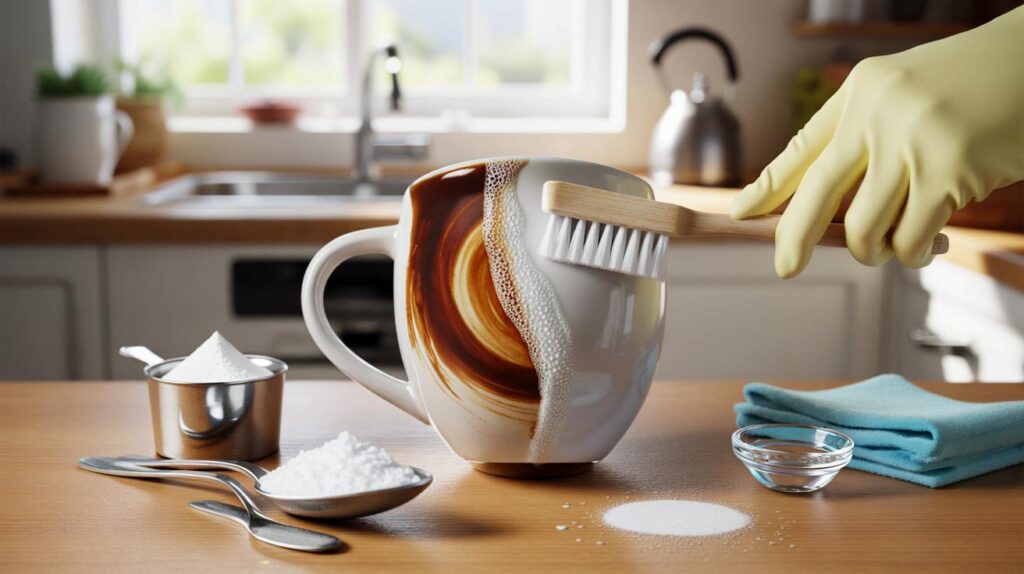
Fed up with dingy tea rings and brown rims? A simple kitchen staple is turning heads for its swift, low-cost shine this week.
A fast-rising cleaning hack promises to lift coffee stains from everyday mugs with near‑effortless rubbing and pennies of product. Home cooks, barista dads and frugal students say a bicarbonate-of-soda paste shifts up to 98% of dark marks in about 15 minutes. The trick uses gentle chemistry and a light abrasive touch rather than harsh bleach.
What sits behind those stubborn coffee marks
Coffee leaves tannins and oils that cling to porous glaze. Those compounds skew acidic and bind to micro‑scratches inside cups. Over repeated brews, the film darkens and hardens. Scrubbing harder can score the surface, which traps even more colour the next day. A smarter route changes the pH and loosens the bond before any elbow grease.
Bicarbonate of soda brings two assets. It raises pH to neutralise acidic residues, and its fine crystals act as a soft scouring agent. That pairing unlocks the film so a light circular motion lifts it away. Most households already stock it for baking, fridge odours or gentle cleaning, so the cost stays low.
Reported results: up to 98% of coffee staining lifted from ceramic, porcelain, stoneware and enamel in around 15 minutes.
How the 15‑minute paste works
The method looks simple, but timing and consistency matter. Aim for a toothpaste‑like paste that clings to the ring without sliding down the wall of the cup. Warm water helps the powder dissolve evenly and spread cleanly.
Your quick mix and apply plan
- 2 tablespoons bicarbonate of soda (about 30 g)
- 1 tablespoon warm water (about 15 ml)
- Soft sponge or an old soft‑bristled toothbrush
- Clean microfibre cloth for drying
Stir the powder and water until smooth. Coat stained areas generously. Leave the paste in contact for 15 minutes. Work in small circles with a light hand, then rinse well with hot water and dry. Add a second, brief pass for rings that have built up over months.
Formula to remember: 2 tbsp bicarbonate + 1 tbsp warm water + 15 minutes’ contact + gentle circular scrub + hot rinse.
When a pinch of salt helps
A tiny sprinkle of fine salt into the paste adds larger grains that boost the mechanical lift without gouging the glaze. Use this tweak for deeply set rings at the base of the cup. Avoid coarse sea salt on delicate porcelain. Keep pressure light and stop if you feel drag.
Where this trick works best — and where to skip it
Materials that respond well
Ceramic, porcelain, stoneware and enamelled interiors respond strongly to the 15‑minute treatment. Glazed surfaces brighten, while printed motifs look crisper once the brown veil has gone. Many tea stains shift under the same routine because they share similar tannins.
Surfaces to avoid
Give metallic trims, gilding and hand‑painted decals a wide berth. Even a mild abrasive can dull a shiny rim or fade fine lining. If in doubt, test on the base. Never use the paste on unglazed clay or soft plastics that scratch easily.
Avoid gilding, metallic bands and hand‑painted detail. Stick to fully glazed interiors for a safe clean.
Alternatives when stains and limescale mix
Hard water leaves mineral haze that holds onto coffee colour. You can stack methods safely if you time them. Start with the bicarbonate paste. For stubborn chalky film, dot a few drops of white vinegar on top and let the fizz help dissolve minerals. Rinse thoroughly and neutralise odour with a final hot wash.
| Method | Best for | Contact time | Abrasiveness | Risks |
|---|---|---|---|---|
| Bicarbonate paste | Routine coffee rings on glazed ceramics | 15 minutes | Low | May dull delicate metallic trims |
| Bicarbonate + vinegar (sequential) | Stain plus limescale build‑up | 15–20 minutes | Low–medium (brief fizz) | Sharp odour; rinse well |
| Hydrogen peroxide 3% + bicarbonate | Older, baked‑in staining | 15–30 minutes | Low | Patch test first; avoid coloured decals |
| Salt and lemon | Quick fix when cupboards are bare | 5–10 minutes | Medium | Can scratch fine porcelain if pressed |
Why this resonates now
Households want cleaner cups without harsh bleach or pricey sprays. Bicarbonate costs pennies per treatment and lives in most pantries. It reduces chemical load in the sink and avoids strong fragrances that taint the morning brew. The method suits renters, students and anyone with a small kitchen setup. It also supports slower wear because light scrubbing beats heavy scouring pads.
Care schedule to keep stains at bay
Daily and weekly habits that work
- Rinse mugs promptly after the last sip to stop tannins setting.
- Run a quick hot wash before bedtime for cups used all day.
- Give frequent‑use mugs a bicarbonate paste treatment once a week.
- For occasional mugs, refresh once a month.
- Switch to softer sponges to reduce micro‑scratches that trap colour.
Questions readers ask
Does it affect flavour the next morning?
Not if you rinse thoroughly. Any alkaline residue can give coffee a flat taste. A final hot water flush and a full dry prevent that.
Tea stains too?
Yes. Black tea contains tannins similar to coffee. The same paste and timing usually brighten interiors. Green tea marks lift faster.
Can I use baking powder instead?
No. Baking powder contains acids and starches that reduce the alkaline punch and the gentle abrasion. Use plain bicarbonate of soda.
Safety notes and small print
- Do not mix vinegar with bleach products at any stage.
- Keep hydrogen peroxide at 3% strength and off patterned decals; test first.
- Stop if you see colour lift from a printed design.
- Wear washing‑up gloves if you have sensitive skin.
Keep it simple: test a small area, go light on pressure, and rinse until water runs perfectly clear.
Extra gains you might not expect
The same paste freshens stainless‑steel teaspoons stained by tannins. It also lifts brown rings from ceramic sinks and brightens enamel roasting trays. Adjust contact time and pressure to match the surface. Clean kettles and coffee makers separately following manufacturer guidance; internal descaling needs a different approach.
Hard water intensifies staining. If limescale builds fast in your area, consider a jug filter for brewing water. Softer water extracts flavour differently and leaves fewer mineral spots on cup walls. That shift, plus the 15‑minute bicarbonate routine, keeps mugs brighter for longer and trims time spent scrubbing on busy mornings.



Just tried the 2 tbsp bicarb + 1 tbsp warm water paste and my tea rings vanished in 10 mins—no bleach stink. My enamel mug looks new again, cheers! 🙂