
Across Britain, gardeners face a spring headache: tender growth draws sap-suckers while harsh sprays clash with wildlife-friendly back gardens.
As seedlings stretch in April and May, a quietly effective tactic resurfaces from family plots: a living shield that lures trouble away from tomatoes. It costs pennies, takes minutes, and fits neatly into a pollinator-friendly garden.
What is the nasturtium trap
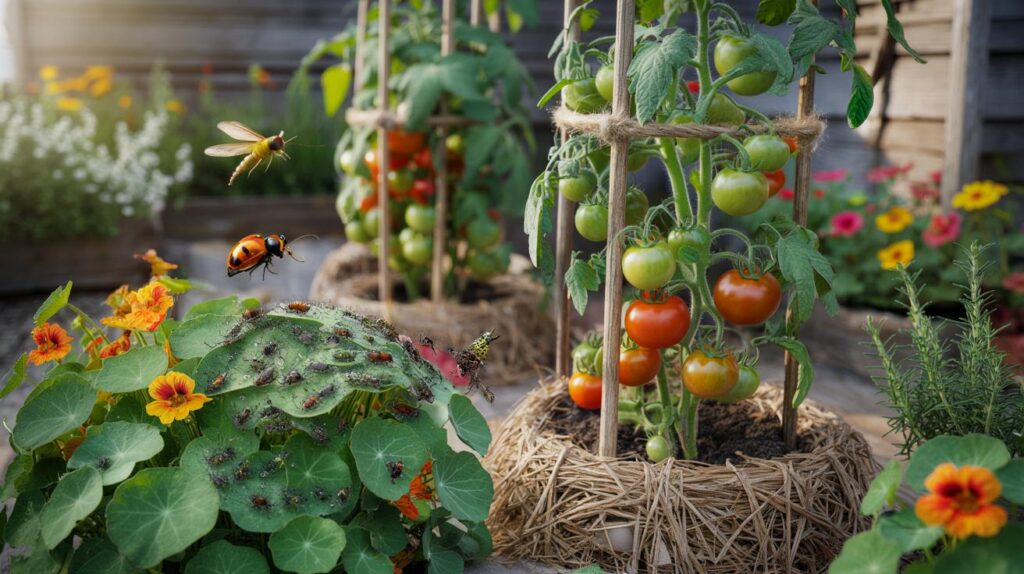
The trick is trap cropping with nasturtiums (Tropaeolum majus). You ring your tomatoes with bright, peppery plants that aphids prefer. Their soft growth, pungent scent and vivid petals act as a magnet. The result shifts the battleground off your crop and onto the decoys.
Reduce aphid pressure on tomatoes by around 75% without synthetic pesticides by surrounding beds with a ring of nasturtiums.
Home trials and allotment logs report a 70–80% drop in aphid build-up on tomatoes once the nasturtiums fill out. You still see pests, but on the decoys rather than the trusses and leaf tips that matter for yield.
What you need
- Nasturtium seed: 20–30 seeds per square metre.
- Mature compost: about 2 litres per square metre to freshen the sowing strip.
- Watering can with a fine rose for gentle irrigation.
- Hand hoe or small cultivator to draw shallow drills.
- Organic mulch such as straw or shredded leaves to hold moisture.
Nasturtiums thrive in lean to moderately rich soil. Keep fertility modest so they stay soft and attractive to pests instead of turning leafy and coarse.
Step-by-step: two weeks ahead
Sowing window and spacing
Start two weeks before you set out tomatoes. In most of the UK, that means mid-to-late April under cloches in the south, or early May in cooler areas. Draw 2 cm-deep drills, 30 cm apart, around or alongside the future tomato row.
Drop seed every 15 cm. Backfill lightly, then firm with the back of the rake. Water with a fine rose to settle the soil without crusting. Keep the surface evenly moist for a fortnight. Germination usually takes 7–14 days, faster in warm spells.
Positioning around tomatoes
Transplant tomatoes once danger of frost passes. Give each plant 50 cm of space from the nasturtium line. This gap keeps roots from competing while still pulling aphids off the crop. Mulch the strip after the first true leaves appear on the nasturtiums to hold moisture and suppress weeds.
| Task | Timing | Quantity | Why it matters |
|---|---|---|---|
| Sow nasturtiums | 2 weeks before tomatoes | 20–30 seeds/m² | Plants established before aphids arrive |
| Depth and spacing | On sowing day | 2 cm deep, 15 cm apart | Quick emergence, dense lure |
| Watering | Daily for 10 days | Fine rose, light soak | Even germination, soft growth |
| Tomato placement | Late April–May | 50 cm from trap line | Protection without root competition |
Care and fine-tuning
Keep nasturtiums on the lean side. Skip nitrogen-heavy feeds. Water to prevent stress, not to push rank growth. Soft, steady growth keeps them irresistible to aphids.
Pinch the tips of the most colonised shoots weekly. You remove the worst clusters while leaving enough insects to maintain the lure. Bag the pinched material and bin it, rather than composting fresh infestations.
Support the system with natural allies. Hoverflies, ladybirds and lacewings flock to nasturtium flowers. Avoid broad-spectrum sprays that would flatten these helpers. A diverse border with thyme, rosemary and marigold adds nectar and light scent that confuses pest orientation.
Keep the trap tastier than the crop: modest fertility, steady moisture, and regular pinching of the heaviest clusters.
What results to expect
By June, the decoys usually carry the brunt of the aphid load. Tomato leaders stay cleaner, so you spend less time squashing colonies on new growth and more time training vines. Many growers record a roughly three-quarter reduction in aphids on tomatoes compared with beds without a trap line.
You also gain bonuses. Nasturtium flowers and young leaves are edible, adding peppery colour to salads. Their carpeting habit shades soil, which slows evaporation around tomatoes in hot spells.
Why it works
Aphids use scent, colour and leaf texture to choose hosts. Nasturtiums broadcast pungent mustard-like notes and present tender, sap-rich growth. Their bright petals act like flags to flying colonisers. Once established, a thriving band of nasturtiums presents an easier, more obvious target than a pruned, well-aired tomato canopy.
Trap cropping shifts pest pressure rather than chasing absence. You welcome aphids to a sacrificial plant so the crop can focus on flowering and fruit set. Predators then congregate where food is plentiful, adding a second layer of control.
Risks and safeguards
- Virus risk: aphids can vector plant viruses. Reduce this by siting the trap downwind of prevailing breezes so first landings hit the nasturtiums, not the crop.
- Ant farming: ants protect aphids for honeydew. Disrupt trails with sticky barriers on stakes or a ring of diatomaceous earth on pots.
- Overcrowding: a trap that grows too lush may swamp the bed. Choose compact nasturtium varieties or trim runners every fortnight.
- Slugs and snails: nasturtium seedlings are tasty. Use collars, night checks, or iron phosphate pellets used responsibly.
Beyond tomatoes
Nasturtium traps also help with brassicas, beans and cucurbits, where black bean aphid and green peach aphid can surge. On allotments, a mixed hedge of nasturtium and calendula around cabbages draws pests away while feeding hoverflies. In containers, a single trailing nasturtium in a hanging basket above your growbag works as a lure without stealing root space.
Costs and time
Seed packets usually cost £2–£4 for 25–50 seeds. A typical 2 m bed needs one packet. Allow 15 minutes to sow and water per bed, then five minutes every few days for checks and pinching during peak season. Resow each spring for the cleanest results, or let a few flowers set seed and collect them for next year.
Fast checklist
- Sow nasturtiums 2 weeks before tomatoes; 2 cm deep, 15 cm apart, rows 30 cm apart.
- Water gently for 10 days; keep soil moist, not soggy.
- Plant tomatoes 50 cm from the trap line; mulch both rows.
- Pinch heavily infested tips weekly; bin the waste.
- Aim for modest fertility; avoid high-n feeds on the trap.
- Encourage predators with mixed flowers; skip broad-spectrum sprays.
Extra angles worth trying
For windy sites, add a second trap line on the windward edge only. This concentrates landings where you can manage them. In greenhouse grows, train a single nasturtium in a pot at the doorway; it becomes the first stop for incoming aphids, and you can rotate it out if numbers spike.
If you want a quick gauge of success, count aphids on the top three leaves of five tomato plants weekly, then repeat on the nasturtiums. Many gardeners see the nasturtiums carry three to five times the numbers by mid-season, while tomatoes stay within manageable thresholds. That gap is the quiet power of a simple, old family method.



Brillant guide—definately trying this in my small city plot. The step to sow nasturtiums 2 weeks early and keep fertility modest makes so much sense. Love that it invites hoverflies and ladybirds while cutting sprays. Thanks for a truly do-able, wildlife-friendly fix! 😊