
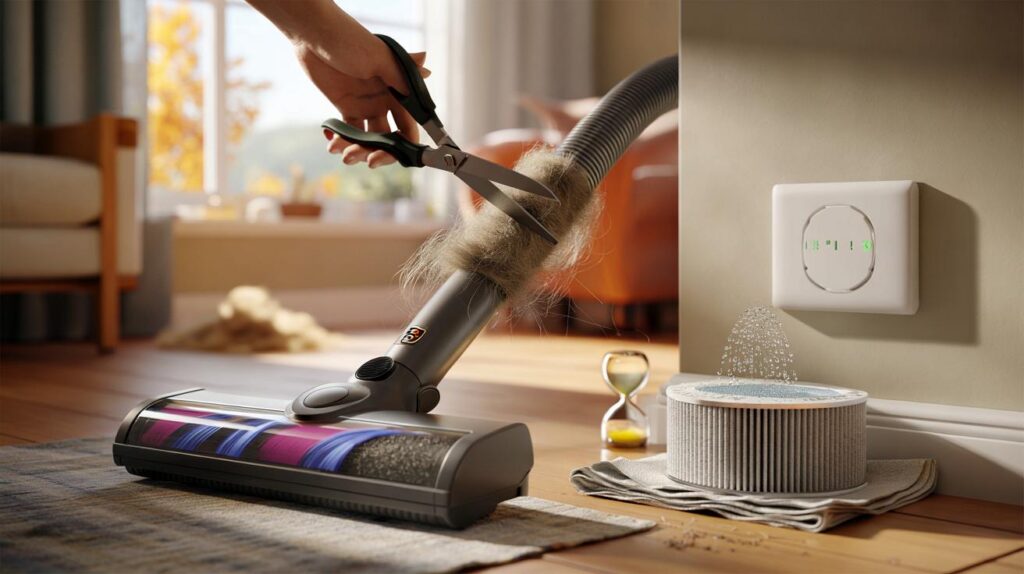
As autumn settles in, homes trap more grit and fur. Many vacuums start to struggle, whispering warning signs we miss.
Across living rooms and landings, small signals crop up before a vacuum fails. A hotter motor. A change in smell. A rasping note that wasn’t there last week. These are not random quirks. They point to a single, fixable mistake that shortens a machine’s life and wastes electricity.
Spot the silent alarm before the breakdown
Most failures do not arrive overnight. They creep in. Suction fades. You need extra passes to lift crumbs. The brush bar hesitates, then stutters. A faint, dusty odour appears after five minutes of use. Bags or bins fill faster, yet the floor still looks gritty. Each clue hints at blocked airflow and a brush jam on the way.
Cold weather pushes the problem along. Doors stay shut. Air recirculates. Pets shed more. Rugs trap fine debris. A machine that ran smoothly in summer now runs hotter. If you sense more noise, less pick-up, or a slightly burnt smell, act before the thermal cut-out trips.
Early signs usually mean airflow trouble: weaker suction, a hotter body, a louder pitch, and a whiff of dusty heat.
The hidden culprit: filter and brush choking airflow
The cause sits in plain sight. The filter clogs with powdery dust. The brush bar wraps itself in hair and thread. Together they strangle airflow, which cools the motor and carries debris to the bin. With airflow reduced, the motor draws hard, heats up, and ages quickly. The brush slows, belts strain, and bearings grind.
Why airflow keeps the motor alive
Air does two jobs inside a vacuum. It moves dirt. It cools the motor. Choke that flow and the temperature rises fast. Foam, paper or pleated filters capture particles, but their pores shrink as dust settles. Brush bars collect long fibres that grip like rope, turning a smooth roller into a bristled handbrake.
Never run a vacuum without its filter. You gain nothing and risk sandblasting the motor with fine dust.
The move that saves your machine: a 15-minute routine every two weeks
Set a simple routine. Fifteen minutes every fortnight keeps airflow high and stops heat damage. You need scissors, a dry cloth, and, if the manual allows, a sink for washable filters.
- Unplug the vacuum and let it cool for five minutes.
- Remove the filter. Tap it gently outdoors to shake out fine dust.
- If washable, rinse under cold water until clear runs through. Do not use detergent.
- Leave the filter to dry fully for 24 hours on a radiator shelf or airing cupboard.
- Flip the vacuum. Cut and pull hair from the brush bar, end caps and bearings.
- Check the hose and wand for blockages using a broom handle or torch.
- Inspect seals and gaskets; re-seat any that look twisted or dusty.
- Reassemble and spin the brush by hand to confirm free rotation.
What to avoid during cleaning
Do not reinstall a damp filter. Moisture turns captured dust into sludge and invites mould. Avoid sharp pulls on belts. Skip bleach and soaps that degrade filter media. Never vacuum wet debris unless the machine is built for it.
Immediate wins you can measure
A clean filter and free brush bar restore pick-up on the first pass. Noise drops because the fan no longer strains. Airflow rises, so you can use a lower power setting without losing performance. That saves energy on each clean, which matters if you run the vacuum several times a week.
Many users see 20–40% less energy draw at the plug after a thorough clean, with the same or better pick-up.
Allergy control improves as well. A fresh filter captures fine particles more effectively. Rooms smell fresher because trapped fluff no longer smoulders against a hot motor housing.
What the symptoms mean: quick checks and fixes
| Symptom | Likely cause | Fix |
|---|---|---|
| Burnt or dusty smell | Clogged filter or slipping belt | Clean or replace filter; inspect belt and brush bearings |
| Brush not spinning | Hair wrap or failed belt | Cut away hair; replace belt if cracked or shiny |
| Poor suction at floorhead | Hose blockage or bin overfill | Clear hose and wand; empty bin or change bag |
| Loud, high-pitched whine | Restricted airflow raising motor speed | Clean filters; check for kinks and seals out of place |
| Machine cuts out mid-clean | Thermal cut-out from overheating | Let it cool; restore airflow; avoid running on max for long |
Money maths: small parts, big savings
Filters cost from £5 to £15 for most models. A new brush bar or belt kit runs from £12 to £25. A replacement vacuum often costs £150 to £400. Two short cleans a month add up to about six hours a year. That time protects the motor, trims electricity use, and keeps carpets cleaner with fewer passes.
If you own pets or cook frequently, step up the routine. Grease mist and dander cling to fibres and blind filter media more quickly. Mark a calendar reminder. Keep a spare filter on hand so one can dry while the other works.
Seasonal tweaks for different vacuum types
Bagged cylinders and uprights
Do not overfill bags. Air must cross the bag surface to carry dust to the filter. Replace the bag when it feels heavy or the fill line nears two-thirds. Check the inlet behind the bag: clumps often sit there and starve airflow.
Bagless sticks and uprights
Empty bins when debris reaches the max line. Tap cyclones gently to release caked powder. Wash foam pre-filters, then dry fully. Inspect the rubber seals on the bin; leaks reduce pull at the floorhead.
Robot vacuums
Clear the main brush and side brushes twice a week during shedding season. Wipe cliff sensors and charging contacts with a soft cloth. Replace small cartridge filters monthly if you run the robot daily.
Set a fortnightly reminder, stick to 15 minutes, and your vacuum will feel new for far longer than you expect.
Extra gains and smart precautions
DIY dust needs a different approach. Plaster, ash and cement overwhelm household filters and circulate abrasive grit. Use a shop vacuum with a pre-filter or a fine dust bag for those jobs. Keep household machines for household dirt.
If odours linger after a clean, inspect the brush bearings and the belt path. Warm rubber and trapped hair produce a scorched smell. Replace bearings that feel gritty. Swap belts that look glazed. A small parts kit often cures what looks like a failing motor.
Those with asthma or allergies can upgrade to a HEPA-rated post-motor filter if the model supports it. That traps smaller particles and helps during winter when windows stay shut. Check the manual for part numbers and service intervals.
Finally, match power to the task. Use lower settings on hard floors, and the boost only for stubborn grit or deep pile. Lower power with clean filters often beats max power with clogged ones, and it keeps the motor cooler for longer service life.



Just did the 15-minute routine and my upright sounds calmer. Didn’t realize a £5 filter could make this much difference—thanks for the nudge!
40% power savings feels optimistic. Do you have measurements across multiple models, or is that a best-case from one plug-in test?