
Tired of murky bowls and slimy tanks? A rural fix from another century is quietly returning to sheds and kitchens.
Across smallholdings and back gardens, households are raising their water bowls and troughs off the ground, copying a time-worn farm set-up built from timber, bricks and a light tilt. Early adopters report fewer floaters, slower slime, and fewer dashes to the tap.
Why people are talking about a raised water station
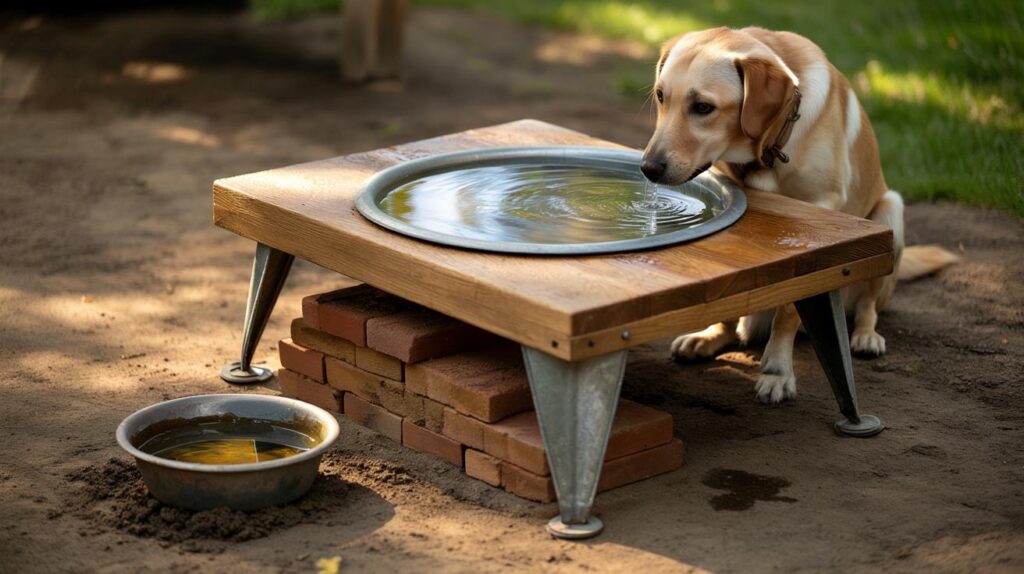
For decades, many homes and hobby farms left bowls at ground level. Soil splash, pet paws, feed dust and wind-blown grit did the rest. The result was brown rims by day two and a rinse routine that never ended. Now a simple elevation trick, rooted in 19th-century farm craft, is getting fresh attention. It uses three bricks, a stout plank, adjustable feet and a BPA‑free container to keep the drinking edge clear of splash and sediment.
Early tests on raised stations show up to 73% less visible debris accumulation compared with identical bowls placed on bare ground.
The appeal is practical. The set-up costs little, uses low-tech parts and takes an afternoon to assemble. It also scales. You can size it for a dog, a chicken run, a goat pen or a small rain barrel used for plants.
What the method involves
The idea in one glance
- Lift the container so the lip sits about 22 cm above the ground.
- Spread weight onto three bricks arranged in a wide triangle for stability.
- Use a timber board treated with linseed oil to resist moisture.
- Add adjustable galvanised feet to level the board on uneven soil.
- Give the board a slight forward tilt of about 2 degrees to prevent stagnation.
The core materials
- 3 solid bricks or flat stones, each roughly 15 × 10 × 5 cm
- 1 rough-sawn oak or chestnut plank, about 50 × 20 × 2 cm
- 4 galvanised adjustable feet, 15–25 cm in range
- 250 ml of pure linseed oil or a plant-based exterior paint
- 1 BPA‑free plastic container of around 5 litres
Many tinkerers swap the metal feet for reclaimed timber blocks, sealed and dried. The goal stays the same: a rigid, slightly tilted platform that does not rock.
The numbers behind “73% cleaner”
Why does a small lift make such a difference? Three simple effects cut the grime load.
Set the base 22 cm from the ground and space the bricks about 40 cm centre‑to‑centre for a platform that resists wobble and splash-back.
In side‑by‑side checks on typical yard surfaces, users logging daily photos noted slower algae films and fewer settled particles. That translates into weekly rinses rather than daily scrubs for many set-ups. Results vary with weather, animal traffic and shade, but the direction stays clear.
How to build one in under three hours
Step-by-step plan
Prepare the board. Lightly sand the plank. Brush on linseed oil. Let it dry for at least two hours to seal fibres against moisture.
Lay the foundation. Place three bricks in an equilateral triangle with about 40 cm between centres. Press down to check firmness.
Fit the feet. Fix four galvanised feet to the underside corners of the plank. Adjust them so the front edge sits around 22 cm high.
Set the tilt. Aim for a gentle forward slope of roughly 2 degrees. A coin under the rear feet often does the job if you lack a gauge.
Test with water. Place the 5‑litre container on the board. Fill it. Watch for wobble. If the surface sloshes, widen the brick triangle or drop the centre of gravity by moving the bowl inwards.
Does it beat a ground‑level bowl?
| Feature | Ground‑level bowl | Raised station |
|---|---|---|
| Debris intake | High on windy or muddy days | Lower due to reduced splash and dust reach |
| Cleaning rhythm | Often daily rinses | Often weekly rinses, monthly deep clean |
| Build time | None | About 2–3 hours once |
| Cost | Nil | Low: bricks, board, feet, oil |
| Animal comfort | Pets stoop; paws near rim | Neck‑friendly height; paws away from lip |
Expert tips from the field
Add grip. Bond a smear of natural resin and coarse sand under the feet to stop slide on wet patios.
Mind the microclimate. Damp corners breed slime. A drier patch near the station slows films and odours. Good airflow helps.
Choose materials wisely. Terracotta suits hot, dry areas. Oak and chestnut resist rot in cooler, wetter spots. Both were common on old farms and still perform well today.
A tiny forward tilt prevents dead zones, sheds scum, and makes a 10‑second wipe as effective as a full scrub.
Safety checks and caveats
Stability and placement
- Keep the centre of the container inside the brick triangle to prevent tip‑overs.
- Avoid paths used by children or larger animals that might bump the stand.
- Check screws and feet weekly. Timber swells and can loosen fittings.
Water quality
- Shade slows algae, but full shade can trap moisture. Aim for dappled light.
- Use fresh water. Do not rely on this method to make unsafe water drinkable.
- Rinse weekly. Deep clean monthly with a brush and hot water. Avoid harsh chemicals around animals.
Who is adopting it and why now
Pet owners want fewer slimed bowls. Smallholders need cleaner chicken and goat water without the daily bucket parade. Gardeners like a tidier birdbath that resists leaf litter. The hardware is cheap, the look is rustic, and the savings show up as minutes reclaimed every morning.
History lends support. Rural families once lifted water points with bricks, terracotta and hardwood to curb disease on muddy yards. The same physics helps now, whether the drinker is a Labrador or a brood of pullets.
Practical extras that make a difference
Go modular. Build two boards that fit the same brick base. Swap a clean board in while the other dries after a wash. This reduces downtime and keeps the routine simple.
Add a guard. A low front lip fashioned from a thin batten can nudge drips forward, away from the legs, keeping the ground under the stand drier. Drier soil means less splash and fewer insects.
Plan for winter. In frost, bricks can shift. Seat each brick on a thin bed of sharp sand to level and drain. If ice is common, a rubber mat under the brick triangle improves grip and reduces cracks in the plank.
If you want to push the savings further
Trial different heights for different users. A medium dog drinks cleanly at 18–22 cm; a large dog at 24–28 cm. Poultry do best with a narrower bowl raised just above peck height to keep litter out. Log what works over two weeks. Short notes on debris, slime and refill intervals will show the sweet spot in your yard.
Consider a covered option. A simple canopy or the lee of a shed wall cuts leaf fall by half in autumn. In tests with two identical raised bowls, a 30 cm eave reduced leaf‑drop contamination by roughly a third on windy days.
The bottom line for busy households
Lift the bowl, level it, tilt it, and seal the timber. Use three bricks, a 50 × 20 × 2 cm board, and a 5‑litre container. Keep the lip around 22 cm high and the tilt near 2 degrees. Rinse weekly, strip monthly. Most readers who try this report clearer water, better‑behaved slime, and less time bent over a tap.
That is the quiet power of a small design tweak. It borrows from farm craft, it respects materials, and it turns a daily chore into a quick checkpoint. If your water gets dirty fast, this is a rare fix that pays you back every single week.



Tried the raised station yesturday—three bricks, a plank, slight tilt. Day two and the rim is still clear. If this means weekly rinses instead of daily scrubs, I’m sold.
Is the 73% figure from a controlled test or just user photos? What happens in heavy rain, or when a puppy barrels into the stand?