
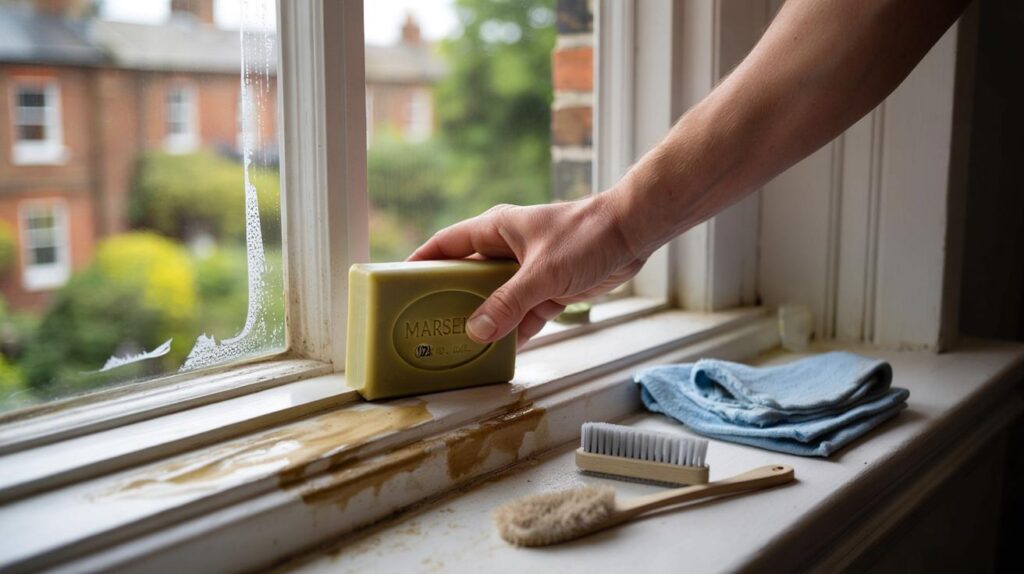
One humble bar from the cleaning cupboard is quietly fixing an everyday household irritation this week across British homes.
A century-old workaround is back on the agenda, and homeowners are swapping sprays for a solid alternative. The promise is speed, silence and a faint, clean scent—without a single drop of liquid lubricant.
The old-school fix that’s suddenly new again
Long before silicone sprays and PTFE aerosols, families leaned on plain soap to keep wooden tracks moving. The chemistry still holds. Traditional Marseille soap contains fatty acids that deposit a microscopic, dry film. That film cuts friction, resists sticking and shrugs off minor dust. Unlike oil, it does not drip or stain curtains and carpets. The result feels instant because the film forms as soon as the bar meets the rail.
Three minutes, no spray, no mess: a dry, fatty-acid film from a 72% olive soap bar makes stuck windows glide.
The method suits older sash and casement frames, drawer runners and even stubborn shutter hinges. It appeals to anyone who prefers a low-cost, biodegradable solution in place of pressurised cans.
What you need, and why it matters
- One Marseille soap bar, 72% olive oil minimum – dense, long-lasting and naturally lubricious.
- One clean microfibre cloth – spreads the film thinly and removes excess.
- One old toothbrush – lifts grit from corners and weep holes.
- One handheld vacuum (optional) – clears abrasive particles before they score the rails.
A clear glycerine soap also works. It lays down a slick film but tends to wear off faster on high-traffic windows.
Seven steps to silence in under 3 minutes
Repeat the treatment every 3–4 months, or as soon as you feel resistance return, to keep the glide consistent.
Why a 72% olive soap works
Marseille soap is rich in sodium olivate and other plant-derived fatty salts. These compounds form a dry slip layer on timber and painted metal. The layer is thin, hydrophobic and stable for months in typical UK indoor conditions. It avoids the dust-magnet effect of wet oils. It also sidesteps the swelling that can follow heavy wax use on softwoods such as pine.
Expert timing and conditions
Pick a dry day. Moist air can make soap lather, leaving residue and drag marks. On softwoods like pine or spruce, go light to prevent build-up in the grain. On hardwoods such as oak, add one extra pass for full coverage. Where the timber looks thirsty or has hairline checks, feed it first with a suitable wood conditioner and let it cure before the soap step.
Keep a small offcut of soap in the tool box. It hardens over time and glides neatly into tight channels without crumbling.
Where it shines, and where to be cautious
Best matches
- Painted wooden sash tracks that rasp when humidity rises.
- Older casement hinges that complain but still move freely.
- Kitchen drawers that catch on one side after a refit.
Think first
- uPVC tracks: test a small area. Soap can leave a visible haze if over-applied.
- Aluminium channels: effective, but remove all dust first to avoid grey streaks.
- Heavily warped frames: soap reduces friction, but alignment still needs attention.
At-a-glance guidance for common frames
| Track material | Application tip | Caution |
|---|---|---|
| Painted softwood | One light pass, quick buff | Too much soap can gum in warm weather |
| Hardwood (oak, beech) | Two passes on contact points | Check for old wax; clean before soaping |
| uPVC | Tiny amount on a cloth, not the bar | Over-application leaves a film on white plastics |
| Aluminium | Buff thoroughly after application | Abrasive dust can mark the surface |
Speed, cost and performance compared
A bar of Marseille soap under £2 covers dozens of windows. One treatment takes about three minutes per window once you know the routine. You avoid propellants, solvent odours and overspray. Silicone sprays act fast as well, yet they drift, spot glass and attract airborne dust if used heavily. Dry PTFE performs brilliantly on metal runners but offers little grip on worn timber. Soap sits between both: clean, controllable and cheap.
Under £2 for months of quieter windows beats most aerosols on price, control and clean-up.
Maintenance frequency and signs you’re due a refresh
- Refresh every 3–4 months in humid rooms and on south-facing frames.
- Top up before cold snaps, when timber contracts and clearances change.
- Look for chalky build-up on corners; wipe and reapply thinly if you see it.
When it’s not just friction
If a sash sticks even after soaping, check for paint ridges on the meeting rails. Scrape drips gently and refinish the edge. If the frame binds only at one point, inspect for a loose screw or a proud nail. On double-glazed units, confirm the packers have not shifted. Lubrication helps movement, but it cannot correct structural misalignment.
Indoor air and surface safety
Marseille soap carries a mild, clean scent that fades quickly. It contains no propellants and no petroleum distillates. It wipes off glass with a damp cloth, then a dry polish. Keep fragments away from carpet pile to avoid white specks. Store the bar in a ventilated spot so it hardens between uses and lasts longer.
Beyond windows: where the bar earns its keep
- Wardrobe sliders: a quick swipe on the bottom runners stops shuddering.
- Sticky drawers: a pass on both side runners evens the pull.
- Hinges that creak: rub the pin head, then swing the leaf to spread film.
- Wooden blinds: touch the cords’ pulleys lightly to reduce squeak.
Practical extras you can try today
Create a “track stick” by shaving a thin edge on the bar with a knife. The chamfer reaches deep channels without fouling paint. For rental flats, apply the film with a cloth to avoid any trace on white uPVC. Keep notes on which windows need more attention; south-facing units often dry out faster and benefit from a second pass.
If you prefer a transparent finish on plastics, use a glycerine bar on a cloth. It leaves less haze yet needs slightly more frequent top-ups. For heavy-duty metal runners, a dry PTFE stick pairs well with the soap method: soap for timber contact points, PTFE for steel-on-steel slides.



Tried this on my cranky sash window—three minutes later it slid like new. The dry film vs oil point is spot on. Also love that it didn’t leave smears on the curtains. Under £2 for silence is wild.
Quick question: does the 72% olive content actually matter for the film, or would any plain bar do? I’ve had wax build‑up before that turned gummy in summer—worried the same might happn here.