
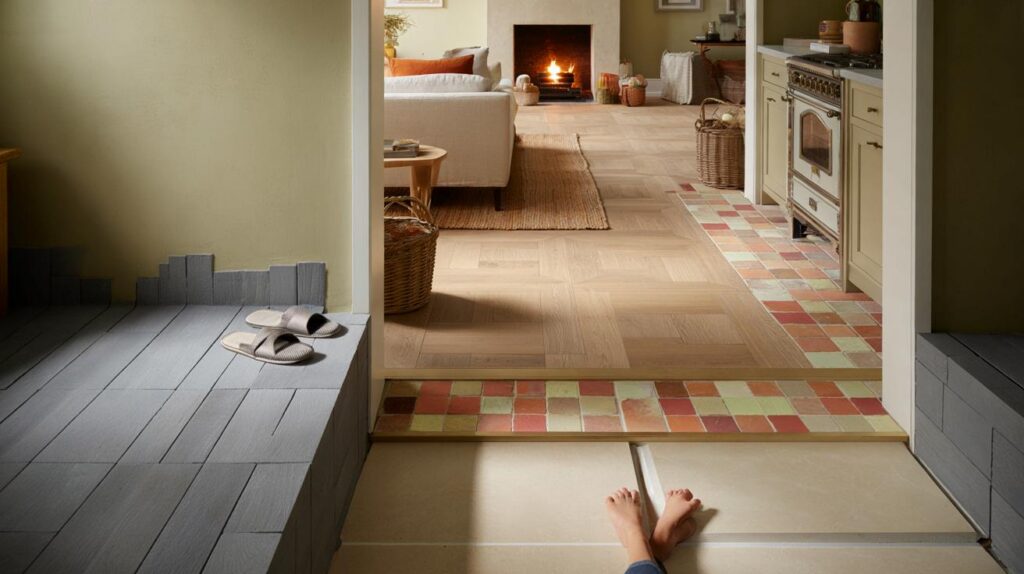
As evenings draw in, a quiet shift is reshaping British homes, starting not with paint colours, but with what you step on.
For a decade, wood-look porcelain sold the promise of warmth without the worries of timber. Designers now say its moment is fading, and tactile, characterful materials are taking the lead.
The trend shifts: why wood-look tiles are losing ground
Fashion fatigue and copy‑paste interiors
Wood-effect tiles became the default in new builds, extensions and open-plan kitchens. Their uniformity once felt slick; today it reads as formulaic. When the same plank pattern appears from Cornwall to the Cairngorms, individuality suffers. Homeowners now want floors that evolve, carry marks of use, and look distinctive from one room to the next.
Texture you can feel now beats imitation you can only see.
Practical gripes you feel every winter
Even the best porcelain still feels cold underfoot once the heating clicks off. In living rooms, that chill can fight against the cosy mood people want by autumn. Repeating prints also become obvious across large spans, and grout lines gather dust in high-traffic zones. Underfloor heating helps, but not every retrofit can take it, and not every budget stretches to it.
Designers read the room
Interior designers report a sharp pivot towards materials that don’t pretend. People want floors that wear in, not wear out; surfaces that can be refreshed rather than ripped out. Natural finishes answer that brief, bringing variation, depth and a calmer acoustic profile than hard, glazed tile.
People are choosing materials with life: terracotta, travertine and pale parquet
Terracotta brings warmth and rhythm
Handmade or machine-formed terracotta adds instant warmth. Its earthy tones—honey, coral, russet—soften modern cabinetry and pair well with limewash walls. Hexagonal tomettes or simple rectangles create gentle movement, and the material’s mass works with underfloor heating. Sealing is required, and patina appears quickly, which many now embrace as part of the charm.
Budget ranges vary by size and finish, but in the UK you might expect around £35–£80 per m² for tiles and £80–£140 per m² installed, depending on substrate prep and sealing. Terracotta suits kitchens, conservatories and hallways, and it sings beside woven rugs in living spaces.
Travertine’s soft sheen and durable calm
Travertine offers a tactile surface with subtle clouding and natural voids that can be filled or left open. Honed finishes diffuse light and smooth hard edges in minimal rooms. It handles daily wear well, feels gentler than marble underfoot, and resists trends. Regular cleaning with a pH‑neutral product and periodic resealing will keep it looking composed.
Typical UK figures: £40–£90 per m² for stone; £90–£160 per m² fitted, subject to thickness and pattern. Large-format pavers in living areas bring a countryside serenity to city flats.
Blonde parquet lifts light levels
Light oak, ash, birch and even bamboo are now the go-to for brightening north-facing rooms. Brushed, matt-oiled boards reflect daylight softly, making small spaces feel cleaner and calmer. Herringbone patterns add energy without overwhelming. With quality underlay, engineered boards dampen footfall and feel welcoming to bare feet in autumn.
Expect around £35–£70 per m² for quality engineered boards, and £70–£120 per m² installed, depending on subfloor and pattern. An oiled finish can be spot-repaired, unlike lacquer, making it family-friendly.
A pale, oiled floor often lifts perceived brightness, and layered rugs add seasonal softness without locking you into one look.
What next for our floors?
Durability and repairability take priority
Households want materials that last decades, not design cycles. Terracotta can be re-sealed and re-waxed. Travertine can be honed back. Engineered oak with a thick wear layer can be sanded multiple times. These options can age with the home rather than date it, reducing waste and long-term cost.
| Material | Feel underfoot | Maintenance | Typical installed cost | Lifespan | Repair approach |
|---|---|---|---|---|---|
| Wood-look porcelain tile | Cool to cold | Low; grout needs care | £60–£110 per m² | 20–30 years | Replace individual tiles |
| Terracotta | Warm, dense | Medium; seal and refresh | £80–£140 per m² | 40+ years | Re-seal, repolish, spot replace |
| Travertine | Soft, tactile | Medium; pH-neutral cleaning | £90–£160 per m² | 40+ years | Re-hone, re-seal |
| Light engineered oak | Warm with underlay | Low to medium; oil care | £70–£120 per m² | 25–40 years | Spot repair, occasional sanding |
Mixes that work in real homes
- Zone a kitchen-diner with pale parquet in the lounge area and terracotta by the cooking run for durable spill protection.
- Use a stone threshold or brass strip to step from engineered oak to travertine in bathrooms without abrupt visual breaks.
- Layer a wool or jute rug over light boards to add autumn texture, then swap to flatweave in spring.
- Introduce colour with small-format clay tiles around a fireplace while keeping the main floor calm and neutral.
- For flats, prioritise acoustic underlay beneath timber to keep footfall noise in check.
How to choose without regret
Test like you live
Bring sizeable samples home and walk on them barefoot. Spill water. Leave a coffee ring. Check how they look at 8am and 6pm. Your feet and eyes will tell you more than any brochure.
Plan from the substrate up
Ask an installer to assess your subfloor. Stone and terracotta are heavier and may need extra prep; timber needs moisture checks and expansion gaps. If you’re dreaming of underfloor heating, confirm compatibility and response times before ordering anything.
Seal, clean and breathe well
Natural floors last when they’re sealed properly and cleaned with the right products. Choose low-VOC sealers and adhesives to keep indoor air fresh. In kitchens and hallways, build in doormats and shoe storage to reduce grit that scratches any surface.
Pick the feel first, then the finish. If the surface delights you underfoot, maintenance becomes a habit, not a chore.
Extra notes that save money and stress
Budgeting a real room
For a 25 m² living space, allow a contingency of 10–15% for waste, offcuts and unforeseen subfloor issues. Include trims, thresholds and finishing oils in your calculations. If costs climb, use the premium material only in the main zone and switch to a simpler, tonal option in secondary areas.
Heating, damp and basements
Stone and terracotta pair well with low‑temperature underfloor heating, smoothing out daily temperature swings. In basements or on ground slabs, test for moisture and consider vapour control layers. For timber, stick to stable engineered boards below grade, and aim for gradual acclimatisation before fitting.
Sustainability in the details
Ask for FSC or PEFC certification on timber, and verify the quarry origin for stone. Locally produced clay tiles can cut transport emissions. Choose repairable finishes—hardwax oils over hard lacquers—so you refresh surfaces rather than replace them.
The mood of 2025 is clear: people want warmth, light and materials that tell the truth. If wood-look tiles once felt like a safe bet, the safer bet now may be a floor that earns its character with every step you take.



Is this just another trend cycle? My porcelian wood-look tiles with UFH feel fine—why swap for terracotta that needs sealing and patina I might not want?
Loved the cost breakdown for terracotta vs travertine; finally numbers I can plan with. One practical question: sealing. For a messy family kitchen (two kids, one dog, rainy school runs), how often would you reseal hand-made terracotta, and which low‑VOC products actually hold up to tomato sauce, coffee rings and mop water? Any prep gotchas on old screed? Pls advise.