
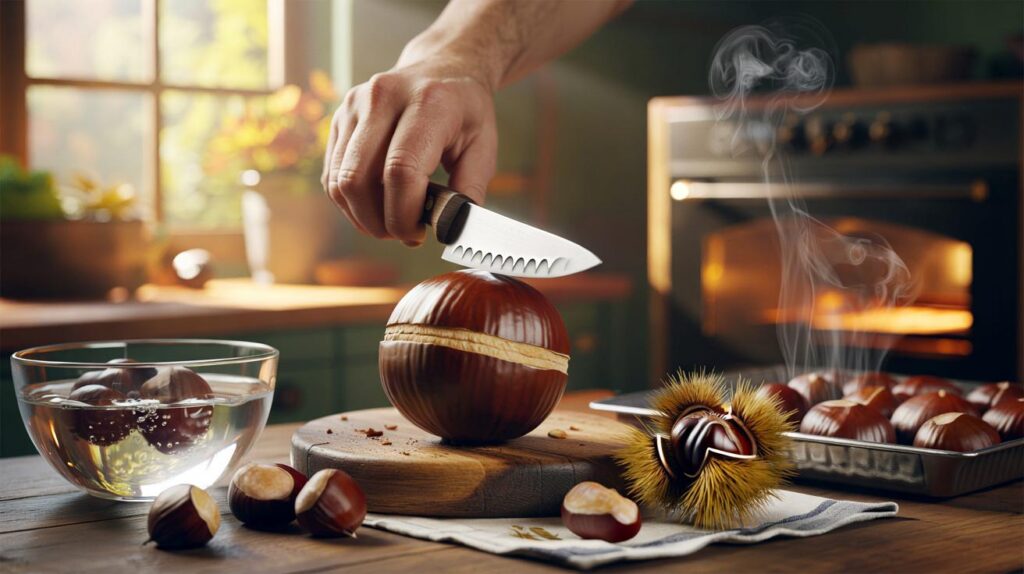
Roasted chestnuts should be cosy, not chewy. Yet households across Britain report bitter bites and stubborn skins spoiling weekend plans.
Seasonal stalls make them look effortless, but home kitchens tell a different story. One easy-to-avoid mistake keeps turning sweet kernels into tough, mouth-drying disappointments.
The tiny mistake costing you flavour
Most home cooks either skip the incision or slice the shell the wrong way. That sends steam in the wrong direction, traps the papery inner skin and dries the nut. The result tastes flat and feels rubbery. Fix the cut, fix the chestnut. The rest of the method then falls into place.
Make one wide, horizontal cut across the domed side before any heat touches the shell. It changes everything at peeling time.
Start the clock the day you buy or pick
Chestnuts are fresh produce, not pantry goods. Delay turns them mealy and invites pests. Sort them the day you bring them home. Remove any with holes, cracks or dull patches. Heavy, glossy nuts signal a plump kernel inside. Light ones often hide air or damage.
Use the float test if you are unsure. Tip the nuts into a bowl of cold water. Sinkers tend to be sound. Floaters often carry worm damage or have dried out.
Cut smart, then soak to soften the fight
Use a small chef’s knife for a clean, controlled cut. Aim for a firm, horizontal slash about 2–3 cm long. Stay shallow; you want the shell and inner skin, not the kernel.
Now give the shells time to loosen. Soak incised chestnuts in cold water for about 1 hour. The water plumps the inner skin and makes it easier to remove later. Short on time? A hot-water shortcut helps.
Time-poor trick: 20 minutes in hot water can mimic a one-hour cold soak and keep the peel from clinging.
Heat that actually works: oven and air fryer settings
Boiling leaves many nuts bland and soggy. Dry heat concentrates flavour and keeps the texture creamy. Spread the soaked, incised chestnuts on a tray, cut side up. Set the oven to 200°c. Roast for about 20 minutes. Shake the tray once halfway through for even cooking.
Using an air fryer? Arrange nuts in a single layer. 200°c for 15–18 minutes suits most models. Larger nuts may need a couple more minutes. Listen for a faint hiss and sniff for a nutty, sweet aroma. Those cues beat clock-watching.
Peel while warm. The papery inner skin hardens as it cools and becomes stubborn within minutes.
The peel that ruins the bite
The beige inner skin carries bitterness. It also dries the mouth. Once roasting ends, wrap the hot nuts in a clean tea towel for 3–4 minutes. The trapped steam loosens the skin. Peel briskly while they are still warm to the touch. If they cool, re-warm briefly in the oven for a few minutes and try again.
Storage rules that save a whole bag
Short week plan
Keep fresh chestnuts in the fridge, not the fruit bowl. Use the vegetable drawer and a breathable wrap, such as a tea towel or a pierced paper bag. Aim to cook within 4–5 days. That window protects sweetness and moisture.
Freezer plan
Freeze only after cooking and peeling. Raw nuts carry too much moisture and split in the freezer. Once peeled, portion into bags, squeeze out the air and label. They reheat well in a pan with a splash of water and a knob of butter, or go straight into stuffings and soups.
Your fast checklist
- Sort on day one; bin any with holes, cracks or mould.
- Make a horizontal cut across the domed side, 2–3 cm long.
- Soak for 1 hour in cold water or 20 minutes in hot water.
- Roast at 200°c for about 20 minutes, or air fry at 200°c for 15–18 minutes.
- Peel while warm and remove the inner skin completely.
- Chill fresh nuts for up to 5 days; freeze only once cooked and peeled.
How to buy like a market pro
Choose weighty, shiny nuts with tight shells. Avoid dents and dull patches. Ask for recently delivered stock if you shop at a stall. Out on a foraging walk, pick only freshly fallen nuts in prickly, many-spined burrs and ignore anything soft or split.
Vital safety note: don’t cook conkers
Horse chestnuts, known as conkers, are not edible. They cause stomach upset and worse. Edible sweet chestnuts sit inside a burr covered with many fine, needle-like spines and usually hold several nuts. Conkers sit in a green husk with fewer, wider spines and usually contain one large, glossy seed. When in doubt, leave them out.
Fixes for common problems
Shells won’t peel
They cooled too much. Reheat for a few minutes at 180°c, then wrap in a towel and peel again.
Bitter taste lingers
Traces of inner skin remain. Scrape gently with a paring knife or rub in a clean tea towel while warm.
Texture feels chalky
The nuts were old or overcooked. Shorten the cook by 2–3 minutes next time and buy heavier, fresher nuts.
Make them earn their place at the table
Once peeled, chestnuts work across a weeknight plan. Toss with shredded Brussels sprouts, pancetta and lemon. Fold into a mushroom risotto with thyme. Blend into a silky soup with celery, onion and stock. For a sweet route, simmer with milk and vanilla, then puree for a quick spread.
Nutritional note and budget maths
Chestnuts are higher in complex carbohydrates than most nuts and much lower in fat. They bring fibre, vitamin C and manganese. A 500 g bag yields about 300 g of edible kernel after peeling. That portion comfortably serves four as a side, or two if you fold it into a stuffing with sourdough and herbs.
Timing for a crowd
For 1 kg, budget 7 minutes to incise, 1 hour to soak, and 20 minutes to roast. Peeling takes roughly 10–12 minutes if you keep the nuts warm in a towel. That schedule fits neatly between prepping a Sunday roast and putting the veg on.
Skip the pot of boiling water. Dry heat at 200°c concentrates sweetness and protects that soft, creamy crumb.
Useful extras for autumn cooks
Save the skins and shells for the compost heap once cooled. They break down well when mixed with dry leaves. If you own a stove-top chestnut pan with holes, use medium-high heat and shake every minute for about 15 minutes; the same cut-and-soak rules still apply. For allergy-aware households, cook chestnuts in a clean pan and store them separately from other nuts to avoid cross-contact.



Tried the horizontal slash + 1-hour soak tonight—game changer. Texture finally creamy, no more papery skins clinging. Peeling while warm was the missing step for me. I also used the air fryer at 200°c for 16 minutes and shook the basket once; perfect. Thanks for the freezer tip too—cooked and peeled before freezing makes so much sense.