
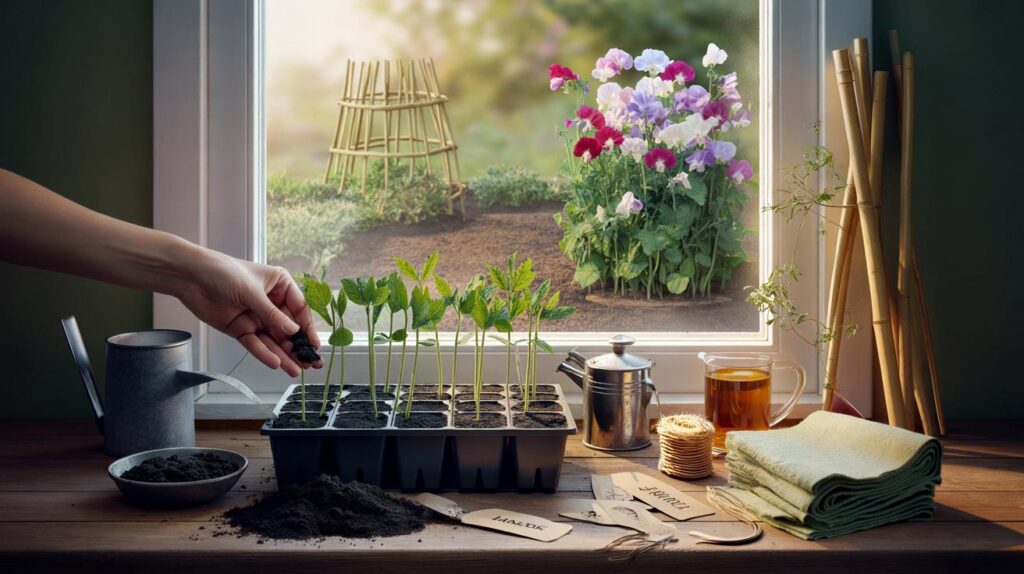
Autumn light fades, but a tray of seeds can still set a bright promise. A tiny October ritual brings long months of scent.
Grab a mug of tea, clear a windowsill, and give yourself a quarter of an hour. If you sow sweet peas now, your spring will arrive early, smell richer, and keep throwing flowers into summer with barely a fuss.
Why october gives you a head start
Autumn-sown sweet peas build deep roots while the year cools. That underground work pays off in earlier blooms and sturdier plants. Spring sowing still works, but you wait longer and pick fewer stems.
Sow in October, aim for 16–18°C to germinate, pinch at 2–3 leaf pairs, and cut every other day once buds open.
Most households can manage the basics. You need seeds, compost, and a bright spot. A simple bamboo wigwam or a fence gives them a ladder. The plants climb, perfume the air, and refill the vase as fast as you empty it.
What you need
- 1 packet of sweet pea seed (20–40 seeds, £2–£4)
- Deep pots, toilet-roll tubes, or root trainers (15–20 cm deep)
- Peat‑free, free‑draining seed compost
- Labels, a pencil, and soft garden twine
- A bright windowsill, porch, or unheated greenhouse
- Horticultural fleece or newspaper for frost nights
Step-by-step sowing
- Fill deep containers with moist compost and firm lightly.
- Sow one seed per cell or pot, 2 cm deep. Space matters for strong roots.
- Keep at 16–18°C until germination. Expect shoots within 10–14 days.
- Move seedlings to bright, cool light once up. Avoid hot radiators and dark corners.
- Pinch out the tip above the second or third pair of leaves. This sparks branching.
- Water from the base. Let the top centimetre of compost dry before the next drink.
- Guard against mice with lids or fine mesh. They love the seeds.
Pinching feels ruthless for a week. By June it looks smart, with more stems, more buds, and fuller vases.
Autumn or spring: what changes
| Sowing time | Germination temp | First flowers | Root strength | Picking window |
|---|---|---|---|---|
| October | 16–18°C | Late April–May | Deep, fibrous | Up to 120 days |
| February–March | 16–18°C | Late May–June | Moderate | 80–100 days |
Planting out and training
Harden plants for 7–10 days in March or April. Put them outside by day and bring them in at night if frost threatens. Space at 20–25 cm. Set supports before planting to avoid root damage.
Choose a sunny, open bed with sharp drainage. Enrich the soil with garden compost. Water in well, then mulch to hold moisture. Tie stems loosely to canes with soft twine. The tendrils take over once they find the structure.
Support ideas that work
- A 2 m bamboo wigwam for six plants per circle
- Mesh along a fence for a neat cut-flower row
- An obelisk in a large pot for balconies and patios
Feeding, watering, and cutting
Water deeply, not little and often. Aim for a soak twice a week in dry spells. Feed with a high‑potash liquid once buds appear. Avoid high nitrogen. Leaves grow, flowers hide.
Cut or deadhead every other day. Do not let pods form or the show slows. Morning harvest gives the longest vase life. Strip the lower leaves, recut stems, and place in deep, cold water for an hour before arranging.
The more you pick, the more they bloom. A single wigwam can give 30–50 stems a week in June.
Choosing varieties for scent and space
Fragrance varies. Some modern mixes focus on size, not perfume. If scent matters, pick named old‑style selections. ‘Matucana’ and ‘Cupani’ smell strong and climb well. ‘Spencer’ types give big, frilly blooms and long stems for vases. Dwarf forms such as ‘Little Sweetheart’ suit pots and baskets, but check height on the packet before you buy.
Quick checks before you order
- Look for “highly scented” on the packet if perfume is your goal.
- Pick long‑stemmed strains for cutting gardens.
- Choose heat‑tolerant types for south‑facing courtyards.
Common problems and fast fixes
- Mice or rats steal seeds: use a propagator lid or fine mesh until shoots appear.
- Slugs and snails shred new growth: ring pots with copper tape or set beer traps.
- Yellowing leaves in pots: check drainage, switch to a potash feed, and avoid overwatering.
- Powdery mildew in July: water the base only, improve airflow, and remove infected leaves.
- Plants stall after planting: a cold snap bites. Cover with fleece on frosty nights.
Safety, value and pollinators
Sweet peas look like edible peas, but they are ornamental. Do not eat the pods or seeds. Keep them away from curious pets and children. Label the row clearly if you also grow veg.
A packet at £3 can fill a bed, a fence, and two big vases a week in high season. Early sowing stretches the returns. Your cost per bouquet falls to pennies by July.
Bees visit the flowers, especially in warm spells with light winds. Open, older varieties help insects most. Mix with calendula, cornflowers, or phacelia to offer nectar when the weather turns cool.
Smart tweaks if you have no garden
Use a 40–50 cm pot with a tall obelisk. Plant three seedlings around the base. Add a handful of slow‑release fertiliser and top up with a weekly potash feed from May. Rotate the pot a quarter turn every few days so growth stays even.
If your flat runs hot and dry, start seeds on the coolest windowsill. Move them to a stairwell or porch once they sprout. Light matters more than warmth after germination.
Extra gains for 2026
Stagger a second sowing in late February. The October batch starts the party. The spring batch keeps it going through August. If heat arrives early, add shade cloth at midday and water before breakfast, not at dusk.
Set a picking routine. Monday, Wednesday, Friday works. Miss a week, and pods set. Keep shears by the back door, and the habit sticks. A small change this month brings colour, perfume, and armfuls of stems when the year turns bright again.



Loved this—15 minutes and a mug of tea feels actually doable. Quick check: for a cold flat, would a bright stairwell at ~16–18°C be enough to germniate before I shift them cooler? Planning to pinch at 2–3 leaf pairs and use potash once buds show. Also, rooting them in toilet‑roll tubes vs deep pots—notice any real difference in root vigor? Thanks for the clear, step‑by‑step; definitly bookmarking for October weekends.