
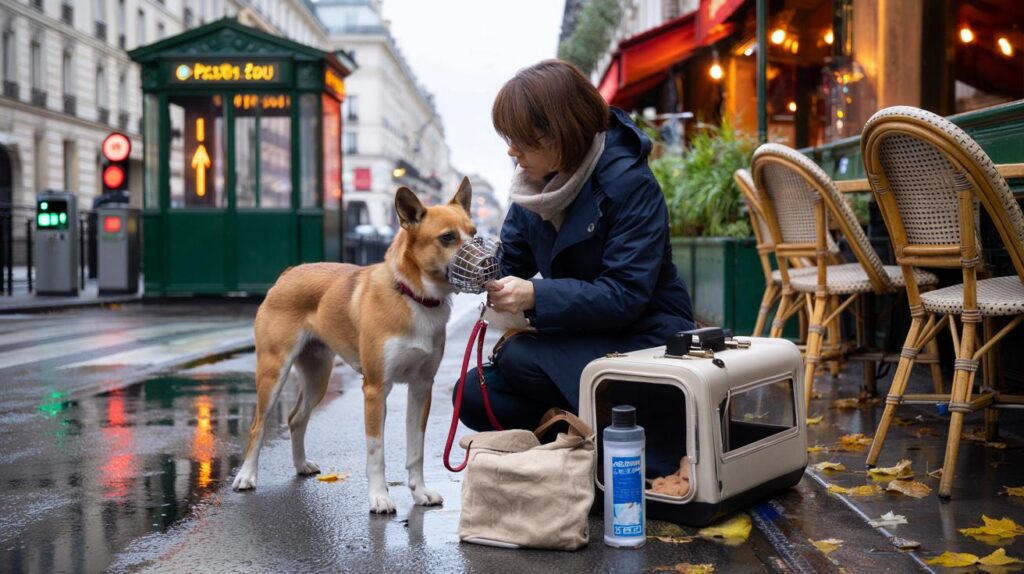
Leaves fall, routines tighten, and city rules quietly bite. Dog owners feel it most during crowded autumn errands and commutes.
Across France in 2025, pet access still shifts by municipality, operator and doorway. We tracked the rules that shape daily life so you can plan a full day with your dog without stand‑offs at the door, wasted journeys, or rainy waits outside a shop.
Where the lead stops: 2025’s real‑world access for city dogs
Urban walks and parks: calm strolls or strict signage
On the pavement, a leashed dog usually passes without issue. Noise, scooters and narrow pavements raise tensions, so keep your dog close. That simple habit lowers complaints and avoids fines.
Parks bring the surprises. Each town sets its own signs and zones. Many green spaces still restrict dogs to marked alleys or exclude them entirely. Paris keeps only selected gardens open to dogs and always on a lead. Some cities carve out fenced canine areas, yet these zones remain patchy on the map.
Read every gate. Signs decide whether you may enter, where you may walk, and whether the lead must stay on. Miss a line, risk a fine.
Clean‑up rules bite year‑round. Carry bags and use bins. Municipal agents can issue penalties that start at dozens of euros for fouling public space. Wet autumn leaves do not hide the evidence for long.
Malls and small shops: different doors, different rules
Large supermarkets and hypermarkets reject dogs, guide and assistance dogs excepted. Hygiene law sits behind that line. Door staff enforce it without debate.
Independent boutiques choose their own policy. Some display a “dog friendly” pictogram and welcome calm, leashed animals. Others ask you to wait outside. Groomers, pet shops and a few lifestyle stores lead the way on access. Always ask before stepping in. A polite question removes friction at the till.
Offices, restaurants and culture: the red zones with rare exceptions
Public administrations and many service counters bar pets for safety and hygiene reasons. Bring paperwork, not your dog, when you face bureaucracy.
Restaurants generally refuse dogs indoors unless the owner sets a different rule. Terraces vary by venue and space. Museums, cinemas and concert halls align with a no‑dog stance. Assistance dogs retain a legal right of entry across these sectors. Staff may request identification for the animal’s status.
On the move: transport that will take your dog in 2025
Metro, buses and trains: what boards, what pays
Urban networks often accept small dogs in a closed carrier. In the Paris Metro and RER, a small dog in a bag travels free. Larger dogs ride on a short lead with a muzzle and a paid ticket, usually charged at a reduced or half fare.
Regional policies shift from city to city. Some buses forbid animals beyond assistance dogs. Others accept leashed, muzzled dogs outside peak times. Read the operator’s page before you set off to avoid a platform refusal.
On national rail, the SNCF sells pet tickets. Under roughly 10 kg, the fee often starts at about €7 when inside an approved carrier. Heavier dogs pay more, frequently a percentage of a standard fare. Big dogs need a muzzle and a lead on board. Keep vaccination papers to hand for checks.
Carrier for the small, muzzle and lead for the large, a ticket for most: pack these three and you rarely meet a barrier.
Cars, taxis and car shares: comfort, consent and compliance
In a private car, secure your dog. Use a harness clipped to the belt, a crate in the boot, or a divider. An unrestrained dog can distract, injure passengers in a stop, and trigger fines under road safety rules.
Taxi access depends on the driver. Call ahead or tick the “pet friendly” option if the platform offers one. Bring a blanket and keep your dog clean to protect seats. Car‑share hosts expect the same care. Ask before booking and confirm the plan for hair and mud.
Planes and ferries: long‑haul with paperwork
Airlines impose size limits, carrier dimensions and fees. Small dogs may travel in cabin inside an airline‑approved soft crate. Larger dogs go in hold in a rigid crate that meets IATA standards. Lines set breed policies and caps on the number of pets per flight.
France‑to‑EU travel needs an ISO microchip, a valid rabies jab and an EU pet passport. Some destinations ask for a recent health certificate from a vet. Check time windows for each document.
Ferries vary widely. Some lines require kennels on deck. Others let dogs remain in vehicles or use pet‑friendly cabins. Wind, noise and salt spray stress many animals on open decks, so plan warm clothing and fresh water breaks.
Quick guide at a glance
| Place | Typical stance in 2025 | What to do |
|---|---|---|
| Pavements and streets | Allowed on a lead | Short lead, clean up, avoid crowds where possible |
| Parks and gardens | Mixed, zone by zone | Read gate signs, follow marked alleys, keep lead on |
| Supermarkets and malls | Mostly no access | Assistance dogs only; try small independent shops instead |
| Restaurants and cafés | Mostly no indoors; terraces vary | Ask first, seat away from aisles, keep your dog under the table |
| Metro and buses | Carrier for small; lead, muzzle and ticket for large | Off‑peak travel, keep distance from doors and prams |
| Trains (SNCF) | Ticket required; rules by size | Bring carrier or muzzle and papers; book early on busy days |
| Taxis and car shares | Driver decides | Ask ahead, bring blanket, keep dog dry and calm |
| Museums, cinemas, offices | No, assistance dogs excepted | Arrange care, avoid peak queues with a dog outside |
Fieldcraft for a smooth day out
Apps and local groups that map friendly doors
Several apps and community maps list cafés, hotels and shops that accept dogs. Local social groups swap updates faster than official pages. Members post new signs, changed rules and honest reviews. That saves wasted walks in the rain.
Print a shortlist on paper for days when your battery dies. Screens fail; a folded cheat sheet inside your wallet does not.
Rights, duties and the manners that open doors
On the street, a led dog on a short lead fits most bylaws. In food retail, the default answer stays no. In transport, an operator policy prevails over local custom.
- Carry bags, wipes and a small bottle of water for quick clean‑ups.
- Fix an ID tag with your mobile number on the collar and harness.
- Pack a soft muzzle and train your dog to accept it at home.
- Teach a tight “heel” and a solid “wait” for doors, lifts and ticket gates.
- Keep a foldable bowl and a blanket in your tote for cafés and trains.
Calm behaviour wins access. A quiet dog under the table draws fewer complaints than any sign on the door.
Autumn specifics and money matters
Rain, leaves and short days change the game. Wet paws slip on tiled shop floors. Towel paws before entry. Dark evenings hide dog mess near kerbs. Choose well‑lit routes and carry a small torch.
Budget for transport. In cities, a larger dog may need a paid ticket on metro or RER. On SNCF, plan for a flat pet fee for small carriers and a higher percentage fare for big dogs. On ferries and airlines, pet fees can exceed a cheap human seat on sales days. Price your route before you promise a visit.
Worked example: one Saturday with a 14 kg dog
Plan a morning park walk on signed alleys. Skip the children’s play area and the sports turf. Head to a small bakery that accepts dogs at the counter, ask politely, step back from the queue, and keep your dog by your calf.
Take the RER off‑peak with a short lead, a muzzle and a paid ticket. Board near a door for space, yet move down the carriage for safety. Sit on the aisle side to keep your dog clear of feet and prams.
Lunch on a terrace with heaters. Choose a table at the edge, not in the aisle. Place a blanket under the chair so your dog lies down and stays warm. Leave if the wind picks up and the dog shivers.
Training and gear that pay off fast
Muzzle practice protects access. Feed treats through the muzzle in short sessions at home. Add the lead only when the muzzle means food. That turns a rule into a cue for calm.
Pick carriers by weight and length, not looks. A small dog stands, turns and lies flat in the cabin bag. A large crate for car or ferry locks shut without rattles. Fit non‑spill bowls and a clip for a waste‑bag roll.
Risk and reward: weighing your options
Fines for fouling, unsafe transport and breaches of local bylaws add up. A single complaint can end a day. Planning saves money and stress. A list of two cafés, one park gate and one backup shop keeps you moving when a sign says no.
The reward is real. With a lead, a carrier, a muzzle and a plan, most urban days work. Your dog stays with you, your errands get done, and strangers drift from suspicion to smiles.



Fantastic field guide. The “read every gate” reminder and the worked 14 kg example are gold. The packing mantra—carrier for small, muzzle + lead for large, ticket for most—will definately save arguments. I also liked the terrace etiquette and the budget notes (pet fees can beat promo fares, ouch). Minor ask: a one‑page cheat sheet would be perfect for my tote. Otherwise, this is the most practical, real‑world dog access explainer I’ve read this year. Bookmarked for autumn errands.