
A cold snap is coming, daylight is slipping, and gardeners face a choice: let beds idle, or bank crisp, sweet roots.
Across chilly plots from Kent to Calais, market gardeners are quietly doubling down on winter radishes. Their secret is not a gadget, nor a miracle variety. It is three quick habits, each taking about 30 seconds, that lock in crunch, curb heat, and carry crops cleanly through frost.
Cold-season radishes are back on the menu
Winter radishes thrive when nights bite and days are short. The cold nudges plants to store sugars, which softens peppery notes and firms the flesh. Miss the timing or cram the rows, and the roots turn pithy or warped. Get three small things right and the results feel almost unfair.
Sow while the soil still feels mild, give every root breathing space, and shield plants without sealing them in.
The 30-second playbook
Beat the clock with early sowing
The window closes fast as autumn advances. Aim to sow before mid October, while soil temperatures hover above 7–8°C and daylight still pushes growth. That brief head start builds leaf area before deep cold slows everything down. In northern sites or higher ground, move a week earlier.
Your 30-second routine is simple. Rake a shallow drill 1–1.5 cm deep. Water the line to settle fine particles. Drop seed with a relaxed hand. Cover lightly, then label the row. The aim is a quick, even emergence within 6–10 days.
Cold, wet clods stunt seedlings. If beds are heavy, mix in fine compost at the surface and avoid working soggy soil. A cloche or low tunnel can buy you another 7–10 days if you are late, but the clock still matters.
Priority one: sow while the soil is still kind. Day length now is your free fertiliser.
Give roots room to swell
Winter types bulk up. Tight spacing starves light and air, and roots twist as they jostle for space. Pro growers set rows 20–25 cm apart, then thin plants to match the cultivar. Small round types sit at 3–5 cm. Chunkier batons and daikon need 8–12 cm. The extra elbow room reduces bolting, improves shape, and cuts fungal trouble in damp spells.
- Row spacing: 20–25 cm for easy hoeing and airflow.
- Within-row spacing: 3–5 cm for small roots; 8–12 cm for long or bulky types.
- Depth: 1–1.5 cm, into a fine, firmed tilth.
- Watering: 10–15 mm weekly in dry spells to stop pithiness and heat.
- Nutrition: moderate nitrogen; too much leaf means spongy cores.
Thin as soon as the first true leaf appears. Do it in one pass. Pull weaklings, leave the straightest seedlings, and water afterwards to settle soil around the survivors.
Protect without suffocating
A light fleece acts like a duvet with gaps. It shaves a few degrees off frost, blunts cold winds, and keeps early birds off your rows. Use 17 g/m² horticultural fleece on hoops or short stakes so the fabric never rubs the leaves. Peg the edges, but leave enough slack for growth and airflow.
Lift an edge on bright days to vent condensation. That simple habit cuts down on leaf disease and keeps the foliage photosynthesising. In exposed beds, add a second, looser layer during sharp snaps, then remove it when the weather steadies.
Shield, don’t seal: vent fleece whenever the sun shows to keep leaves dry and growing.
What changes on your plate
Handled this way, winter radishes carry dense flesh, tight skins, and a gentle bite. Cold nights raise sugar levels. Even black Spanish types mellow, while watermelon radish keeps its snap and colour. Texture stays crisp instead of chalky, which matters for salads, pickles, and roasting.
| Action | Time cost | Main gain | Risk avoided |
|---|---|---|---|
| Early sowing | 30 seconds per row | Faster establishment | Stalled seedlings in cold soil |
| Proper spacing | 30 seconds to thin | Uniform, full roots | Forked, stringy, or hollow cores |
| Light fleece cover | 30 seconds to set | Frost buffer and airflow | Leaf scorch, bird damage, mildew |
Timing, varieties and quick maths
Day length is the quiet driver. Sown by mid October in most lowland gardens, winter radishes reach kitchen size in 50–75 days, depending on type and temperature. Expect longer at higher latitudes or on shaded sites. A simple rule: for each 2°C drop in average temperature, add a week to maturity.
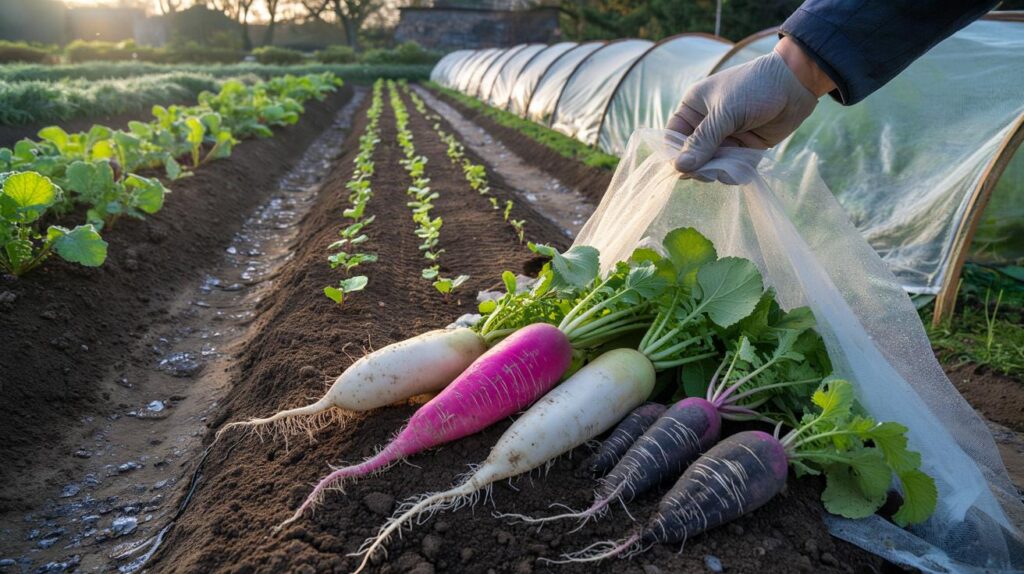
Choose types that suit your gap. For soups and roasting, black Spanish and green meat give heft and keep well. For salads and quick pickles, watermelon radish delivers colour and crunch. For grating and stir-fries, daikon (mooli) brings length and mildness. Mix a row to stagger harvests and reduce risk.
Risks to watch and easy fixes
Flea beetle fades with the cold, but slugs stay active. Lay beer traps outside the fleece and clear debris from path edges. If foliage yellows and growth stalls, check drainage first. Waterlogged soil suffocates young roots, so raise the bed slightly or add surface grit to improve runoff.
Clubroot can strike any brassica patch. Rotate beds for three to four years and keep pH near neutral. Lime only if a test shows acidity. Remove all brassica residues after harvest and compost them hot. Under fleece, watch for condensation beads; vent at midday and skip evening waterings before a frost.
Harvest, storage and kitchen wins
Pull roots once they feel firm and full when pinched. Trim foliage to 1–2 cm to stop moisture loss. Rinse off soil, dry, and store in the fridge wrapped in a damp tea towel, or pack in damp sand in a cool shed at 0–4°C. Expect two to eight weeks of good texture, variety depending.
Winter radishes shine beyond salads. Roast chunks with thyme and oil for a nutty sweetness. Shave thinly and salt for quick pickles. Ferment matchsticks with carrot and ginger for a bright side that lasts. Mild cold-grown roots take up flavours fast, so small batches suit weeknight cooking.
Make the minute count in real beds
If you sow a three-metre row by the second week of October and thin to 8 cm for long types, you can lift 30–40 medium roots by late December under fleece. A second, shorter row sown a week later bridges the New Year gap. The extra 90 seconds buys steady harvests when shops turn patchy.
These moves also stack with other crops. Slot radish rows between slow winter brassicas to fill bare soil and suppress weeds. Use the same fleece line to shield young lettuces. Keep the routine tight: quick sow, quick thin, quick cover. Small, timely actions do the heavy lifting when the weather turns.



Brilliant breakdown. I tried early sowing + proper spacing last winter and the difference was wild: zero pithiness, cleaner skins, and a sweeter bite even on black Spanish. The 30‑second routines sound trivial but they stack—especially venting the fleece at midday. I’d add that trimming tops to 1–2 cm before storage is a game‑changer too. Thx for the clear spacing numbers (8–12 cm for daikon); I was cramming them and wondering why they forked. Definately keeping this.