
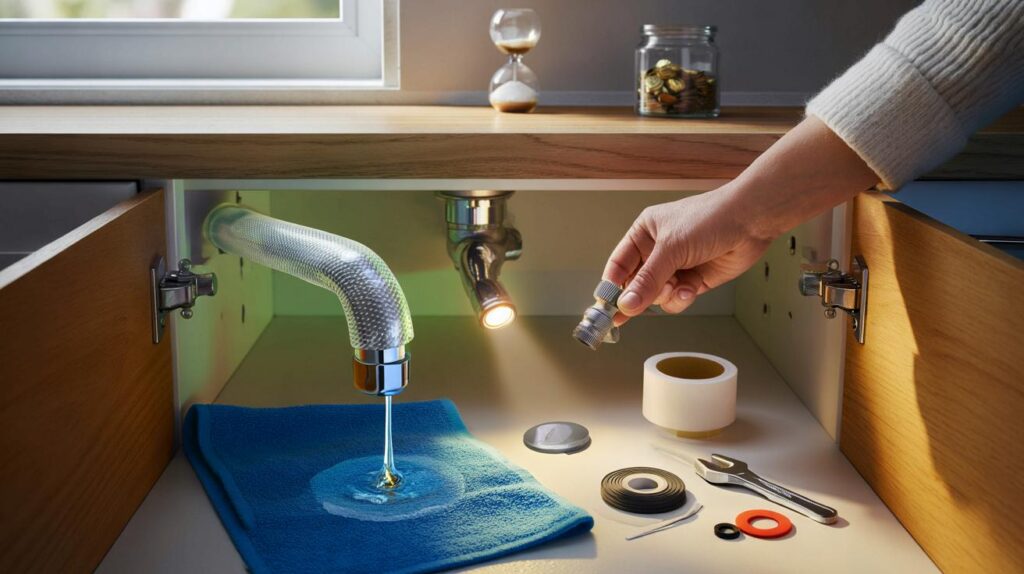
You could be paying for water you never use. The signs whisper behind walls, under sinks, and inside cisterns.
Across the country, households are letting clean water slip away without noticing. Small drips add up to big numbers. Cold weather nudges pipes, seals and valves, and people close doors on problems they cannot see. Simple checks and quick fixes can halt the flow, protect your home, and trim your bill before winter bites.
Detecting hidden leaks at home
The most expensive leaks lurk out of sight. Under the kitchen sink. Behind the toilet. Beneath bath panels. A slow weep may never hit the floor, yet the meter keeps spinning. Start with the obvious places, then work towards the concealed runs of pipe.
Signs you can spot in minutes
- A quiet trickle or tapping when all taps are closed.
- Dark patches on skirting boards or at the base of walls near pipes.
- A musty smell in cupboards under sinks or basins.
- Scale or green staining around tap bases, flexi-hoses and isolating valves.
- A toilet cistern topping up by itself when no one has flushed.
- Meter test: note the reading, avoid water for two hours, then check again. Movement signals a leak.
A single drip every second can waste roughly 120 litres a day, enough to fill a bath you never take.
Act fast: simple moves that stop the flow
Speed matters. Water migrates into timber, plaster and flooring. That invites mould and repair bills. You do not need a toolbox on wheels to take control.
- Shut off the nearest isolating valve for the affected tap, toilet or appliance.
- Dry the area fully, then watch for fresh beads of water to pinpoint the source.
- Gently tighten compression nuts by a quarter-turn. Do not overdo it.
- Swap out perished fibre washers for rubber or EPDM alternatives.
- If in doubt, turn off the stopcock and book a repair before reopening it.
Ten calm minutes with a towel, a torch and an adjustable spanner often ends the leak for pennies.
Swap a washer, stop the waste
Most weeping taps and flexi-hose joints fail at cheap parts. Washers harden. O-rings flatten. Cartridges gum up with limescale. Replacing them is straightforward if you work methodically.
How to deal with a dripping tap
- Turn off the local valve or main stopcock.
- Open the tap to release pressure.
- Remove the handle and cover. Unscrew the cartridge or spindle.
- Lift out the old washer or O-ring and match the size like-for-like.
- Clean the seat with a soft cloth. Reassemble and reopen the valve.
How to calm a running toilet
- Lift the cistern lid. If water runs into the pan, add a few drops of food colouring. Colour in the bowl confirms a leak.
- Check the float height. Lower it so water stops 2–3 cm below the overflow.
- Inspect the flapper or flush valve seal. Replace if warped or slimy.
- Rinse grit from the fill valve or fit a new unit if the hissing continues.
| Common leak | Typical daily loss | Quick fix | Approximate parts cost |
|---|---|---|---|
| Dripping tap | Up to 120 litres | New washer or cartridge | £2–£20 |
| Running toilet | 200–400 litres | Flapper/seal or fill valve | £6–£25 |
| Weeping flexi-hose | 50–150 litres | Tighten or replace hose | £5–£15 |
| Seeping compression joint | 20–80 litres | New olive and PTFE tape | £1–£5 |
What it means for your bills
Small numbers per minute become large numbers per year. A drip at one per second reaches roughly 43,800 litres over 12 months. That is 43.8 cubic metres you never used.
A quick household calculation
- Water and sewerage are usually billed per cubic metre. Local rates vary widely. Many households pay between £3 and £6 per m³ combined.
- At 43.8 m³, that single drip could add roughly £130–£260 a year to your bill.
- If some of that water is hot, energy costs stack up as well.
Heating one litre of water by about 35°C needs around 0.041 kWh. If your drip wastes 120 litres of hot water in a day, that is close to 4.9 kWh. At an electricity rate near 27p/kWh, that is about £1.30 a day, or over £450 a year. With gas, the per‑kWh price is lower, but the waste still bites. Even if only a third of the lost water is hot, the energy penalty remains noticeable.
Cutting leaks can trim water use by up to 15% and reduce energy demand when hot water is involved.
Seasonal pressure: autumn and winter checks
Cooler months test pipework. Rubber hardens. Old valves stick. People use more hot water. A five‑point routine each month keeps control.
- Open kitchen and bathroom cupboards. Check for damp rings and swollen chipboard.
- Run your fingers around the base of taps and beneath flexi-hoses.
- Watch the toilet bowl for a colour trail after a dye test.
- Listen at night. Silence should mean zero flow.
- Log your meter reading on the first of the month. Compare to last month’s usage.
When to call a professional
Some faults need specialist kit and experience. Act early if you notice any of the following.
- Persistent damp patches spreading across ceilings or down party walls.
- Mould returning after thorough drying and ventilation.
- A meter that moves when every valve is shut.
- Boiler pressure dropping repeatedly with no visible leaks.
Leak detection services use acoustic probes, tracer gas, thermal cameras and moisture meters. That limits damage and speeds up a targeted repair. Keep photographs and notes for your insurer if damage has occurred.
Extra tips and upgrades
Small kit, big gains
- Fit aerators on taps and efficient shower heads. They cut flow while keeping comfort.
- Add a dual‑flush converter to older toilets. The short flush saves water on each use.
- Install a smart leak alarm under sinks and near tanks. It sends an alert when it senses water.
- Label your stopcock and local isolating valves. Everyone in the house should know where they are.
- Keep a small box: assorted washers, O‑rings, PTFE tape, a couple of olives, and a spare flexi-hose.
Helpful details you can use today
Know your parts. A washer is a flat disc that seals a tap seat. An O‑ring is a round rubber seal that stops leaks around a spindle or spout. A cartridge is the internal mechanism of a mixer tap. In a toilet, the flapper or flush valve seal keeps water in the cistern, while the fill valve refills the tank after a flush. Taking a clear photo before disassembly helps you match replacements at the shop.
Try a short simulation to spot hidden cost. Assume your home loses 80 litres a day across small leaks. Over a year, that is 29.2 m³. At £3–£6 per m³, the water cost lands between £88 and £175. If a quarter of that water is hot and you heat with electricity at 27p/kWh, the energy used is about 0.041 kWh × 20 litres × 365 ≈ 299 kWh, or roughly £80. Together, the waste may exceed £250 a year before any property damage.
There are risks beyond money. Persistent moisture invites mould spores that aggravate asthma and allergies. Timber swells. Laminate flooring lifts. Plaster crumbles. These add labour, materials and disruption. A ten‑minute monthly check, plus prompt low‑cost parts, prevents that cascade. For households on a meter, the savings free room in the budget. For those not on a meter, cutting hot water losses still brings energy gains and a quieter home.



That meter test tip just saved me money 🙂
120 litres a day from a single drip per second sounds high—do you have a source or calc? If a drip is ~1 ml, that’s about 86 L/day (86,400 drips). Maybe typical drips are bigger? Not trying to nitpick, just want to get the maths right.