
In a county where winding lanes meet busy A-roads, a quiet change aims to calm chaos when collisions turn frightening.
Devon and Cornwall Police are handing out free seatbelt covers designed to make roadside communication faster and clearer after a crash, especially when a driver or passenger struggles to speak.
What the new cover includes
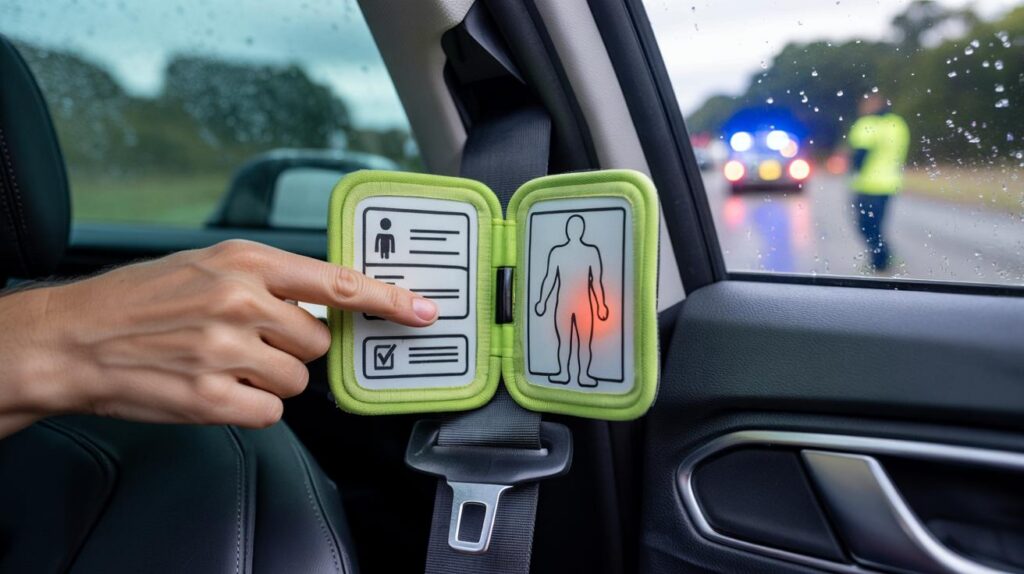
The fabric cover slips over an adult seatbelt and sits where a responder can see it at once. The pack holds a fold-out card with three practical parts.
- Personal details: name, emergency contact and key medical notes that responders can read quickly.
- Communication preferences: plain-English prompts explaining how you prefer to be addressed, supported or calmed.
- Pain map images: simple body diagrams so you can point to where it hurts without speaking.
Officers say the cover clips on in seconds, moves easily between vehicles and does not interfere with how the belt works.
The aim is simple: reduce confusion, cut precious minutes and help responders act faster when stress levels are high.
Why timing matters at the roadside
Collisions overwhelm senses and scramble thinking. Sirens, bright lights and pain make speaking hard, even for people who usually communicate well. For anyone with a speech, language or communication need, that barrier can be steep.
Acting Insp John Ford described the covers as a small aid with a large impact. He pointed to common scenarios: a driver trapped behind a deployed airbag; a passenger in shock unable to answer questions; a bystander trying to help but unsure what to ask.
First responders make several critical decisions in the first minutes. Clear, immediate information can shift outcomes.
Road safety specialists often talk about the “golden hour” after a serious crash. But the first 10 minutes shape what happens next: who needs to be extricated, which injuries take priority and whether a patient can be moved safely.
Who the scheme aims to support
The covers target anyone who may need extra help getting their message across under pressure. That includes autistic people, people with learning disabilities, stroke survivors, and those with conditions that affect speech or understanding.
Police and health partners also stress that many people who do not normally identify as disabled may struggle to communicate after a collision because of shock, pain or anxiety.
Around 1 in 7 people are neurodivergent. A roadside tool that respects different communication needs can help many of us.
Alison Hernandez, Police and Crime Commissioner for Devon, Cornwall and the Isles of Scilly, backed the initiative through Vision Zero South West, the regional road safety partnership. The partnership also funded an information video with British Sign Language and subtitles to ensure deaf and hard-of-hearing drivers get the same guidance.
How to get one and how to use it
Devon and Cornwall Police say covers are available free at police enquiry offices across the force area. Stocks will replenish routinely, with priority for people who identify a communication need.
Filling the card without fuss
- Write in block capitals and keep details brief.
- Use the communication prompts to note what helps you: slower speech; yes/no questions; showing objects rather than describing them.
- Tick or circle parts of the pain map that apply to you during an incident.
- Update your emergency contact if it changes.
- Avoid sensitive data that you would not want a member of the public to see.
Keep the cover on your main driving seatbelt. Swap it to a different seat if a passenger has additional needs. If you use a taxi or hire car, move the cover before you set off.
What responders and families can expect
Police, paramedics and fire crews already follow protocols to identify who needs help first. The cover does not replace that training. It supplements it with information you control and present in a form that is easy to spot.
| Feature | Benefit at the roadside |
|---|---|
| Front-facing cover on the belt | Immediate visibility for responders and bystanders |
| Communication preference prompts | Fewer repeated questions, calmer interaction |
| Pain map images | Faster triage when speech is limited or impossible |
| Removable design | Use across different vehicles without tools |
Families who accompany someone with additional needs can fill out the card together and practise pointing to the pain map. That rehearsal builds confidence for an emergency they hope never comes.
How this fits into wider road safety goals
Britain still sees around 1,600 road deaths each year, with many more seriously injured. Campaigners argue that safer roads need layers of protection: better junctions, lower speeds where risk rises and practical tools that work when things go wrong.
This scheme sits in that third layer. It does not prevent a collision. It helps minimise harm after impact. It recognises that communication failures cost time, and time can change outcomes.
Minutes matter. A simple, visible prompt can bridge the gap between panic and action.
Questions you might have
Is the cover only for disabled drivers?
No. The pack supports anyone who may find speaking difficult in a high-stress moment. That includes older drivers, tourists unfamiliar with English, and people in shock.
Will it work with child seats?
The design fits standard adult seatbelts. Parents and carers can keep one on the front passenger belt or a rear adult belt in cars that carry children.
Do I have to carry medical details?
You choose what to write. Keep it brief and useful, such as “epilepsy” or “type 1 diabetes,” and an emergency contact. Avoid bank or sensitive personal information.
What happens next
Police will monitor uptake and feedback from responders. If drivers find the covers helpful, partners could expand distribution through GP practices, community groups and charities. Vision Zero South West plans to share training clips so volunteers and social care teams know how to use the cards well.
Locally, the scheme arrives ahead of darker evenings and busier school runs. Officers hope the covers become as routine as a first-aid kit: rarely needed, but reassuring to have within reach.
Practical tips before you set off
- Complete the card in daylight and check legibility.
- Show family members where it sits on the belt.
- Practise pointing to the pain map with a child or adult who may need it.
- Review the details every three months, or after a change in medication.
Think of the cover as part of your safety kit. It pairs with a charged phone, reflective jacket and basic first-aid supplies. It also signals to emergency crews that you welcome help and explains the quickest way to provide it.



Genuinely love this idea. In those first chaotic minutes, having clear personal details and a pain map right on the belt could shave off precious time. Low-tech, portable, and human-centered — feels like the kind of small thing that saves lives 🙂 Kudos for including communication preferences and BSL in the rollout. I’ll be grabbing one for my parents and swapping it into the taxi when needed.