
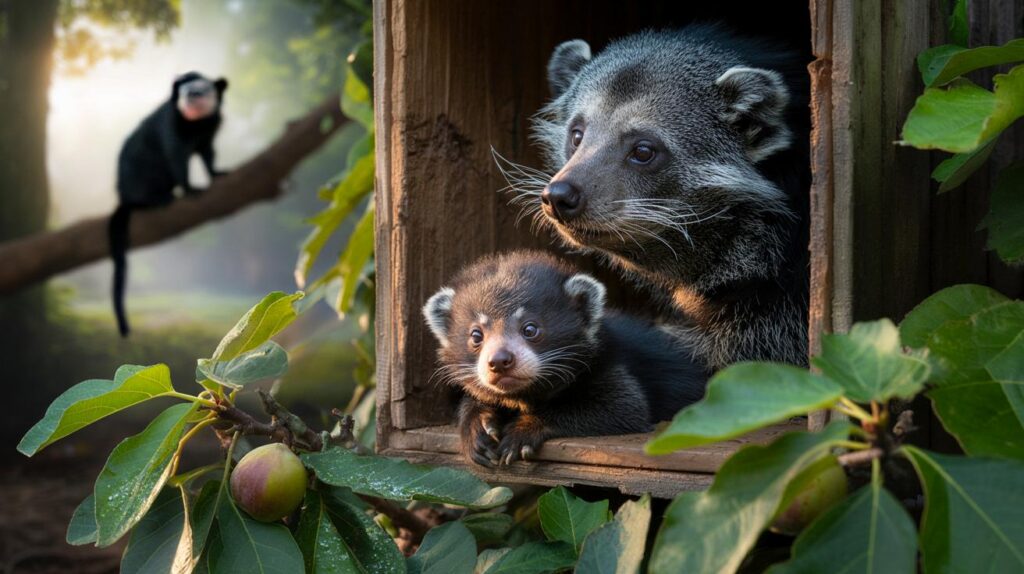
Keepers in Sussex say a newborn with a popcorn scent has arrived quietly, but the story begins months earlier.
Visitors at Drusillas Park in Polegate are hearing whispers about a tiny “bearcat” with bright eyes and a bold nose. On 8 August, during routine checks, the team found a female binturong cub nestled against her mother — the first of her kind ever born at the zoo since it opened a century ago.
A first in a century for Drusillas
The cub, named Boots, arrived to parents Dora and Niffler, a settled pair whose calm bond has turned into a conservation success. Staff describe Dora as quiet and attentive, while Niffler keeps a respectful distance — a natural role for male binturongs, which do not rear young in the wild. The pairing looks textbook: matched temperaments, careful introductions, and patient routines since Dora came from Frankfurt in April.
Boots is nursing and sleeping in a nest box, where keepers notice small signs of growth each day. Her whiskers are pushing through, her eyes are sharp, and that distinctive scent — a sweet, buttery smell often compared to warm popcorn — already lingers on her fur. For now, she largely stays hidden. Binturong cubs typically remain tucked away for up to three months before venturing out with any confidence.
First binturong birth at Drusillas in 100 years, confirmed on 8 August during morning checks.
How keepers spotted the tiny arrival
The team knew something had shifted when Dora fell unusually quiet and spent longer periods in her nest. By the following morning, their hunch was confirmed: a small, dark cub was curled close by. Keepers have monitored the nest from a distance to reduce stress, with minimal hands‑on contact while motherly care does the heavy lifting.
Feeding will continue for around eight weeks. After that, weaning starts on soft steamed vegetables and carefully prepared portions that a young jaw can handle. Boots will also sample fruits and, later, a wider omnivorous diet suited to her species.
Dora nurses for around 8 weeks; Boots may start tentative explorations before the 3‑month mark.
Why a bearcat birth matters beyond Sussex
Binturongs, also known as “bearcats”, are neither bears nor cats. They belong to the civet family (Viverridae) and spend much of their lives in trees. In the wild, they range across Southeast Asian forests from India to Indonesia, but their numbers have fallen. The IUCN lists the species as Vulnerable, with habitat loss, hunting and illegal trade applying heavy pressure in multiple countries.
Drusillas participates in the EAZA European breeding programme, which aims to maintain healthy, genetically diverse populations under human care. A cub born to a compatible pair offers more than local celebration: it adds resilience to the regional safety net for a species facing a steady decline in the wild. Programmes like this also give zoos a practical platform to talk about forest protection and responsible consumer choices that can reduce pressure on tropical habitats.
Vulnerable on the IUCN Red List; binturongs face shrinking forests and demand from the wildlife trade.
The science behind that “popcorn” aroma
That sweet, toasty smell is not a myth. Binturong scent marks contain volatile compounds, including 2‑acetyl‑1‑pyrroline — the same molecule found in baked bread and popped corn. The odour helps individuals signal their presence as they move through the canopy, advertising territory and status to other bearcats. For keepers, it is an unmistakable sign that Boots is doing exactly what a healthy cub should do: smell like a binturong.
What makes Boots’ family special
Dora’s calm behaviour matters because early stress can disrupt feeding and bonding. Her previous experience rearing cubs, before she reached Sussex, appears to be paying off. Niffler, meanwhile, contributes by keeping away from the nest area and avoiding unnecessary disturbance — a role that suits his relaxed temperament.
- Parents: Dora (mother), Niffler (father)
- Cub: Boots, female, first for Drusillas in 100 years
- Key dates: Dora arrived in April; birth found on 8 August
- Early care: 8 weeks nursing, then gradual weaning
- Nest behaviour: cubs often stay hidden for up to 3 months
| Date or stage | What to expect |
|---|---|
| April | Dora joins Niffler at Drusillas after careful transfers and introductions |
| 8 August | Keepers confirm the birth during morning rounds |
| Weeks 1–8 | Nursing period; minimal disturbance; signs include whisker growth and rising alertness |
| Around 3 months | More frequent nest exits; short, supervised explorations |
| Following months | Diet broadens; climbing confidence increases under keeper supervision |
Binturong basics: what children ask, and adults want to know
What exactly is a bearcat? The binturong is a large, nocturnal tree‑dweller with a muscular prehensile tail that functions almost like a fifth limb. The tail wraps and grips branches, letting the animal reverse, hang and pivot in dense forest. That agility is vital in the canopy, where it feeds on figs and other fruits, small animals and bird eggs.
Why does it matter to forests? By swallowing fruit whole and later passing seeds, binturongs help spread trees across large distances. Some figs rely on animals like them to reach new gaps in the forest, which supports biodiversity. Remove the seed‑spreaders, and regeneration slows.
What threatens them? Forest clearing for agriculture and infrastructure breaks up habitat. Poaching and the wildlife trade remove adults and offspring. Demand tied to viverrids — the family that includes palm civets used in “civet coffee” — also distorts local markets, and binturongs can be caught in the same networks.
Seed‑spreading fruit eaters with a gripping tail: binturongs are built for canopy life and forest renewal.
What visitors might see — and when
Patience helps. Boots will spend long periods tucked away, especially in daylight. Short, cautious outings may begin after several weeks. Binturongs tend to be most active around dawn and dusk, so any first glimpses could come during quieter times. Keepers may adjust viewing to protect the family’s routine, particularly while nursing continues.
How this birth connects to bigger choices
Breeding programmes make a difference, but they cannot replace intact forests. Consumers can back up the work by choosing certified products that avoid deforestation, supporting organisations that protect Southeast Asian habitats, and backing legislation that restricts illegal wildlife trade. Families visiting zoos can also take part in talks, ask about sustainable palm oil policies, and join adoption schemes that fund diets, enrichment and veterinary care.
For those curious about growth, binturongs reach sexual maturity at around two to three years. In human care, they can live beyond 20 years with consistent diets and regular health checks. Keepers track weight, hydration and mobility, adjusting feed to match growth spurts and seasonal changes. For a cub like Boots, that means gentle weigh‑ins, carefully steamed vegetables during weaning, and climbing structures sized to her stage of development.
Visitors often ask how to tell if a cub is thriving. Signs include steady weight gain, bright eyes, responsive movements and appropriate vocalisations. A healthy cub also learns to climb in short bursts, rests deeply between feeds and shows curiosity without constant agitation. Boots is already ticking those boxes, according to staff, with measured steps from the nest and a keen nose leading the way.



A bearcat that smells like popcorn? Sussex just made my weekend plans 🙂 What’s the best time for a first peek—dawn or dusk?