
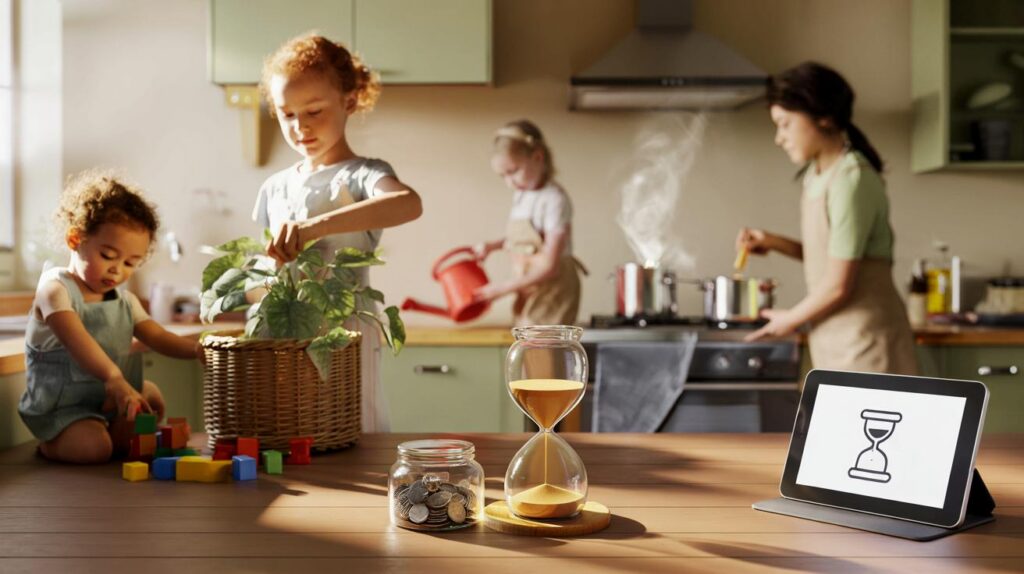
Across Britain, families are rethinking housework as children take real jobs, trading tantrums for teamwork, and mess for measurable gains.
This week, a clear age-by-age checklist from a parenting educator set off a lively debate among parents, while new conversations revived research showing that small, regular chores tie to stronger focus, better memory and more confident children.
What’s new this week
A practical, age-stepped set of household jobs has been trending among UK parents, with hundreds swapping tactics for those tricky moments when a child simply refuses. The mood is shifting from perfection to practice: quick, specific instructions, a short time limit, and two simple choices are proving more effective than open-ended demands.
Start early, keep it simple, and build the habit — not the perfect fold or the fastest finish.
Psychologists echo the approach. Chores should sit inside family life, not replace play or rest. The goal is contribution, routine and confidence, not a spotless kitchen.
Age-by-age: what children can actually do
Children are capable of more than most adults expect, provided tasks are safe, clear and sized to their stage. Below are examples parents are using now.
Ages 2–3
- Pop toys into a basket and place board books on a low shelf
- Carry spoons to the table and lay napkins
- Pair socks and fold small flannels
- Put soft clothes in the laundry basket
- Wipe low tables with a damp cloth and dab up small spills
- Help feed pets with an adult right beside them
Ages 4–5
- Pull up the duvet and smooth pillows
- Lay the table and carry their plate back after meals
- Water houseplants with a small jug
- Use a light handheld vacuum on crumbs
- Put shopping in the cupboard at child height
- Wipe doorknobs and light switches with a safe wipe
Ages 6–7
- Prepare simple snacks such as fruit, toast or yoghurt
- Fold bath towels and stack them neatly
- Rinse dishes and load them onto the rack
- Take out small rubbish bins and replace liners
- Weed a patch of garden or sweep the patio
- Peel carrots or potatoes using a peeler, supervised
Ages 8–9
- Load and unload the dishwasher correctly
- Hang and fold clean clothes, then put them away
- Scramble eggs or make porridge on the hob with an adult nearby
- Wipe kitchen worktops after dinner
- Walk the dog with an adult or older sibling
- Keep their room surface-tidy: desk clear, floor clear
Ages 10–12
- Deep clean a bathroom: sink, loo, mirror and floor
- Plan and cook a simple meal once a week
- Mow a flat lawn after training and with safety checks
- Wash a bicycle or family car using a basic kit
- Mop hard floors and spot-clean skirting
- Manage their own laundry from basket to drawer
Teens 13–16
- Cook a two‑course family meal and handle leftovers safely
- Plan a week’s packed lunches and shop from a list
- Change bedding and run a hot wash
- Do basic DIY: change a bulb, tighten a hinge, assemble flat‑pack
- Babysit younger siblings at home for short periods, if ready
- Manage pet care end‑to‑end for a day, including walks
Real-life tasks grow executive function: planning, sequencing, self-control and working memory — the same skills that underpin learning.
What the research says
Studies have linked household tasks to a range of gains. Work led by paediatricians in the United States reports that children who pitch in tend to show stronger prosocial behaviour — they comfort friends more readily and cooperate with less prompting. Australian researchers have also flagged that “hands-on” chores such as cooking and gardening correlate with sharper memory and better attention. None of this calls for long hours; consistency beats intensity.
Educational psychologists in the UK add an important guardrail: chores don’t replace play, reading or rest. When families frame jobs as teamwork rather than punishment, children engage more and progress faster.
Before screens: how to make the rule stick
Many households now use a simple sequence: first jobs, then screens. The key is clarity and a short runway.
- Say what to do, not what to stop: “Put clothes in the basket and line up your books.”
- Give two choices: “Start with the blocks or the crayons?”
- Set a timer: 5–10 minutes for under‑8s; 10–20 for older children.
- Praise effort, not perfection: “You stuck with it and finished — thank you.”
- Don’t redo their work in front of them; teach the tweak next time.
Pocket money: pay or don’t pay?
Britain is split on this. A balanced approach works for many families:
- Family jobs: non‑negotiable and unpaid (dishes away, bedroom tidy).
- Earners: optional extras with pay posted in advance (wash the car £2, mow the lawn £4, batch‑cook pasta £3).
This protects the message that everyone contributes while still teaching money skills. Tie payment to standards and safety, not speed.
How much time, and what’s the point?
Short, daily jobs add up without crowding the day. Here’s a simple guide you can adjust to your household.
| Age | Daily minutes | Supervision | Main goal |
|---|---|---|---|
| 2–3 | 5–10 | Right beside them | Join in and finish |
| 4–5 | 10–15 | Close by | Follow two-step instructions |
| 6–7 | 15–20 | Check-ins | Order and neatness |
| 8–9 | 20 | Spot checks | Accuracy and hygiene |
| 10–12 | 20–30 | After-action review | Independence |
| 13–16 | 30+ | As needed | Planning and ownership |
When they refuse: scripts that defuse
Parents report better results with firm kindness rather than bargaining. Try these short lines.
- “You can be cross and still tidy the blocks. I’ll stay nearby.”
- “It’s tidy time. Two minutes, then you pick what’s next.”
- “Blocks or crayons first? You choose.”
- “Jobs, then screens. Tell me when you’re done and we’ll set the timer.”
Safety and fairness
Match tools to size: child-height brooms, blunt peelers, light laundry baskets. Lock away chemicals. Show each step once, then let the child try. Rotate jobs weekly so no one gets stuck with the least-liked task. For neurodivergent children, use clear visuals, shorter blocks, and predictable routines; swap noisy chores for quieter equivalents where needed.
Try this tonight
Pick two family jobs for each child and write them on a card. Set a five-minute sand timer. Say exactly what finishing looks like. When the sand runs out, everyone checks off jobs and moves on. Keep the same cards for a week, then adjust.
Extra ideas that build real-world skills
Weekend skill boosts work well: a child who can make eggs can later make a packed lunch; a teen who plans one dinner learns budgeting and food safety. Pair chores with small reflections: what went well, what they’ll change next time. This nudges metacognition — thinking about thinking — which carries over to homework and revision.
Worried about overloading? Use a simple ratio: for every minute of jobs, there should be at least three minutes of play, reading or rest. Household work becomes a rhythm, not a grind — and children see themselves as needed, capable and trusted.



Brilliant breakdown! The age-by-age jobs plus ‘first jobs, then screens’ is exactly the kind of clarity my house needed. I tried the two choices + 10-minute timer tonight and my 6-year-old actually finished without a meltdown. Also love the family jobs vs earners split—it keeps the ‘we all contribute’ message while still teaching money. Defintely printing the checklist and sticking it on the fridge.