
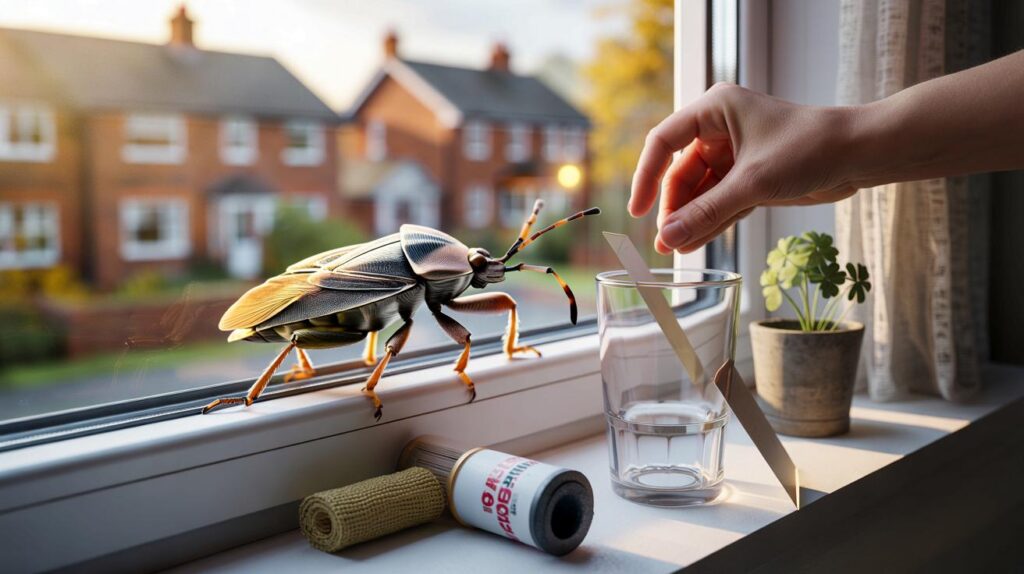
As winter bites, millions of homeowners spot brown shield-shaped insects creeping indoors, sparking questions, worries and odd folklore nationwide today.
Calls to housing teams rise as temperatures drop and light-seeking insects drift into porches and lofts. Experts point to an annual movement known as overwintering. Social media adds a new twist, with talk of omens and luck gaining traction alongside practical advice.
What is that brown bug by the window?
The likely culprit is a shieldbug. Two types turn up most often in British homes. The native green shieldbug that turns brown in autumn. And the brown marmorated stink bug, an invasive species that looks marbled brown with a broad, shield-like back. Adults measure around 12 to 17 mm long, roughly the size of a 1p coin.
They slip indoors through tiny gaps while seeking dry, mild corners to ride out the cold months. Window frames, soffits and curtain folds offer ideal hideouts. When disturbed or crushed, they release a strong odour as a defence.
They do not bite, they do not spread disease, and they only smell when squeezed or vacuumed without care.
Why you are seeing more of them now
Short days and cooler nights trigger a surge. Warm masonry and indoor heating lure overwintering insects onto sunlit walls and into roof spaces. Porch lights act like beacons. Unsealed gaps around cables, vents and frames allow easy entry.
The science: overwintering behaviour
Shieldbugs feed outdoors through spring and summer. They then look for sheltered crevices when night temperatures slide under about 10C. They gather in small groups, slow their metabolism and wait. Central heating wakes them periodically, so you might notice a stray bug on a curtain or lampshade during a mild spell.
The folklore: omen, luck and patience
Households often read meaning into these arrivals. Many view the brown bug as a symbol of resilience and order. Some keep the visitor alive and release it, believing this gesture invites steadiness at home. Others link autumn sightings with thrift and careful planning for the colder months ahead.
Folklore frames the brown bug as a messenger of patience and persistence; science frames it as a seasonal refugee.
What it might mean for your home
For your wallet: a visit often signals draughts and weak sealing. Fixing those gaps cuts heat loss and energy bills. For your health: most people tolerate the odour, though a few report mild irritation. For luck: belief varies by family and tradition; there is no evidence either way, but the ritual can calm worries.
Seven signs and steps you can take today
- See a shield shape and mottled brown colour with banded edges along the abdomen.
- Find it near windows, loft hatches, soffits, curtain tops or picture rails.
- Notice movement on warm days after a cold snap; heat rouses dormant bugs.
- Catch it using a glass and a thin card; slide, lift and carry it outside.
- Do not crush it; the odour lingers on fabrics and fingers.
- Seal gaps around cables, vents, frames and eaves with silicone or draught strips.
- Switch off porch lights where safe, or change to warmer-spectrum bulbs that attract less.
How to tell it from bedbugs and what to do next
| Feature | Shieldbug / stink bug | Bedbug |
|---|---|---|
| Size | 12–17 mm, broad, shield-shaped | 5–7 mm, flat, oval |
| Colour | Brown or marbled, sometimes green earlier in the year | Reddish-brown |
| Where found | Windows, lofts, curtains, sunny walls | Beds, mattress seams, skirting near beds |
| Smell | Strong odour when crushed | No distinct odour |
| Bites | No biting of humans | Bites humans at night |
This quick check stops panic. A shieldbug in the lounge is a nuisance, not a health emergency. Release it and block the gap it used to enter.
Safe removal and prevention
Use a jar-and-card method. It avoids odour and protects the insect. If you use a vacuum, line the nozzle with a thin sock and remove the bug outdoors before it releases scent inside the bag. Keep pets away during removal, as the taste repels cats and dogs.
For prevention, inspect frames, trickle vents, cable entries and rooflines. Fit fine insect mesh to attic vents where practical. Draught-proof letterboxes and loft hatches. Maintain good window seals. Clean warm ledges and corners where bugs rest. Open windows briefly each day to refresh air without cooling the entire house.
Relocate, do not squash, and fix the entry point the same day; that simple loop breaks repeat visits.
What gardeners and balcony growers need to know
Shieldbugs feed on fruit, beans and ornamental plants outdoors. Damage appears as small dimples or pale patches on skins. If you grow tomatoes, peppers or apples, check for adults on warm autumn afternoons. Shake plants into a tray and move the insects away from crops. Encourage birds and predatory insects by avoiding broad-spectrum sprays that also remove allies.
Why this story matters this winter
Milder autumns and longer warm spells prolong insect activity. That means more chances for bugs to slip indoors before the first hard frost. Energy costs push households to seal better, which helps both bills and bugs. Tighter homes cut draughts and reduce entry points. Small fixes make a clear difference: a £5 tube of sealant, a roll of foam strip, and ten minutes per window can stop dozens of intruders.
A cultural footnote for the curious
Many families keep a gentle ritual. They cup the brown visitor, make a wish for steadiness, and carry it to a hedge. The act calms nerves and adds meaning to a dull task. Science does not test luck, but the routine builds a habit of patience and care that households value.
If you face frequent sightings, try a simple audit. Count entry points, check light sources, and track dates against cold nights. A quick log shows patterns. You then target the exact gap that matters. If numbers rise sharply in a single room, a contractor can assess soffits and vents without guesswork.
Final note for allergy-prone readers: the odour can irritate sensitive noses. Wear thin gloves, use the jar method, and ventilate for a few minutes after removal. That keeps the task quick, kind and odour-free.



If they don’t bite, is there any risk for asthmatics from the odour? Also, any humane way to keep them out of loft hatchs besides silicone and mesh?