
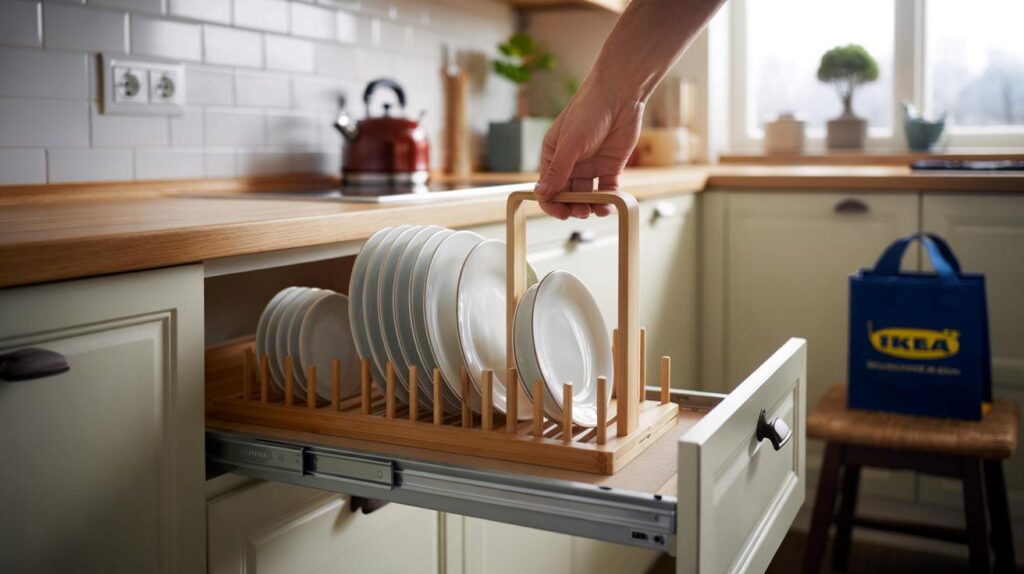
Tired of clattering cupboards? A small, low-cost organiser whispers order into cramped British kitchens this winter, nudging calmer meals and quicker prep.
Shoppers keep circling one quietly clever buy at IKEA: a £12, Japanese‑inspired adjustable plate holder that turns wobbly piles into tidy rows. It looks modest, yet it changes the way you reach, cook and clear away, especially in compact homes where every centimetre counts.
Why a £12 organiser has people talking
IKEA’s adjustable plate holder borrows from Japanese storage discipline and blends it with Scandinavian restraint. The idea stays simple: stand plates upright, separate them by slim gaps and use side handles to move the whole set without a risky shuffle. Place it in a drawer or on a shelf and the daily routine steadies.
For £12, you get calm in the cupboard: upright plates, fewer chips, less noise and one‑handed lifting when dinner runs late.
British kitchens often stack crockery high to save space. That looks neat until you need the bottom plate. The holder sidesteps the balancing act. Each plate gets its own slot, so you pull from the front like files in a cabinet. That small tweak cuts the clatter and protects delicate rims and glazes.
What you actually get for £12
- Adjustable frame that adapts to dinner plates, side plates and serving dishes.
- Side handles so you can lift the whole set from cupboard to table in one go.
- A layout that keeps plates visible, so you stop guessing sizes in a dim cupboard.
- Compatibility with drawers or shelves, helping you reclaim vertical space.
- Gentle separation to reduce friction, scuffs and stress during busy cooking bursts.
Space, time and noise: small wins that add up
Open‑plan homes magnify sound. A tidy, rattle‑free cupboard softens the background hum when someone cooks while others work or relax nearby. Families benefit too. Children can help set the table without wrestling a teetering tower, and anyone with a sore wrist avoids lifting a heavy stack.
| Kitchen routine | Traditional stack | Adjustable holder |
|---|---|---|
| Access speed | Slow if you need plates at the bottom | Quick, front‑to‑back selection |
| Noise | Frequent clatter | Low, controlled movement |
| Risk of chips | Higher with friction and slips | Lower with separated plates |
| Carrying to table | Awkward, two‑hand lift | Stable, handled transfer |
| Drawer use | Limited, items shift easily | Secured rows that stay put |
Who benefits most
- Flat‑dwellers who need every shelf and drawer to earn its keep.
- Busy households that batch‑cook or serve family meals on rotation.
- Hosts who plate in the kitchen and carry stacks to a dining table.
- People who want less noise in an open‑plan living space.
- Anyone with delicate stoneware or patterned china they want to protect.
When each plate has a parking spot, the whole kitchen feels quicker: grab, plate, serve, repeat.
Will it fit your cupboard or drawer
Check three things before you buy. First, measure your plate diameters and match the tallest one to the space where you plan to store it. Second, check shelf depth so plates sit fully within the cupboard or drawer with a clear front edge. Third, make sure there’s finger room above the plates for a comfortable grip, especially if you plan to lift the holder by its handles.
If you use drawers, look for sturdy runners and a base that resists flex. Plates feel heavy inside a moving drawer, and a firm base keeps the holder steady. On shelves, place it near the front, keeping a little clearance from the door so the handles don’t catch.
Set‑up tips that keep plates safe
- Empty the space, wipe it dry and line it with a thin, non‑slip mat if shelves feel slick.
- Adjust the frame so each plate stands upright with a small air gap to avoid rubbing.
- Group plates by size from front to back, so your most‑used set sits within easy reach.
- Lift with both handles when moving a full load, and keep the route clear of obstacles.
The design crossover: Japanese order, Scandinavian calm
Japanese storage culture treats space with respect. Objects sit in deliberate places, and movement flows around them. IKEA leans into that idea with a tool that looks quiet and behaves predictably. The minimal profile avoids visual noise while doing a practical job that you feel every day during breakfast rush or late‑night washing up.
Minimal kit, maximum effect: a discreet frame that swaps clutter for rhythm and turns cupboards into easy workplaces.
Cost, value and the hidden savings
A £12 organiser costs less than replacing chipped plates over a year of everyday cooking. You also save time—often the most precious resource on weeknights. When everything sits in sight, you pick the right size on the first try, portion more consistently and reduce those seconds of rummaging that stack up across the week.
The holder also frees space. Upright rows open a little air around the set, making room for pasta bowls or a serving platter alongside. In small kitchens, that shift can mean one less shelf crammed with awkward piles, and fewer items migrating to worktops where they gather dust and get in the way.
What to watch out for
- Very large platters or extra‑deep bowls may sit better elsewhere; dedicate this frame to plates that share similar diameters.
- Do not overload. If the frame feels tight, remove a plate and keep the gaps consistent.
- Dry plates fully before slotting them in to avoid trapped moisture and streaks.
- Wipe the frame with a damp cloth and dry it to prevent residue build‑up.
- Test a gentle open‑and‑close cycle if you place it in a drawer, checking for snag points.
Extra ways to multiply the gains
Pair the plate holder with a vertical lid stand for pans and a slim divider for baking trays. Those three organisers create clear lanes in a single cupboard, so cookware stops overlapping and scratching. If you share a kitchen, label zones by type—plates, bowls, lids—so guests and children return items to the right place without prompting.
Try a five‑minute audit before the weekend shop. Count how many dinner plates you actually use in a week, retire spares to deeper storage and keep only the active set in the holder. This small rotation reduces visual load and makes washing up feel less daunting. If you change your tableware by season, store the off‑season set in its own box and keep the organiser for the plates you reach for daily.



Does it actually stop the clatter, or is this just another gadget gathering dust?